In the early morning of festival day, villagers and the hamlet patriarch prepare sacrifices, such as rice, glutinous rice cakes, flowers, fruit, meat and Can wine. Also, they make offering objects such as candles, a tiger, a pair of elephant horns and a rhino horn from wood.
When all is prepared, the patriarch will blow a horn to give the signal to start the ceremony. He leads the procession from a large yard to the hamlet’s entrance where he performs the most important ritual to pray to the genies.
After the main rite, the procession return to the yard where a Neu (bamboo) tree is set up. The Neu tree is believed to be a bridge between the locals and genies. There, they continue other rites, such as spraying wine on the roof and walls of every house in the village to drive away evil spirits and prevent the locals from having bad luck.
After finishing all of the rites, the villagers enjoy Can wine together. With a background of gong beats, boys and girls passionately dance and sing, creating an exciting atmosphere during the festival.
.
When all is prepared, the patriarch will blow a horn to give the signal to start the ceremony. He leads the procession from a large yard to the hamlet’s entrance where he performs the most important ritual to pray to the genies.
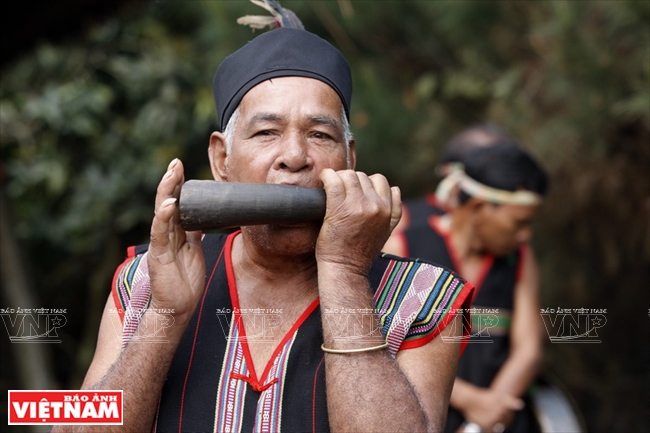 The ceremony starts after the hamlet patriarch blows a horn. 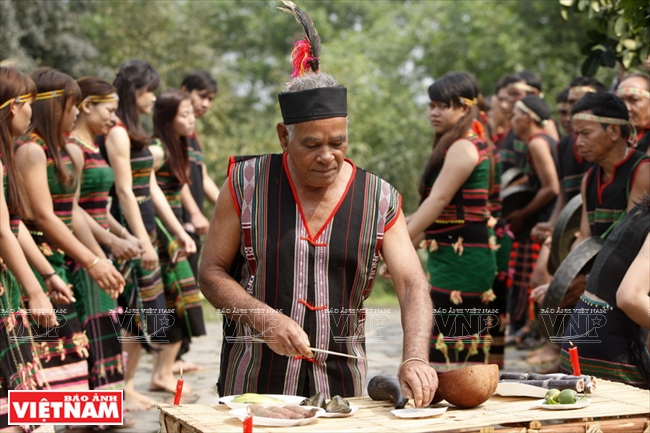 The patriarch carries out the offering ritual at the hamlet’s entrance. 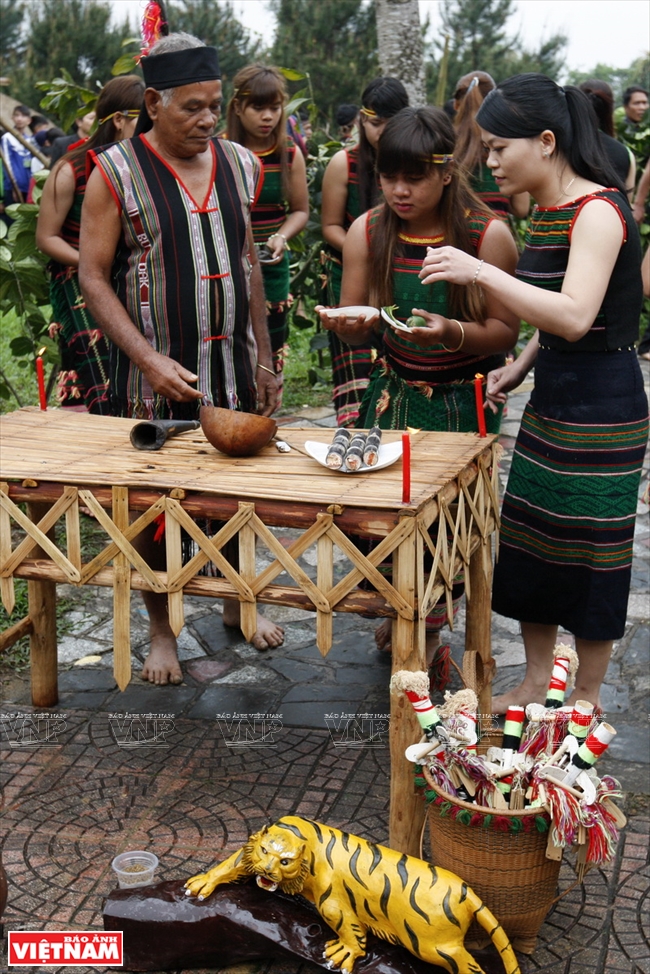 Preparing offerings for the ritual. 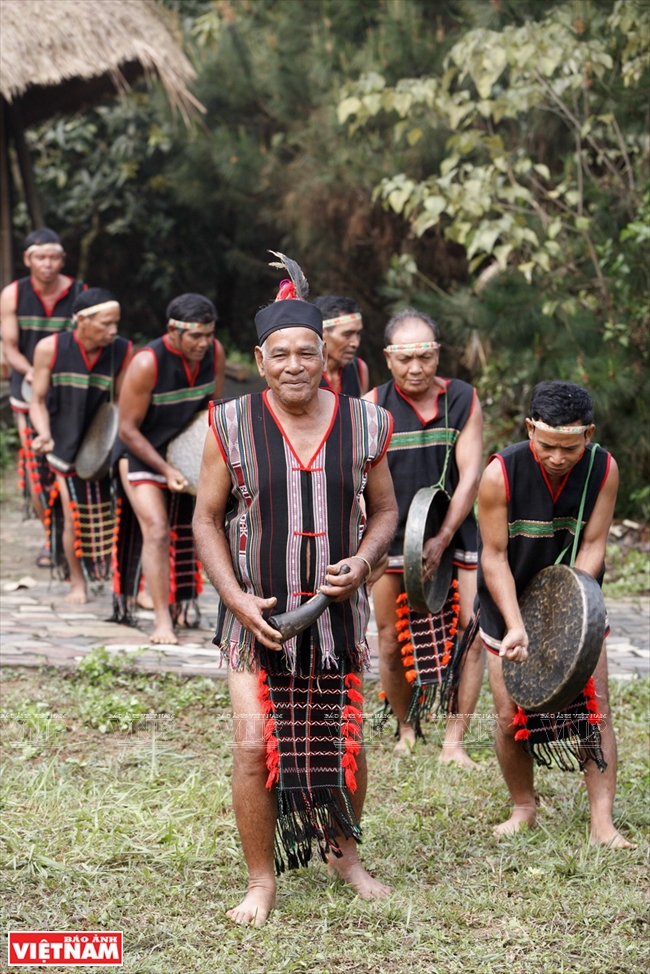 The patriarch leads the gong procession at the ceremony. 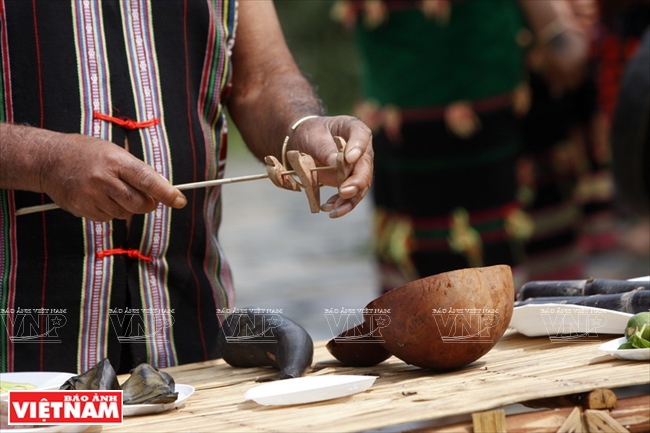 Preparing an offering for the rite. 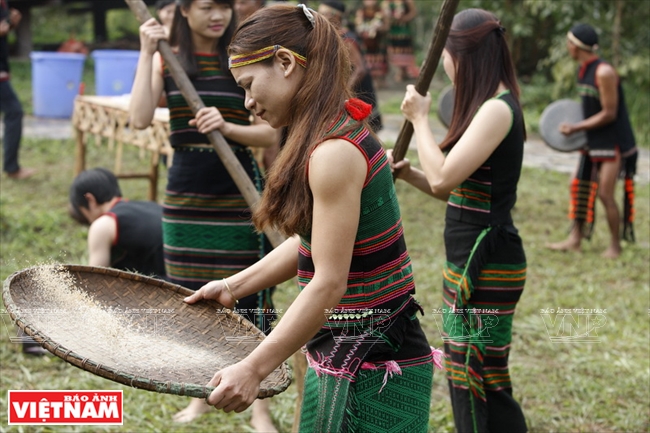 The villagers prepare for the ceremony which falls in late March and early April of the lunar calendar. 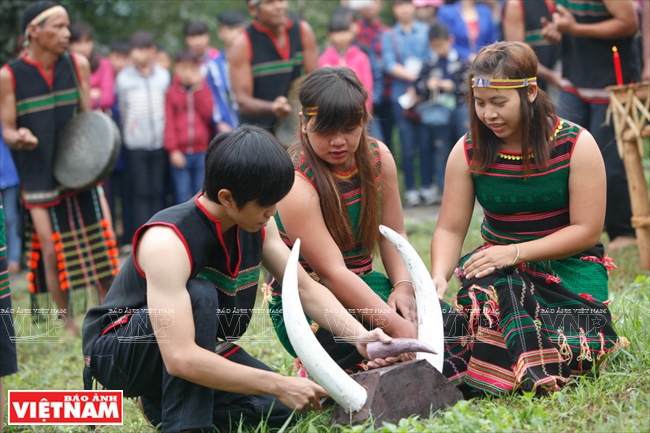 Some objects are carefully prepared for the rite. 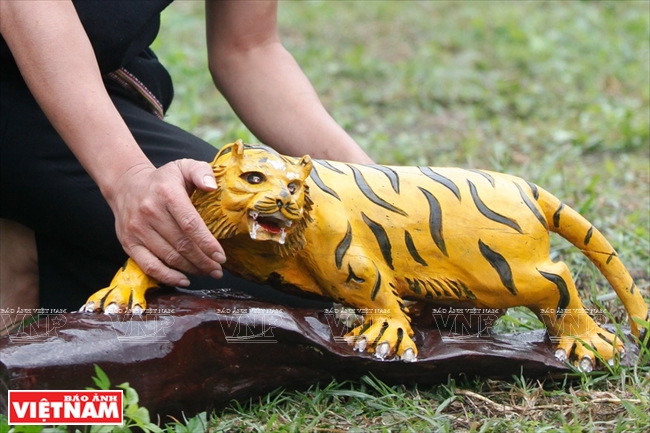 A wooden tiger is used at the rite to drive away unlucky things. 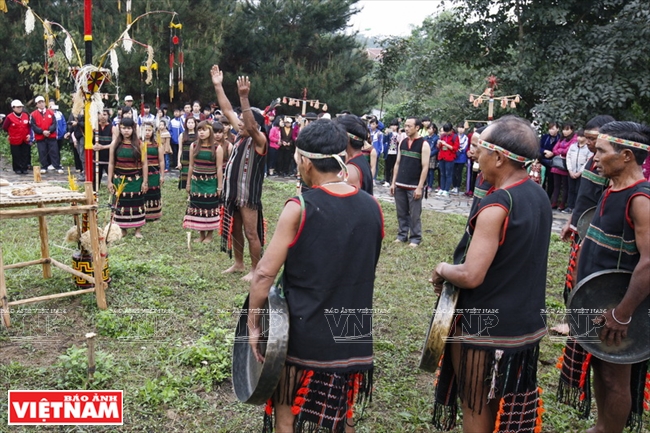 An offering rite is held near a Neu tree . 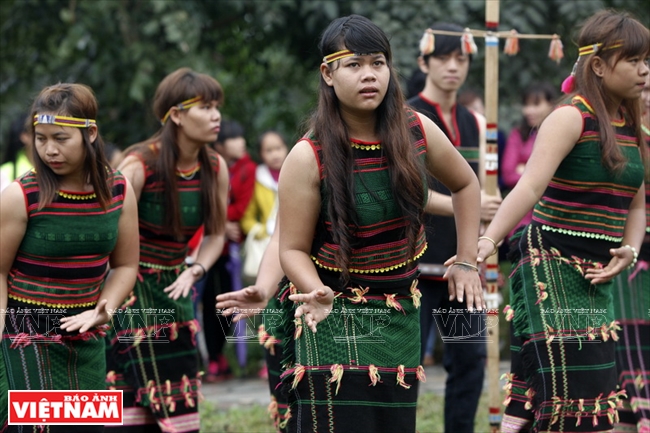 M’nong girls perform a traditional dance. 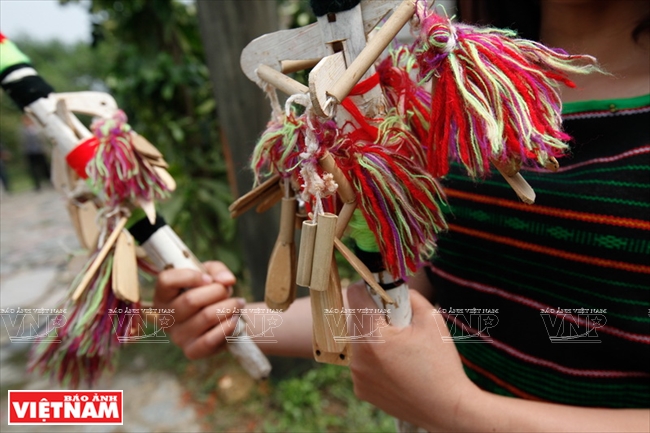 Musical instruments of the M’nong women at the ceremony. 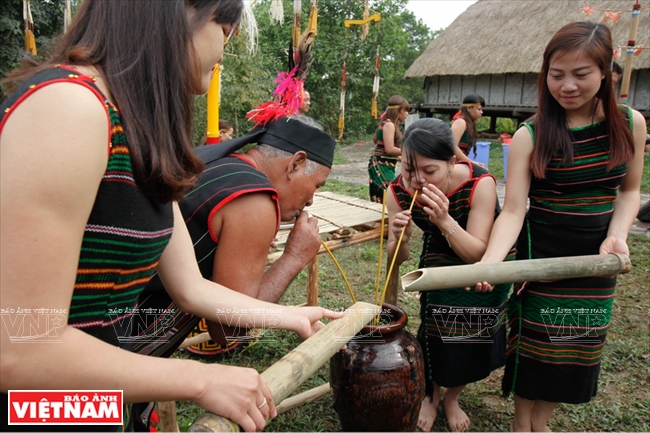 People enjoy Can wine after the offering rite. |
After the main rite, the procession return to the yard where a Neu (bamboo) tree is set up. The Neu tree is believed to be a bridge between the locals and genies. There, they continue other rites, such as spraying wine on the roof and walls of every house in the village to drive away evil spirits and prevent the locals from having bad luck.
After finishing all of the rites, the villagers enjoy Can wine together. With a background of gong beats, boys and girls passionately dance and sing, creating an exciting atmosphere during the festival.
.
By Viet Cuong