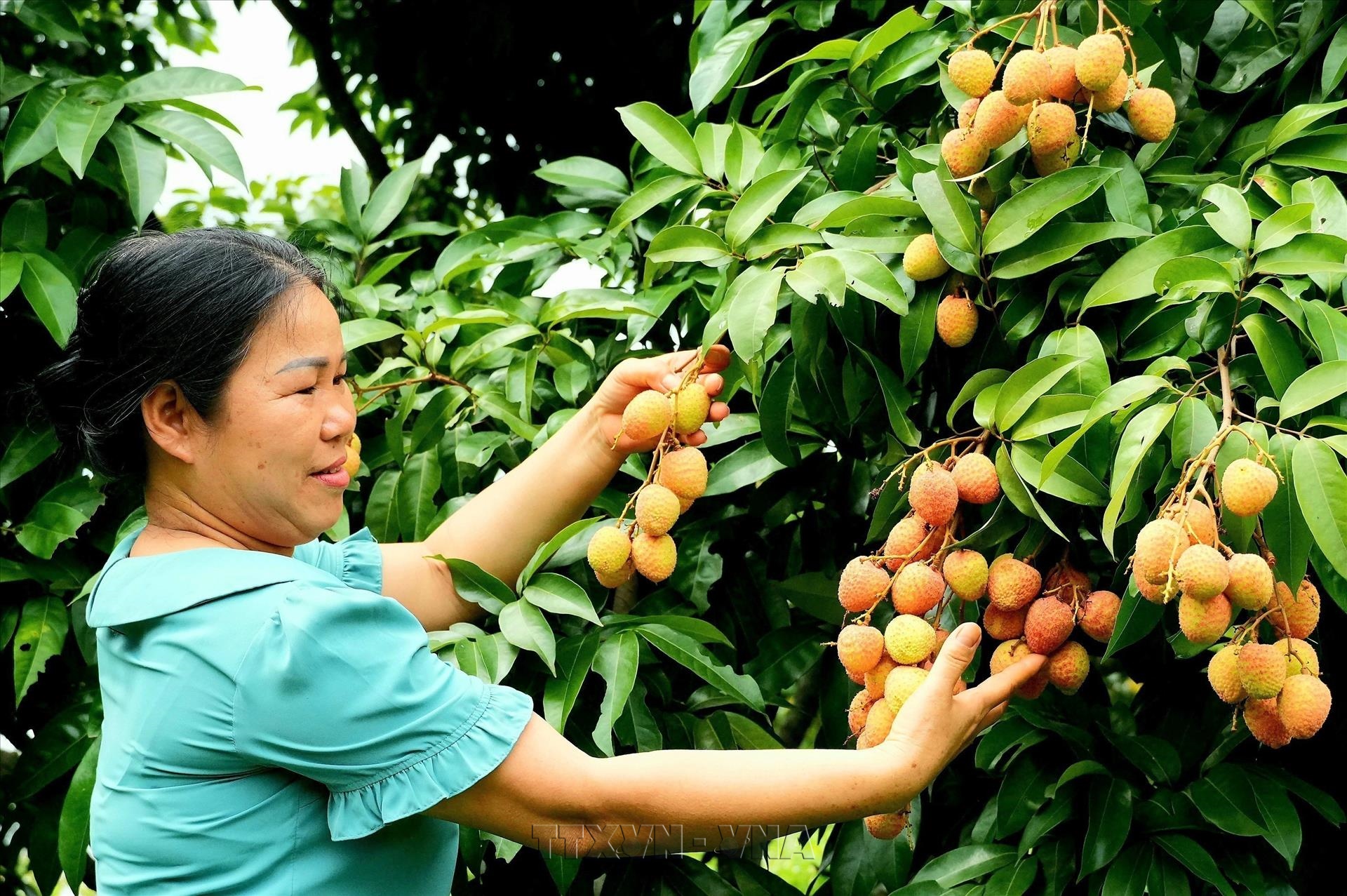
A comprehensive care process ensures high quality for Bac Ninh lychees to meet the requirements of various markets. Photo: VNA
China is the world's largest fruit market and Vietnam's biggest export destination for fruits and vegetables. Rising import demand in recent years has created significant opportunities for Vietnamese producers.
Vietnam has overtaken Chile to become China's second-largest fruit supplier after Thailand. It has emerged as Thailand's main competitor in the lucrative durian market, while also becoming a key supplier of bananas, fresh coconuts, longan, lychees and other tropical fruits.
According to Nguyen Thanh Binh, Chairman of the Vietnam Fruit and Vegetable Association, although fruit and vegetable exports to China have exceeded 5.5 billion USD, there remains considerable room for growth. Vietnamese fruits are still concentrated on a limited number of regions and has yet to penetrate many localities of China.
Beyond products already approved for official export, many promising fruits are still awaiting market access through new phytosanitary protocols. Citrus fruits are a prime example. While pomelos and lemons have been cleared for official exports, oranges and mandarins have yet to gain approval. Custard apples, avocados and several other fruits are also regarded as having strong market potential.
Among Vietnam's key export products, durian continues to be the sector's strongest growth driver. According to the Department of Crop Production and Plant Protection, Vietnam currently has around 192,000 hectares of durian plantations. Production reached approximately 1.8 million tonnes in 2025 and is projected to rise to 2–2.1 million tonnes in 2026. Vietnamese durians are now exported to 28 markets worldwide.
Bananas are also viewed as a major growth opportunity. Global banana trade was valued at around 16.7 billion USD in 2025. Vietnam ranks among the world's top 10 banana exporters, with export earnings of roughly 418.7 million USD, while China imports nearly 1 billion USD worth of bananas annually.
Pham Quoc Liem, Chairman of U&I Agriculture Corporation (Unifarm) and Vice Chairman of the Vietnam Fruit and Vegetable Association, said reaching 1 billion USD in banana exports would require more than expanding cultivation areas or increasing output.
Instead, the industry must raise the value of each tonne of products by restructuring the entire value chain, from seed varieties and production areas to cultivation, post-harvest storage, processing and marketing, while accelerating the adoption of science and technology and strengthening sustainable production linkages.
Nguyen Quoc Manh, Deputy Director of the Department of Crop Production and Plant Protection, said China remains the most important market for Vietnamese fruit and vegetables. Exports to China have expanded by around 65–70% annually in recent years, making continued market access essential to the industry's future growth.
Opportunities, however, are accompanied by mounting challenges. Importing countries are imposing increasingly stringent requirements on product quality, food safety and traceability. Rising input costs and stricter production standards are also placing greater pressure on growers and exporters.
One of the sector's biggest obstacles remains the issuance and management of growing-area and packing-house codes, mandatory requirements for exporting many fruits to major markets, including China.
To address these issues while awaiting a comprehensive revision of the Government's Decree No. 38/2026/ND-CP on soil-attached plant imports and the management of growing-area and packing-house codes, the Government has issued Resolution No. 36/2026/NQ-CP, which streamlines administrative procedures for these codes.
The resolution shortens processing time, reduces compliance costs and strengthens post-clearance inspections, traceability and enforcement. The measures are expected to provide a timely boost to exports as the Central Highlands enters the peak durian harvest season.
At the same time, the Ministry of Agriculture and Environment is developing a national database of growing-area codes linked to land management data while encouraging cooperatives and production partnerships to establish large-scale raw material zones that meet international market requirements.
Alongside regulatory reforms, the ministry is negotiating with China to expand the list of fruits eligible for official exports while also seeking market access for additional products in the US, Japan, the Republic of Korea, Australia and other high-value destinations./.