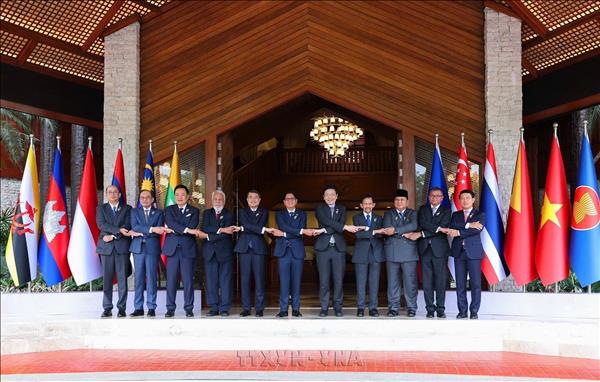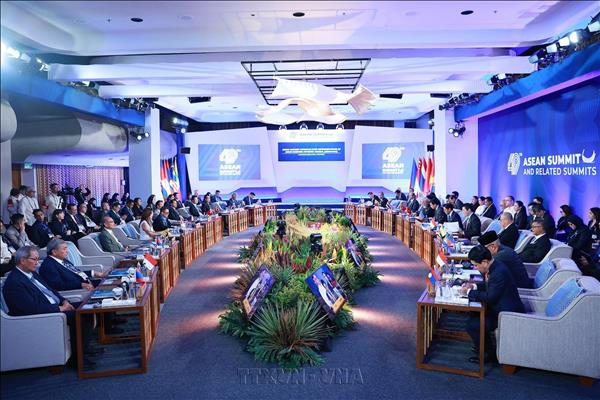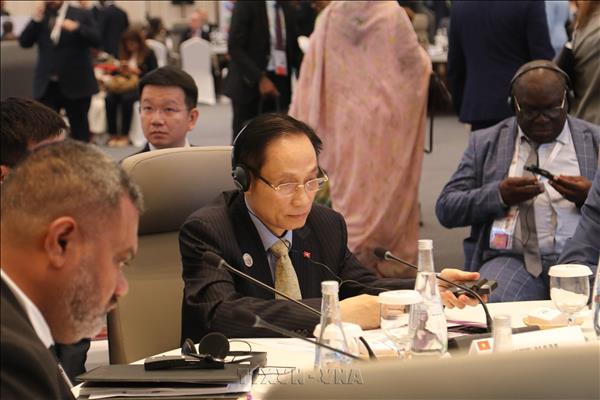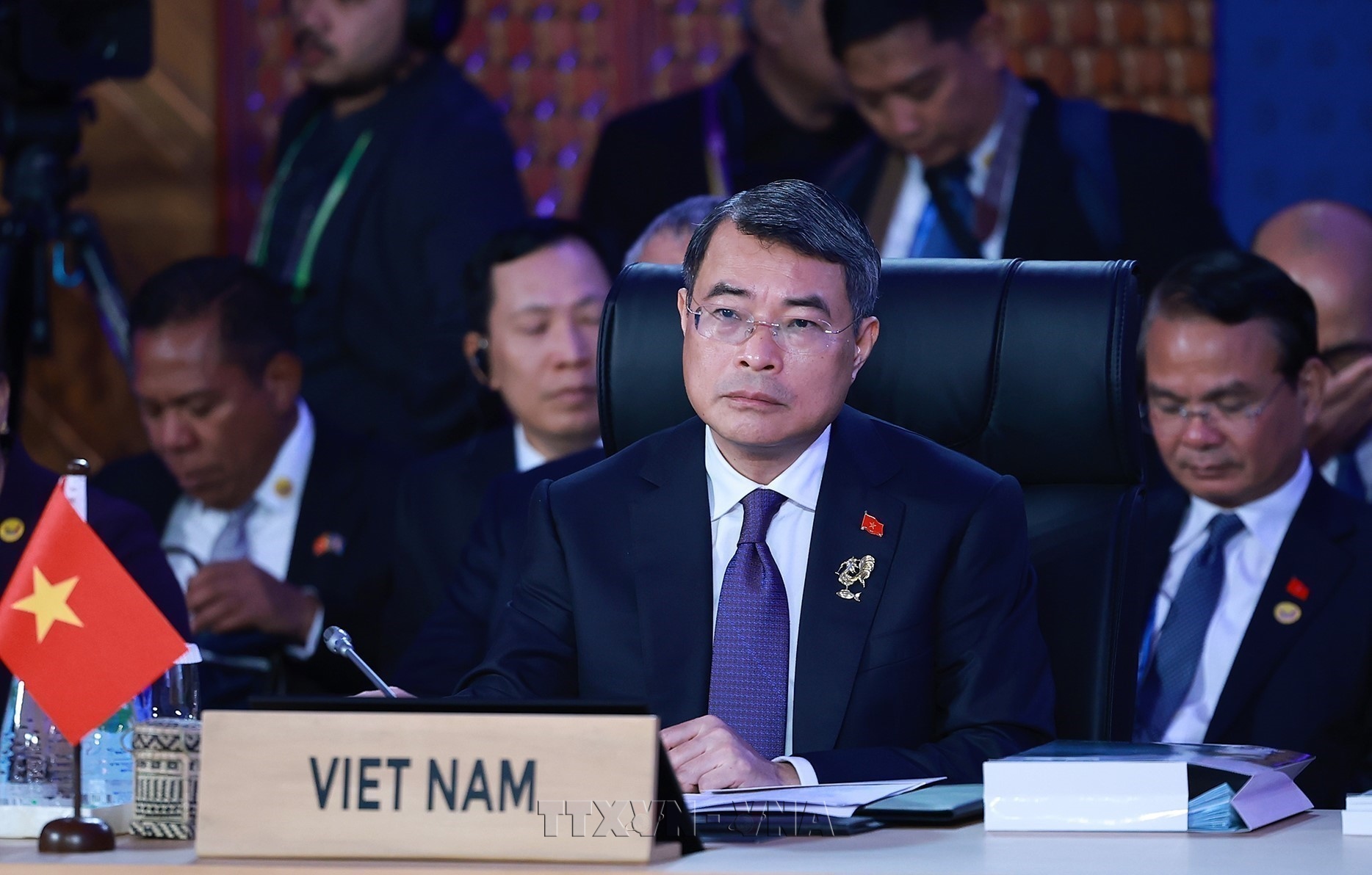
Prime Minister Le Minh Hung proposed three strategic directions to enhance ASEAN cooperation amid numerous challenges, at a plenary session of the 49th ASEAN Summit and related summits in Manila, the Philippines on November 15.
First, he underlined that ASEAN should help build a peaceful and stable environment for development. The bloc needs to step up dialogue and confidence-building, and promote common principles and norms of conduct to resolve differences.
The PM called for stronger defence, security and legal cooperation, effective implementation of the ASEAN forum of legal advisers on public international law, and the early development of an ASEAN Coordinating Council’s rules on coordination and information-sharing for emergency crisis response. He thanked member states for supporting Vietnam’s proposed ASEAN Declaration on Enhancing the Role of Law Enforcement Agencies in Emergency Disaster Response and Relief.
Second, ASEAN should foster dynamic, innovative and resilient shared development. The Prime Minister called for priority to be given to the effective implementation of the ASEAN Digital Economy Framework Agreement (DEFA), attracting high-quality investment and strengthening participation in regional and global supply chains.
Highlighting the urgent need to safeguard economic security, particularly supply chain, energy and food security, he affirmed Vietnam’s readiness to make active contributions to the implementation of the ASEAN Power Grid (APG) and the Manila Energy Initiative (MEI).
He proposed an initiative entitled “Space for Development and Resilience”, aimed at three objectives: sharing and harnessing space data for development; strengthening capacity to ensure a safe and sustainable space environment; and connecting research, training, businesses and investment to develop the regional space economy.
Third, ASEAN should promote its identity to build a cohesive and sustainable Community. The Prime Minister called on the bloc to invest in high-quality human resources, particularly digital skills, facilitate labour mobility within the region and ensure social welfare.
He welcomed efforts to conclude negotiations on the agreement establishing the ASEAN Centre for Public Health Emergencies and Emerging Diseases (ACPHEED), affirming that Vietnam would work closely with Indonesia, Thailand and other member states to bring the centre into operation as soon as possible. He also proposed that ASEAN take the lead in implementing the UN resolution on the “International Decade of Culture for Sustainable Development”, with priority given to developing cultural and creative industries.
Reviewing cooperation in 2026, participating leaders noted that ASEAN has achieved many important results through solidarity and shared determination. They highlighted the bloc’s achievements in political-security, external relations, economy, and socio-cultural field.
To build on this positive momentum, they agreed that ASEAN should give particular priority to strengthening its capacity to translate policies and goals into concrete, measurable outcomes, especially those set out in the ASEAN Community Vision 2045.
They stressed that amid geopolitical changes, the bloc must remain steadfast in upholding solidarity and its central role, safeguarding regional peace and stability, and stepping up efforts to address current security challenges such as online scams, human trafficking and illicit drug trafficking. ASEAN should also continue to enhance its resilience and capacity to respond proactively to shocks by facilitating trade, making full use of existing free trade agreements (FTAs), strengthening supply chain, energy, food and water security in tandem with sustainable agricultural development, and exploring the possibility of signing new FTAs with potential partners.
In external relations, the leaders agreed that ASEAN should maintain a balanced and proactive approach in its relations with partners, promoting practical and mutually beneficial cooperation on the basis of international law and ASEAN centrality. The bloc should also make full use of its cooperation mechanisms to foster a “culture” of consultation, dialogue, confidence-building and preventive diplomacy in support of regional peace, stability and cooperation.
At the conclusion of the plenary session, the leaders adopted and noted 87 documents outlining ASEAN cooperation across all three Community pillars. Key areas included strategic trade management to ensure secure regional trade; promoting the growth of micro, small and medium-sized enterprises (MSMEs) through artificial intelligence; strengthening resilience and regional oil supply security; and enhancing the role of ASEAN law enforcement agencies in emergency disaster response and relief.
Earlier, at the opening of the 49th ASEAN Summit the same day, the ASEAN leaders witnessed the unveiling of ASEAN’s new emblem following Timor-Leste’s official admission as its 11th member; the deposit of the DEFA with the ASEAN Secretary-General; and the presentation of the 2026 ASEAN Prize to Hla Hla Aung of Myanmar in recognition of her outstanding contributions to strengthening community resilience and disaster response./.