
Laying the groundwork for carbon trading
The launch follows a series of key policy measures introduced in 2026. The Government issued Decree No. 29/2026/ND-CP establishing the domestic carbon exchange, while the Prime Minister approved pilot greenhouse gas emissions quotas for 2025–2026 under Decision No. 263/QD-TTg. With the legal framework largely in place, emissions quotas have been allocated to 110 major emitters in the thermal power, steel and cement industries, paving the way for Vietnam's first carbon trades.
The market is expected to spur investment in emissions reduction projects, expand access to green finance and help businesses improve competitiveness, strengthen brand value and comply with increasingly stringent environmental, social and governance (ESG) standards.
Nguyen Thanh Cong, Deputy Head of the Carbon Market Division under the Department of Climate Change at the Ministry of Agriculture and Environment, said the market is intended to support Vietnam's greenhouse gas reduction commitments, including its Nationally Determined Contribution (NDC) and net-zero target by 2050, while encouraging low-carbon investment and enhancing the competitiveness of Vietnamese enterprises.
Ahead of the launch, the Department of Climate Change signed cooperation agreements with the Vietnam Exchange (VNX), the Vietnam Securities Depository and Clearing Corporation (VSDC), the Hanoi Stock Exchange (HNX) and the Joint Stock Commercial Bank for Investment and Development of Vietnam (BIDV).
According to Nguyen Tuan Quang, Acting Deputy Director General of the Department of Climate Change, the agreements establish mechanisms for data sharing, market supervision, settlement and transactions involving emissions quotas and carbon credits. They also demonstrate the country's organisational, technical and operational readiness to operate the carbon market and support green transition and sustainable development.
While the legal framework and technical infrastructure are gradually falling into place, experts say the readiness of businesses remains the market's biggest challenge.
Dang Hong Hanh, a climate change expert at PoA Carbon Vietnam JSC, said the 110 companies participating in the pilot phase enjoy early access to the carbon market but must also surrender emissions quotas equivalent to their actual emissions. More importantly, she said, early participation allows businesses to shift their mindset by treating carbon not simply as an environmental obligation but as an economic asset capable of generating value through emissions quota and carbon credit trading.
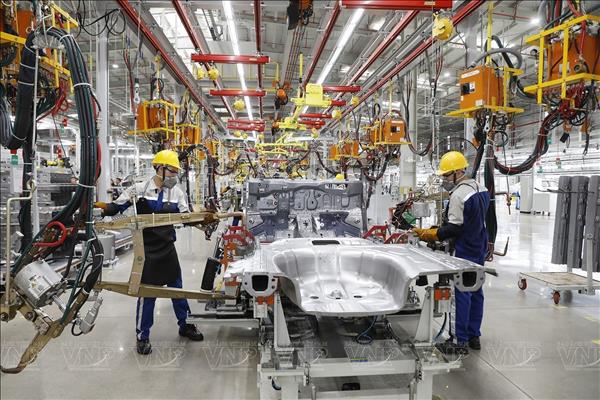
Assoc. Prof. Dr. Luong Duc Long, Vice Chairman and General Secretary of the Vietnam National Cement Association (VNCA), said the pilot allocation of emissions quotas will encourage cement manufacturers to modernise production, improve efficiency and strengthen competitiveness while preparing for international climate-related trade measures such as the European Union's Carbon Border Adjustment Mechanism (CBAM).
Once fully operational, the market will enable sectors that can cut emissions at lower cost to sell surplus quotas to industries facing higher abatement costs, helping Vietnam achieve its climate targets in a more cost-effective manner.
Despite its potential, experts cautioned that Vietnam's carbon market still faces challenges, including low carbon credit prices, an incomplete legal framework, particularly for forest carbon, as well as limited measurement, reporting and verification (MRV) capacity and fragmented data systems.
Building a mature carbon market
To support long-term market development, the Government and relevant ministries have progressively strenthened the legal framework through Decree No. 29/2026/ND-CP, Decision No. 263/QD-TTg on pilot emissions quotas, Decision No. 699/QD-BNNMT on quota allocation, and Circular No. 11/2026/TT-BNNMT governing the management and operation of the national registry for greenhouse gas emissions quotas and carbon credits.
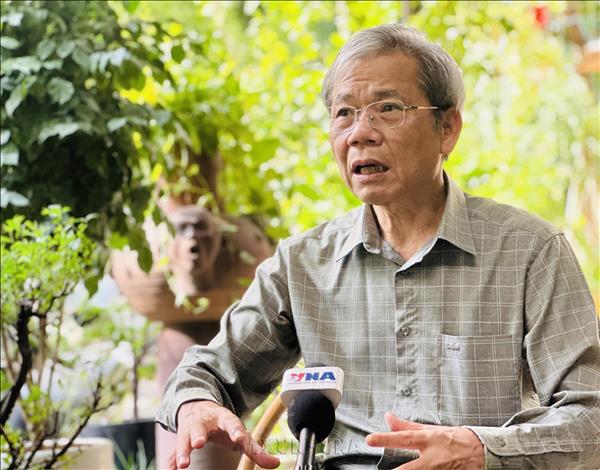
Assoc. Prof. Dr. Nguyen Dinh Tho, Deputy Director of the Institute of Strategy and Policy for Agriculture and Environment (ISPAE), said Vietnam must carefully balance opportunities, costs and benefits to maximise climate finance while accelerating technological upgrading, reducing emissions and mobilising resources for sustainable development.
Experts also stressed the need to further align Vietnam's carbon market with international practices by clarifying carbon credit ownership, trading rules and benefit-sharing mechanisms among the State, businesses and local communities.
They also called for the development of a modern, digitally enabled carbon market backed by high-quality carbon credits generated through forest conservation, mangrove restoration, renewable energy and green agriculture. At the same time, businesses should accelerate the adoption of cleaner technologies and advanced emissions management systems, while Vietnam expands international cooperation to attract green finance, access cutting-edge technologies and expertise, broaden carbon trading opportunities and strengthen its position in the global green value chain./.