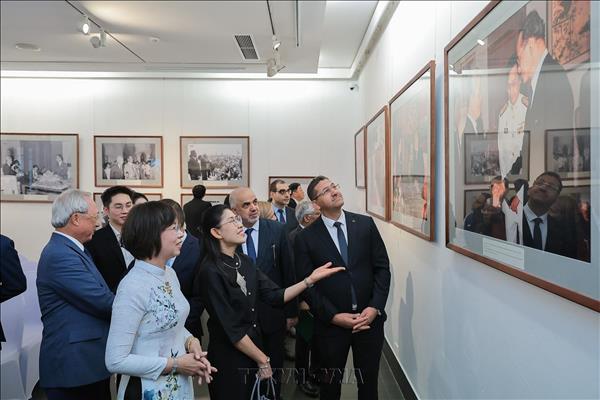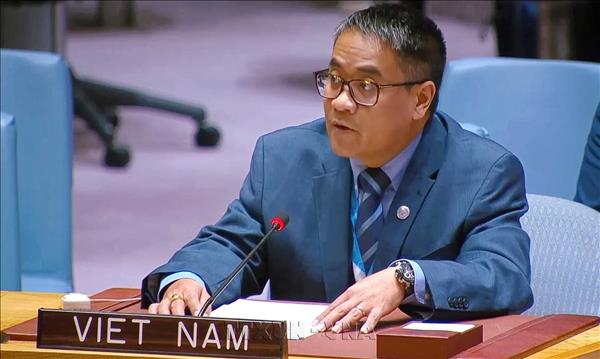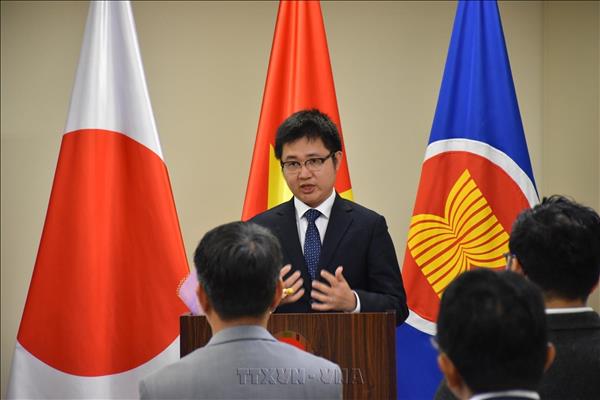
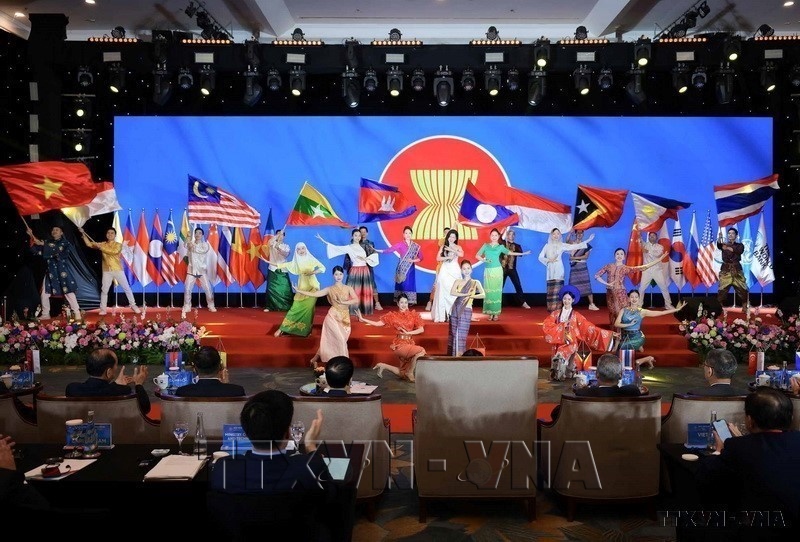
The opening ceremony of the ASEAN Digital Ministers' Meeting (ADGMIN), hosted by Vietnam, brings together ministers responsible for information technology, telecommunications and digital transformation from ASEAN member states (January 2026). Photo: Hoang Hieu/VNA
Serving not only as a cornerstone of the ASEAN Community, the TAC has also enabled member states, including Vietnam, to reinforce regional solidarity, uphold ASEAN centrality and respond effectively to an evolving strategic landscape.
Enduring values in a new context
Over the past five decades, the regional strategic environment has witnessed profound changes, marked by intensifying major-power competition alongside emerging challenges such as cybersecurity, climate change, energy security, supply chain disruptions and transnational crime. These developments have underscored the need for ASEAN to strengthen not only regional peace and stability but also its collective resilience and coordinated action.
Enduring values in a new context
Over the past five decades, the regional strategic environment has witnessed profound changes, marked by intensifying major-power competition alongside emerging challenges such as cybersecurity, climate change, energy security, supply chain disruptions and transnational crime. These developments have underscored the need for ASEAN to strengthen not only regional peace and stability but also its collective resilience and coordinated action.
According to experts, the principles enshrined in the TAC remain as relevant as ever; what must evolve is the way they are applied. Dr. Arisman, Executive Director of the Centre for Southeast Asian Studies (CSEAS) in Indonesia, said the treaty’s strength lies in its flexibility. Respect for sovereignty, peaceful dispute settlement, the renunciation of the threat to use or use of force and mutually beneficial cooperation remain fundamental principles, he noted, but ASEAN should interpret and implement them in ways that address emerging security challenges. He stressed the importance of preventive diplomacy, confidence-building measures, enhanced maritime cooperation and continued adherence to international law, particularly the 1982 United Nations Convention on the Law of the Sea (UNCLOS), as the basis for resolving disputes.
Sharing this view, Beni Sukadis, Senior Coordinator at the Indonesian Institute for Defence and Strategic Studies (Lesperssi), said adherence to the TAC should go hand in hand with deeper practical cooperation. He highlighted the need for ASEAN to accelerate economic integration, digital transformation and supply chain resilience, and expand cooperation in maritime security, cybersecurity, climate change and other non-traditional security issues.
The TAC's adaptability has enabled it to evolve from a treaty designed for Southeast Asian nations into a widely recognised code of conduct governing ASEAN's relations with external partners. It has also provided a framework for managing differences, broadening cooperation and preserving peace and stability across the region.
Sharing this view, Beni Sukadis, Senior Coordinator at the Indonesian Institute for Defence and Strategic Studies (Lesperssi), said adherence to the TAC should go hand in hand with deeper practical cooperation. He highlighted the need for ASEAN to accelerate economic integration, digital transformation and supply chain resilience, and expand cooperation in maritime security, cybersecurity, climate change and other non-traditional security issues.
The TAC's adaptability has enabled it to evolve from a treaty designed for Southeast Asian nations into a widely recognised code of conduct governing ASEAN's relations with external partners. It has also provided a framework for managing differences, broadening cooperation and preserving peace and stability across the region.
Advancing the treaty's values together
Vietnam's 31-year journey within ASEAN reflects the country's consistent commitment to translating the TAC's principles into concrete action. Since joining the bloc on July 28, 1995, during ASEAN's post-Cold War expansion, Vietnam has developed from a new member into an proactive, active and responsible participant, contributing to all three pillars of the ASEAN Community while helping strengthen unity, consensus and centrality.
Vietnam has consistently upheld the TAC's principles of respect for sovereignty, peaceful dispute settlement, non-use or threat of force, dialogue and mutually beneficial cooperation. These principles also underpin the country's foreign policy of independence, self-reliance, multilateralisation and diversification of international relations.
The country's contributions have been evident throughout ASEAN's development, particularly during its two terms as ASEAN Chair in 2010 and 2020 when Vietnam worked closely with fellow member states to promote dialogue, strengthen cooperation and advance ASEAN Community building. During its 2020 chairmanship, despite the unprecedented challenges posed by the COVID-19 pandemic, Vietnam helped maintain ASEAN's cooperation mechanisms, demonstrating the bloc's resilience and reinforcing its central role in the regional architecture.
As ASEAN moves forward with implementing the ASEAN Community Vision 2045, Vietnam remains committed to working with fellow members to build a resilient, innovative and sustainable regional community. In this new phase, steadfast adherence to, and flexible application of the TAC's principles will continue to underpin ASEAN's unity and centrality.
ASEAN Secretary-General Kao Kim Hourn has described Vietnam as an important and constructive member of ASEAN over the past three decades, highlighting its significant contributions to the political-security, economic and socio-cultural pillars. He expressed confidence that Vietnam will continue playing an active role in advancing the ASEAN Community Vision 2045.
New Zealand's Ambassador to ASEAN Joanna Anderson praised Vietnam's effective coordination role, particularly in energy security and economic cooperation, while Indonesia's Ambassador to ASEAN Derry Aman considered Vietnam a cohesive force with a strong commitment to ASEAN's core principles. Their assessments reflect growing international recognition of Vietnam's increasingly proactive and substantive role within the regional grouping.
Half a century after its signing, the TAC has become more than the foundation of cooperation among Southeast Asian nations. It has evolved into a set of internationally respected norms that continue to guide regional peace and cooperation. As the strategic environment grows increasingly complex, the treaty's enduring values of dialogue, trust-building, respect for international law and peaceful dispute settlement remain essential to strengthening ASEAN unity and safeguarding its central role in the evolving regional architecture. Through its active engagement over the past 31 years, Vietnam has helped translate those principles into action and will continue working with ASEAN to promote peace, stability and sustainable development in the region and the world./.