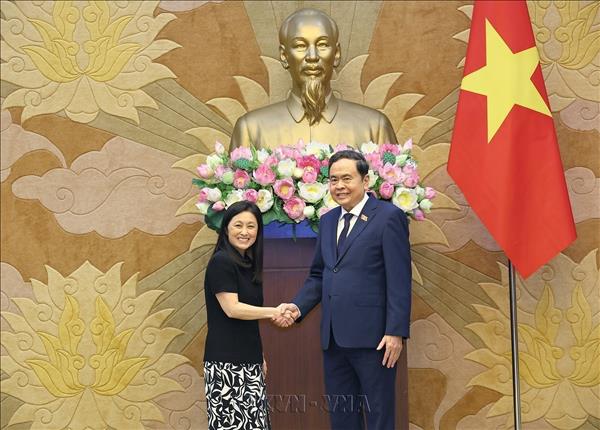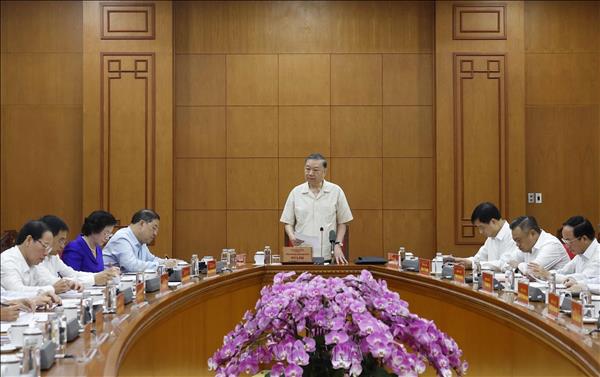
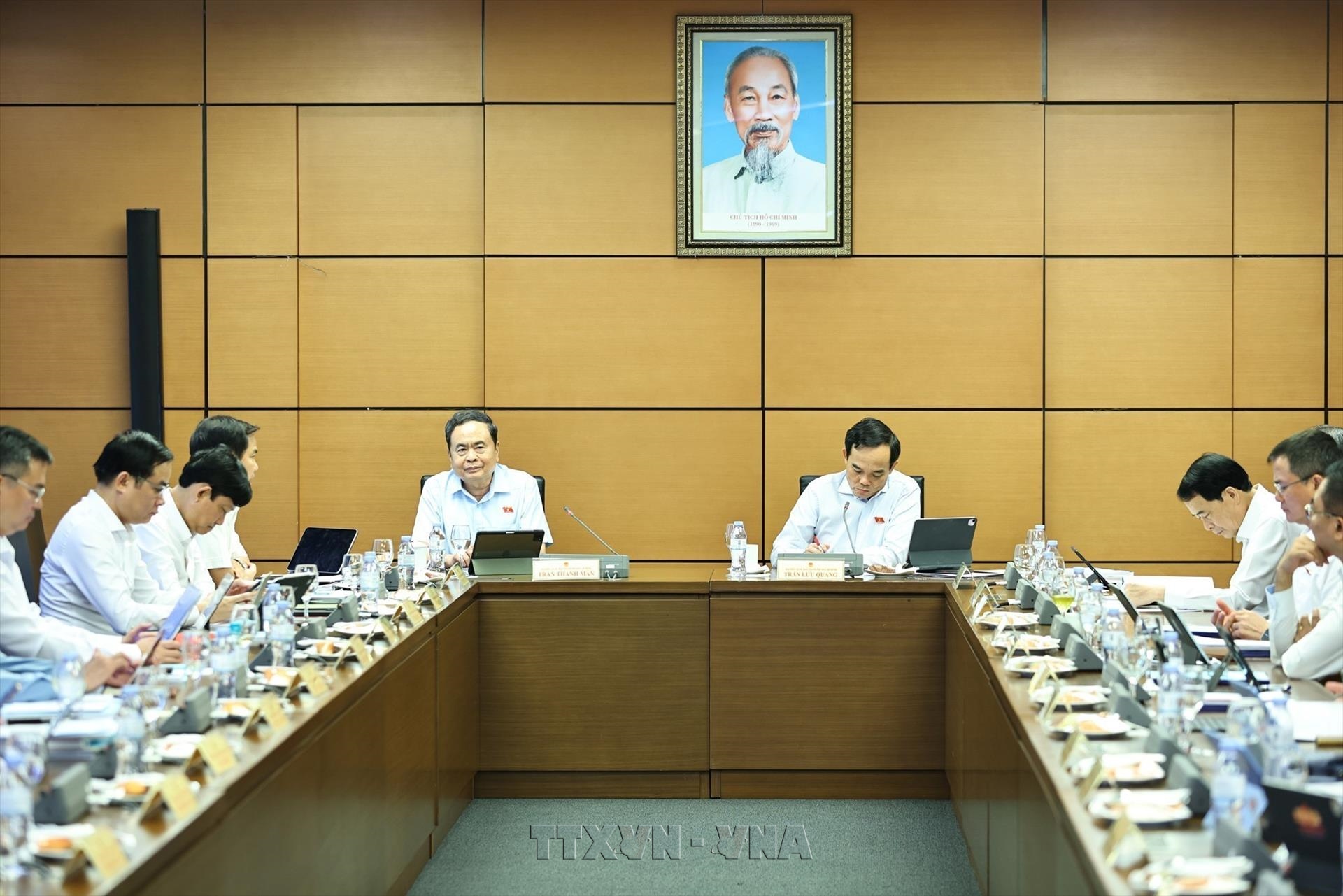
National Assembly Chairman Tran Thanh Man addresses the event. Photo: Minh Duc/VNA
According to the agenda of the first extraordinary session of the 16th NA, lawmakers will in the morning hear proposals and verification reports on three draft laws before holding group discussions.
The draft laws include the Law on Urban Development; the Law on amending and supplementing several articles of 10 laws concerning administrative procedures and business conditions in the agriculture and environment sectors; and the Law amending and supplementing several articles of the Law on Radio Frequencies, the Law on Telecommunications, the Law on E-Transactions, and the Law on Technology Transfer.
In their afternoon sitting, NA deputies will debate the draft resolution on special mechanisms for APEC 2027-related projects in Phu Quoc Special Zone.
The draft aims to provide a legal basis for promptly addressing obstacles arising during the implementation of projects and works serving the event, particularly those that began construction before all legal procedures had been completed in order to meet tight deadlines.
Its adoption is expected to help ensure the timely completion of key infrastructure projects, facilitate the successful organisation of the APEC Economic Leaders' Week 2027, reinforce Vietnam's international standing and prestige, and contribute to promoting socio-economic development of the special zone, An Giang province and the country in general.
The NA will also discuss another draft resolution providing special mechanisms and policies for handling legal violations related to the state and private economic sectors, and activities involving science and technology, innovation and digital transformation.
The draft seeks to establish a legal framework for resolving practical difficulties pending amendments to relevant laws, while encouraging innovation, protecting proactive and responsible officials acting in the public interest, and enhancing the effectiveness in the fight against corruption, wastefulness and misconduct.
The proposed resolution is expected to remain effective for three years. It also allows the continued application of provisions permitting the temporary suspension of criminal prosecution to enable offenders to remedy consequences after the resolution expires, in accordance with existing legal provisions./.