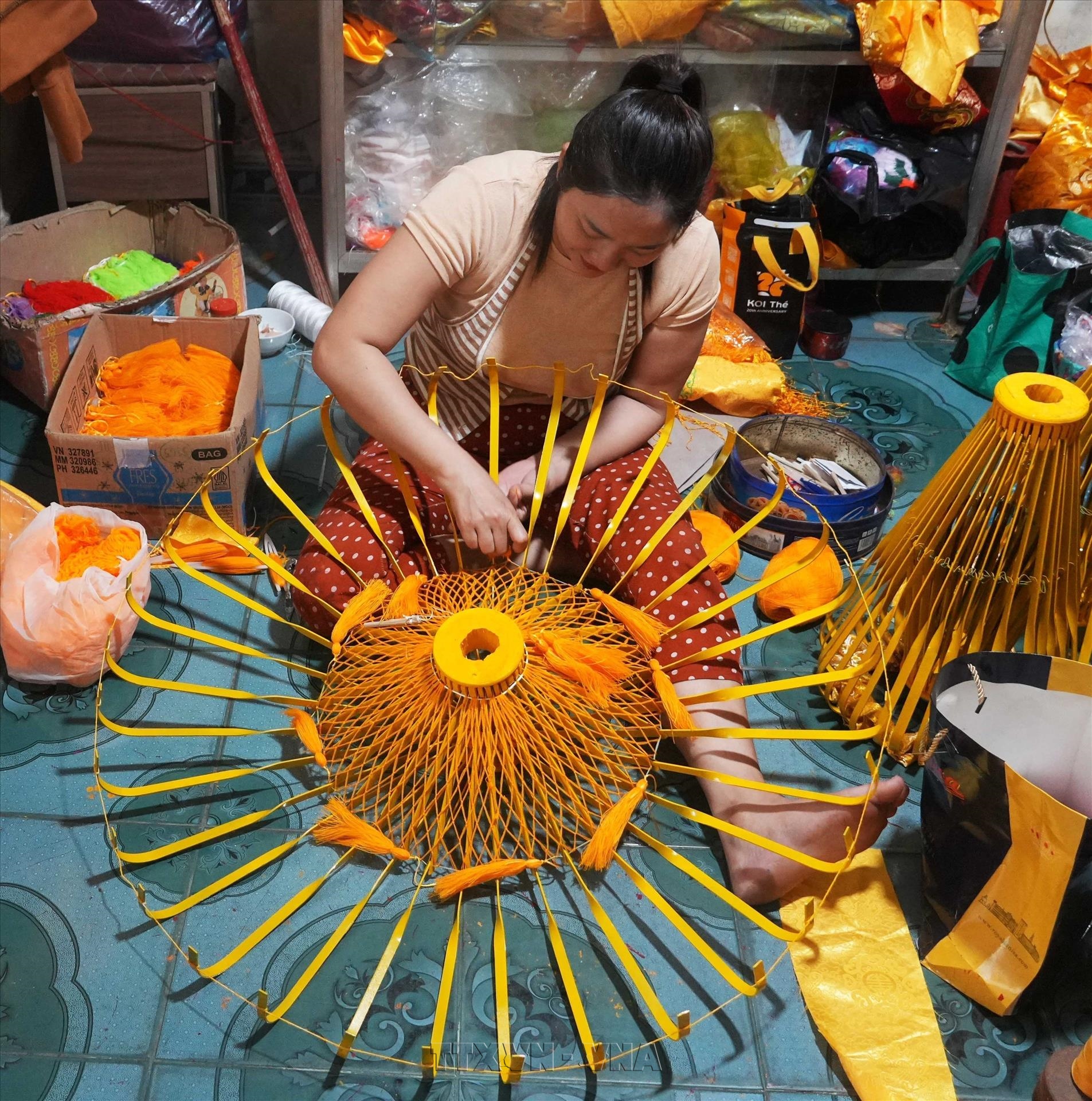
Handcrafting ceremonial parasols at a workshop on Bui Thi Xuan Street, Thuan Hoa Ward, Hue City. Photo: VNA
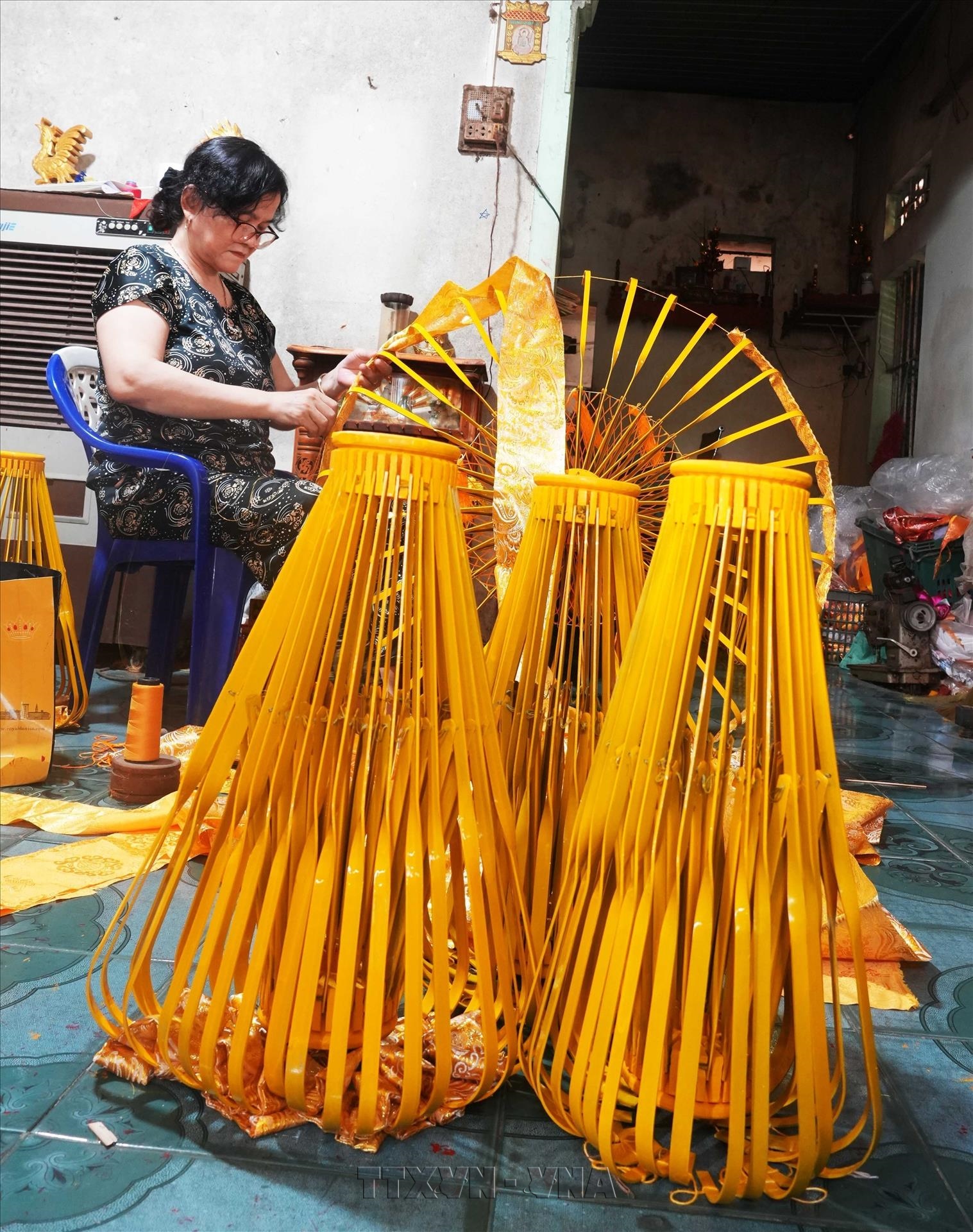
Yellow ceremonial parasols are folded up at a workshop on Bui Thi Xuan Street, Thuan Hoa Ward, Hue City. Photo: VNA
Far exceeding their practical function of providing shelter from the sun and rain, these parasols hold deep symbolic significance within the cultural life of the Hue imperial court. They were used to signify solemnity and nobility during the rituals of the Nguyen Dynasty, as well as in various sacrificial rites rooted in folk beliefs.
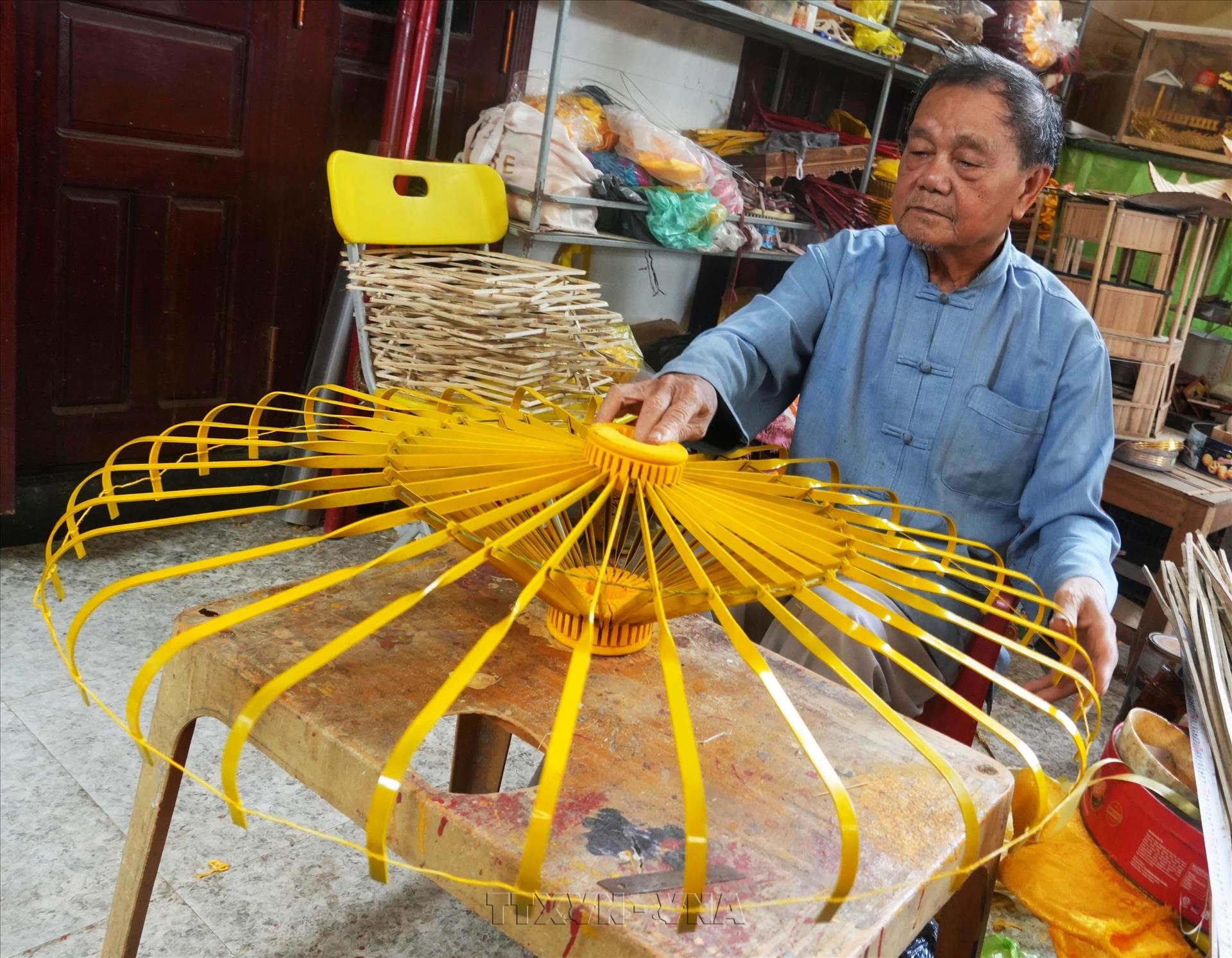
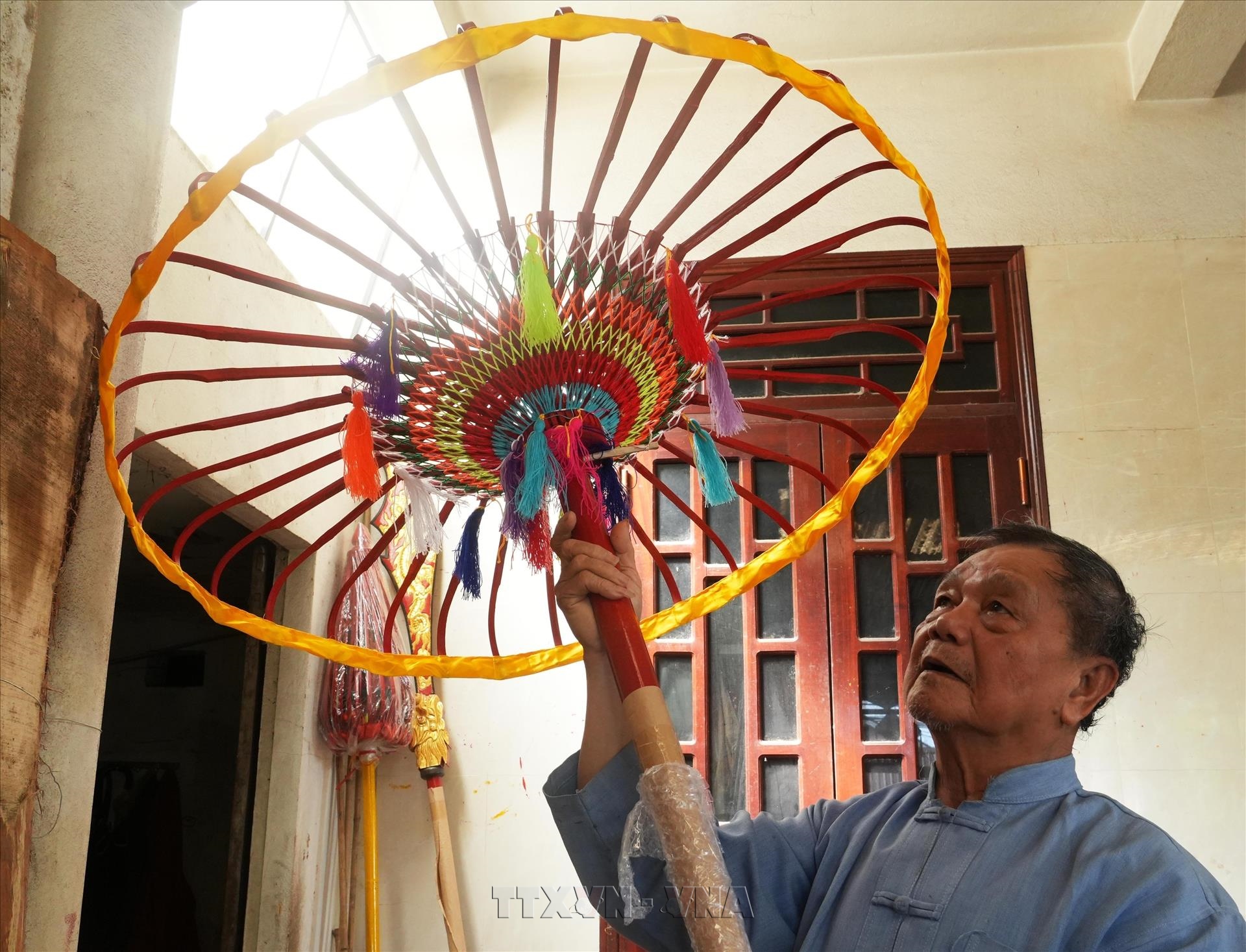
Handcrafting ceremonial parasols at a workshop on Bui Thi Xuan Street, Thuan Hoa Ward, Hue City. Photo: VNA
Today, these ceremonial parasols serve as decorative elements in sacred spaces—such as historical monuments, pagodas, village communal houses, and ancestral clan halls—as well as in wedding ceremonies throughout the ancient capital of Hue./.
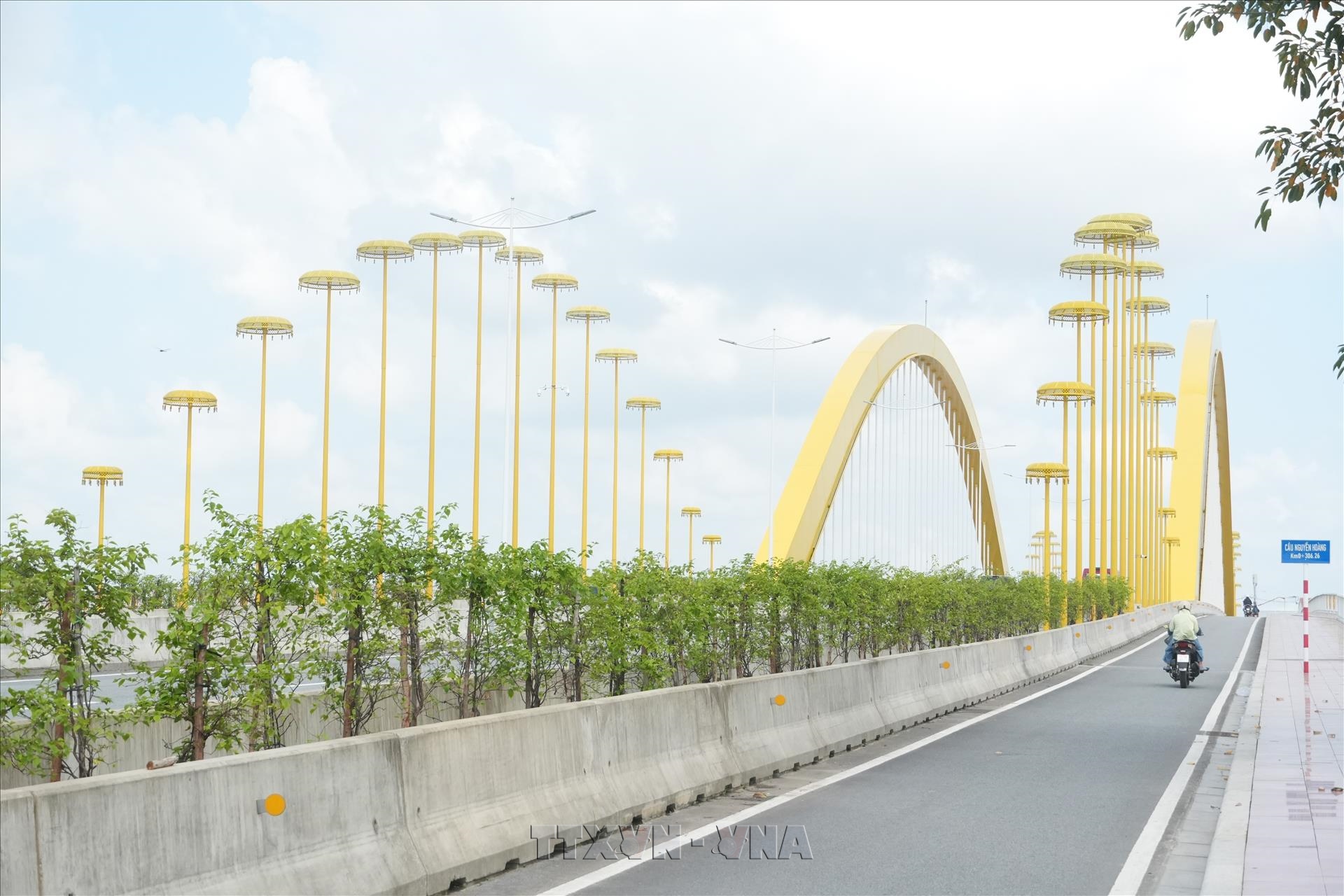
Decorative ceremonial parasols are displayed on the Nguyen Hoang Bridge, which spans the Perfume River in Hue City, adding a sense of formality and elegance. Photo: VNA
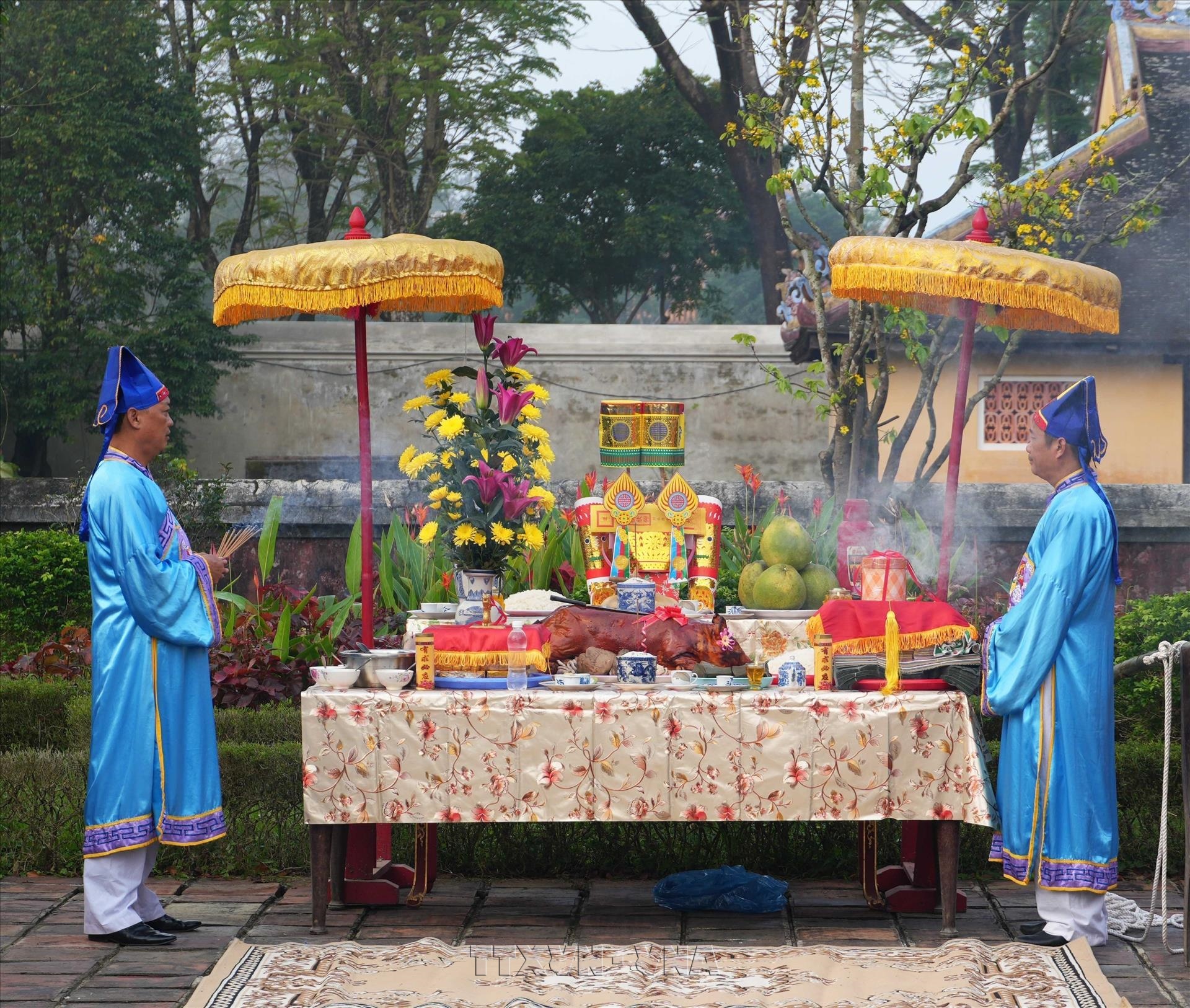
Two ceremonial parasols are placed on either side of the altar during the "neu" (Tet pole) erection ceremony at the Hue Imperial Citadel, serving to enhance the solemnity of the occasion. Photo archives/VNA