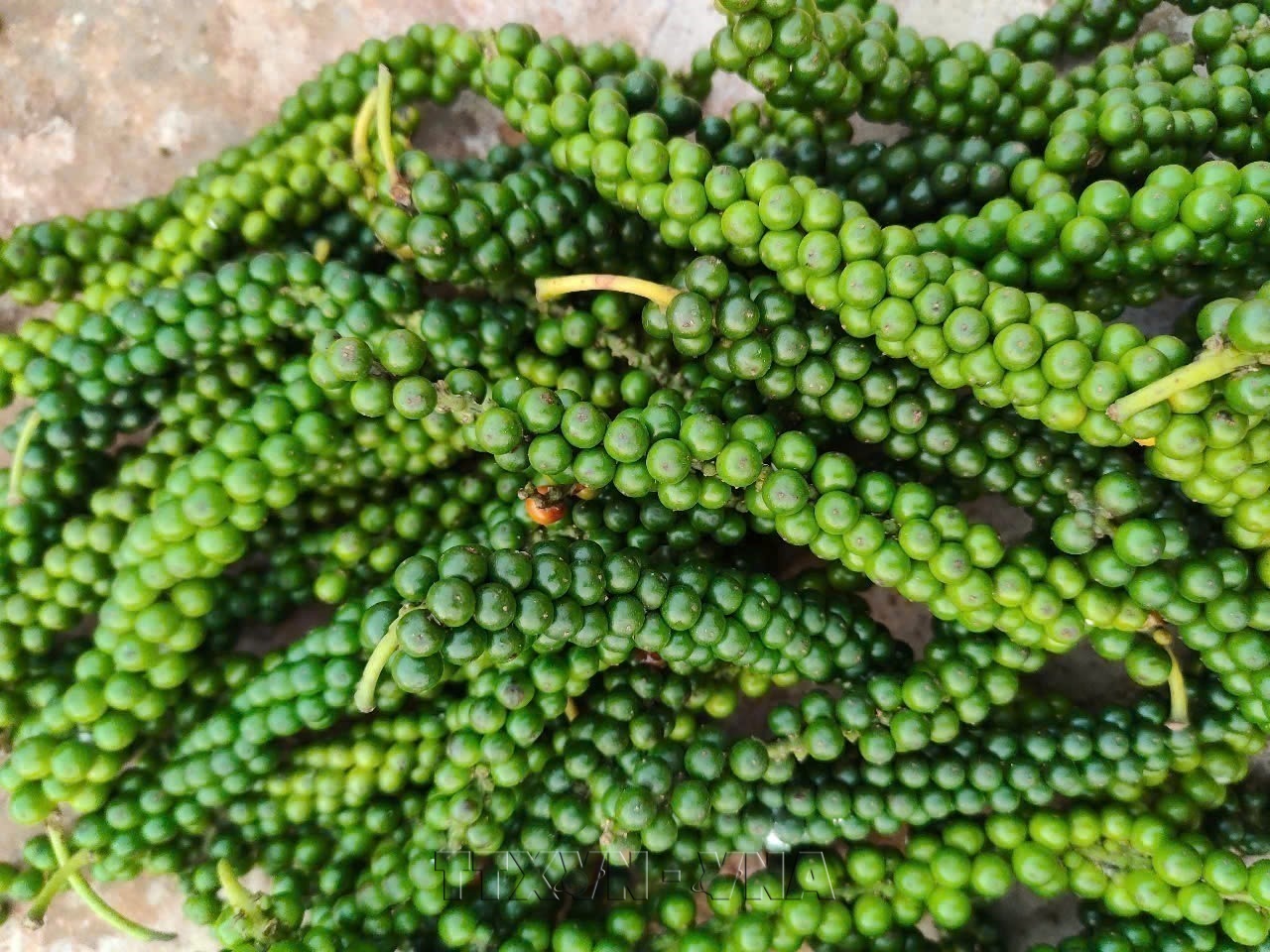
The outlook for the pepper industry remains positive, but greater efforts are needed to standardise growing areas, improve product value and strengthen competitiveness.
During the reviewed period, the US remained Vietnam’s largest pepper export market, purchasing 47,254 tonnes, or 23.5% of the total. It was followed by China with 22,620 tonnes and the UAE with 13,486 tonnes.
According to the Vietnam Pepper and Spice Association (VPSA), the country shipped abroad 10,915 tonnes of pepper worth 70 million USD in the first half of September alone.
Meanwhile, Vietnam imported 959 tonnes of pepper worth 5.3 million USD in the first half of September. During the period through September 15, imports reached 47,961 tonnes, up about 35% year-on-year.
Despite strong export growth amid shrinking domestic production, domestic pepper prices have yet to recover as expected. The main reasons include additional supplies from imports and market uncertainties caused by conflicts in the Middle East and US tariff policies.
As of September 29, pepper prices in major growing areas ranged from 136,000-140,000 VND (5.24- 5.29 USD) per kg, up 1,000-3,000 VND per kg from the end of August but still 10,000-12,000 VND lower than a year earlier.
Building transparent supply chains
VPSA said global pepper production in 2026 is forecast to remain below earlier estimates, as output in Vietnam, Indonesia and India has fallen due to adverse weather and lower yields. Although Brazil has recorded higher production, the increase is not enough to offset shortages in other major producing countries.
The industry also faces increasingly stringent quality requirements. Notably, the European Food Safety Authority (EFSA) is moving towards cumulative risk assessment for multiple pesticide active substances, a trend expected to tighten controls on spice products.
Therefore, businesses need to strengthen control over raw-material areas, establish transparent traceability systems, regularly test products and proactively update themselves on new regulations in import markets.
Assessing the outlook, Le Viet Anh, Secretary General of VPSA, said several positive factors continue to support Vietnam’s pepper industry.
Global carry-over stocks from 2025 to 2026 are forecast at only around 170,000 tonnes, including nearly 60,000 tonnes in Vietnam. With supplies no longer abundant, recovering demand in the US and China is helping keep pepper prices relatively high.
However, businesses continue to face pressure from tariff policies, logistics costs and increasingly stringent technical standards. They therefore need to strengthen competitiveness to maintain growth momentum in the final months of the year.
Nguyen Do Anh Tuan, Director of the International Cooperation Department under the Ministry of Agriculture and Environment, said limited global supply, together with a gradual recovery in import demand in major markets, has helped maintain relatively high pepper prices, creating favourable conditions for exports and improving the value of the sector.
In this context, developing standardised raw-material areas, building an industry database, standardising growing-area codes and establishing transparent supply chains have become essential to maintaining the competitiveness of Vietnam’s pepper industry./.