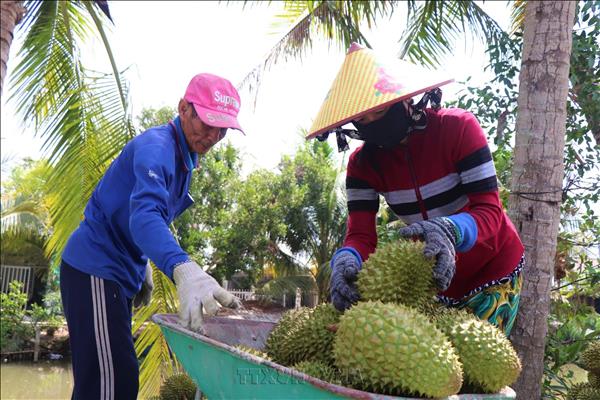
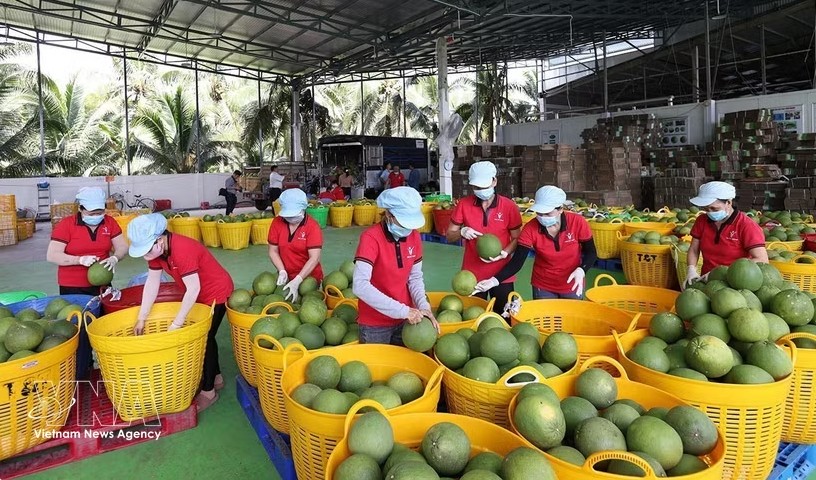
Across various localities like Guangxi, Yunnan and Chongqing, imported tropical fruits such as durian, mangosteen, longan, mango and pineapple have become commonplace in wholesale markets, supermarkets and modern retail chains. Among them, Vietnamese fruits, including dragon fruit, mango, rambutan and durian, are expanding their presence and contributing to a more diverse supply for Chinese consumers.
The growing variety of imported fruits has also been accompanied by lower retail prices, improving affordability and accessibility. Industry distributors attribute the trend to intensified competition among suppliers, alongside more efficient logistics networks and faster customs clearance procedures that have helped reduce costs throughout the supply chain.
According to a trader at a wholesale market in Nanning, the broader range of imported fruits, including those from Vietnam, has provided consumers with more choices in terms of quality and price while sustaining steady demand even during peak periods.
The expansion of fruit trade has been supported by the implementation of the Regional Comprehensive Economic Partnership (RCEP) and ongoing efforts to upgrade the China – ASEAN Free Trade Area. These initiatives have streamlined customs and quarantine procedures, lowered trade barriers and facilitated smoother market access for ASEAN exporters.
In Yunnan province, businesses have benefited from the use of RCEP certificates of origin, which have helped cut import costs and improve supply chain efficiency. Local customs authorities reported a sharp increase in the number of companies utilising preferential tariff schemes for fruit imports from ASEAN, further boosting regional agricultural trade.
At the same time, investments in logistics infrastructure are enhancing trade connectivity. The China – Laos railway, cross-border logistics corridors and modern cold-chain facilities have significantly reduced transport times, ensuring imported fruits arrive on shelves with their freshness and quality intact.
With China remaining one of the world's largest consumer markets and economic integration between China and ASEAN continuing to deepen, particularly through the planned upgrade of their free trade agreement, ASEAN fruit exports are expected to sustain robust growth. Vietnamese fruit, in particular, is well positioned to further strengthen its role in regional agricultural supply chains and expand its share of the Chinese market./.