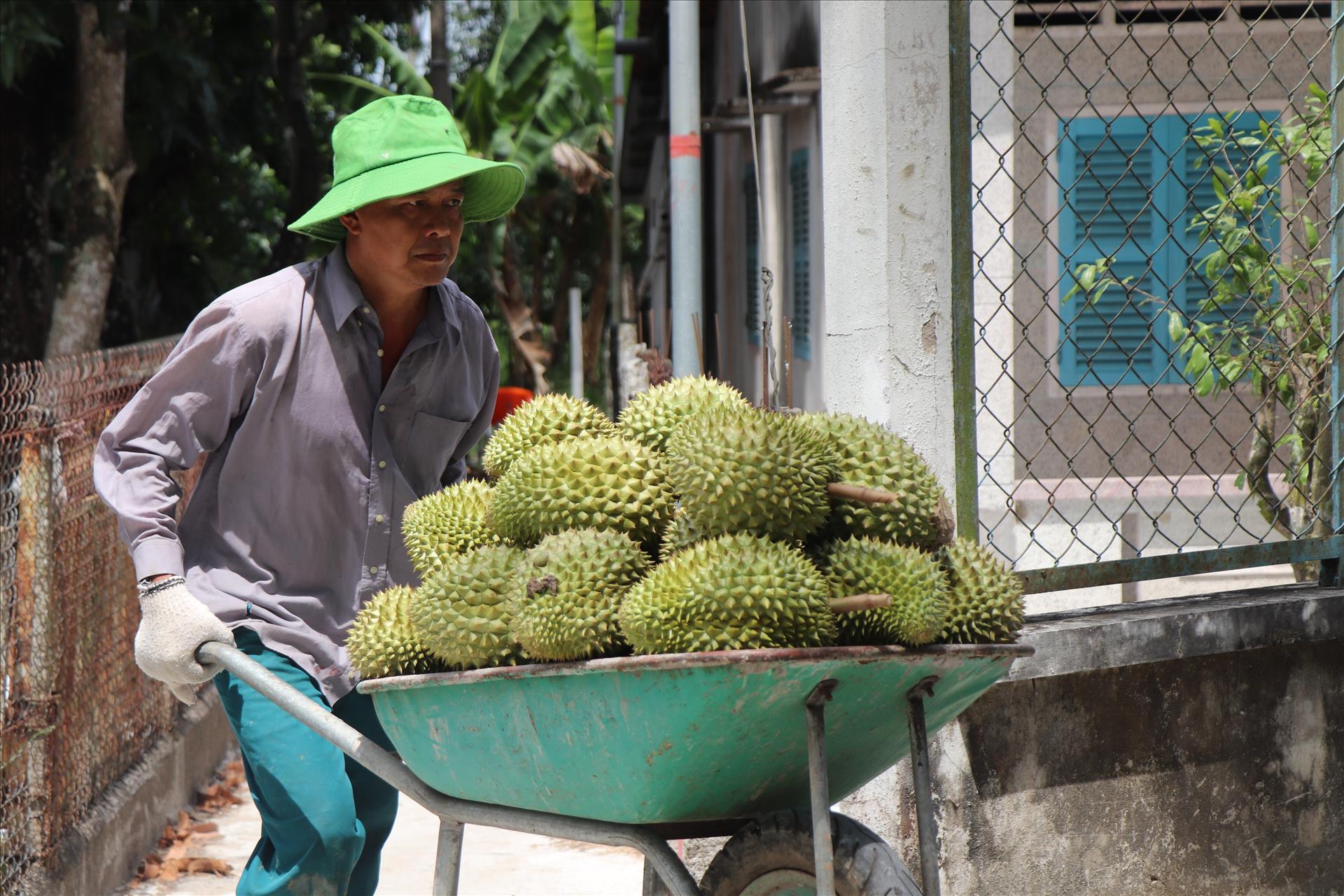
Dak Lak, Vietnam’s largest durian-producing province, is expected to harvest more than 500,000 tonnes this year, up around 20% from 2025 thanks to expanding cultivation areas and improved yields.
According to the Dak Lak Durian Association, the Central Highlands harvest season does not overlap with Thailand’s production cycle and has been less affected by heavy metal concerns, giving Vietnamese durian a competitive edge. More importantly, Vietnam is expected to begin official durian exports to India from this July, opening a significant new avenue for market diversification.
The Department of Plant Production and Protection under the Ministry of Agriculture and Environment said Vietnam and India are completing the final technical procedures required for market access. If all goes according to plan, Vietnam will become the first country to export durian to the Indian market, ahead of Thailand.
Le Anh Trung, Chairman of the Dak Lak Durian Association, said durian remains a relatively new product for Indian consumers. While the market is highly segmented, India has a large and growing middle- and upper-income population with the purchasing power to support premium fruit imports.
Dang Phuc Nguyen, General Secretary of the Vietnam Fruit and Vegetables Association (VINAFRUIT), described India as a long-term strategic market rather than an immediate windfall opportunity. In the near term, India is likely to be better suited to processed products such as frozen and dried durian rather than fresh whole fruit, given the advantages of longer shelf life and easier logistics, he said.
The outlook is reinforced by the success of Vietnamese dragon fruit in India. In 2025, dragon fruit exports to the market reached 42 million USD, up 6.4% year-on-year, making India one of the product’s largest export destinations after China.
Despite a challenging start to 2026 that saw domestic durian prices decline sharply, export performance remained robust. In the first four months of the year, durian exports reached 293 million USD, up 60% from the same period last year.
China remained the dominant market, accounting for 256 million USD in export value, an increase of 143% year-on-year. Exports to the US rose 12% to nearly 7 million USD, while shipments to the RoK surged 201% to 1 million USD.
Nguyen noted that Vietnam currently exports only frozen durian to the RoK. However, demand has been rising rapidly, supported by the growing Vietnamese community there and by producers’ efforts to meet the market’s stringent food safety requirements.
He said growth in demanding markets such as the RoK, the US, Japan, Australia and Europe remains modest in absolute terms, but represents an important foundation for long-term expansion.
Trung, meanwhile, stressed that China will remain the industry’s key market in the foreseeable future. To maintain market share, he said, the sector must strengthen traceability systems covering the entire supply chain, from cultivation and harvesting to logistics and distribution, while also expanding into promising new destinations such as India.
He also called for stronger government support to promote sustainable durian-growing areas and encourage investment in deep processing, helping increase value-added production and reduce risks associated with price volatility and market fluctuations./.