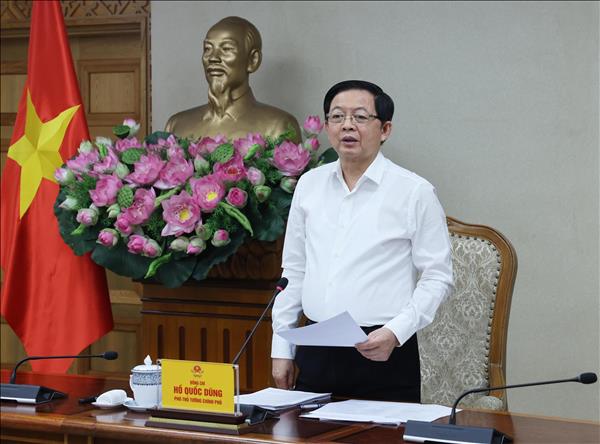
Building on the strong foundations of bilateral cooperation, Minister of Foreign Affairs Le Hoai Trung expressed Vietnam’s wish for Sweden to remain one of its foremost partners in Europe in the fields of science and technology, innovation, digital transformation and green development.
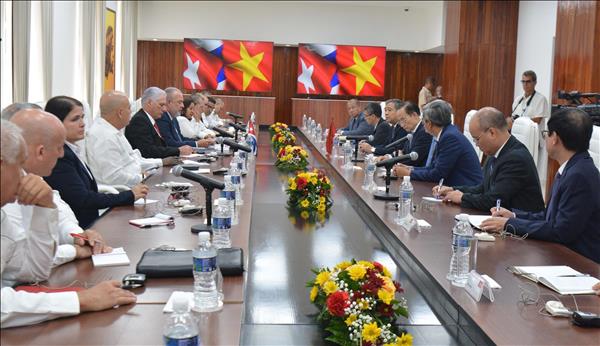
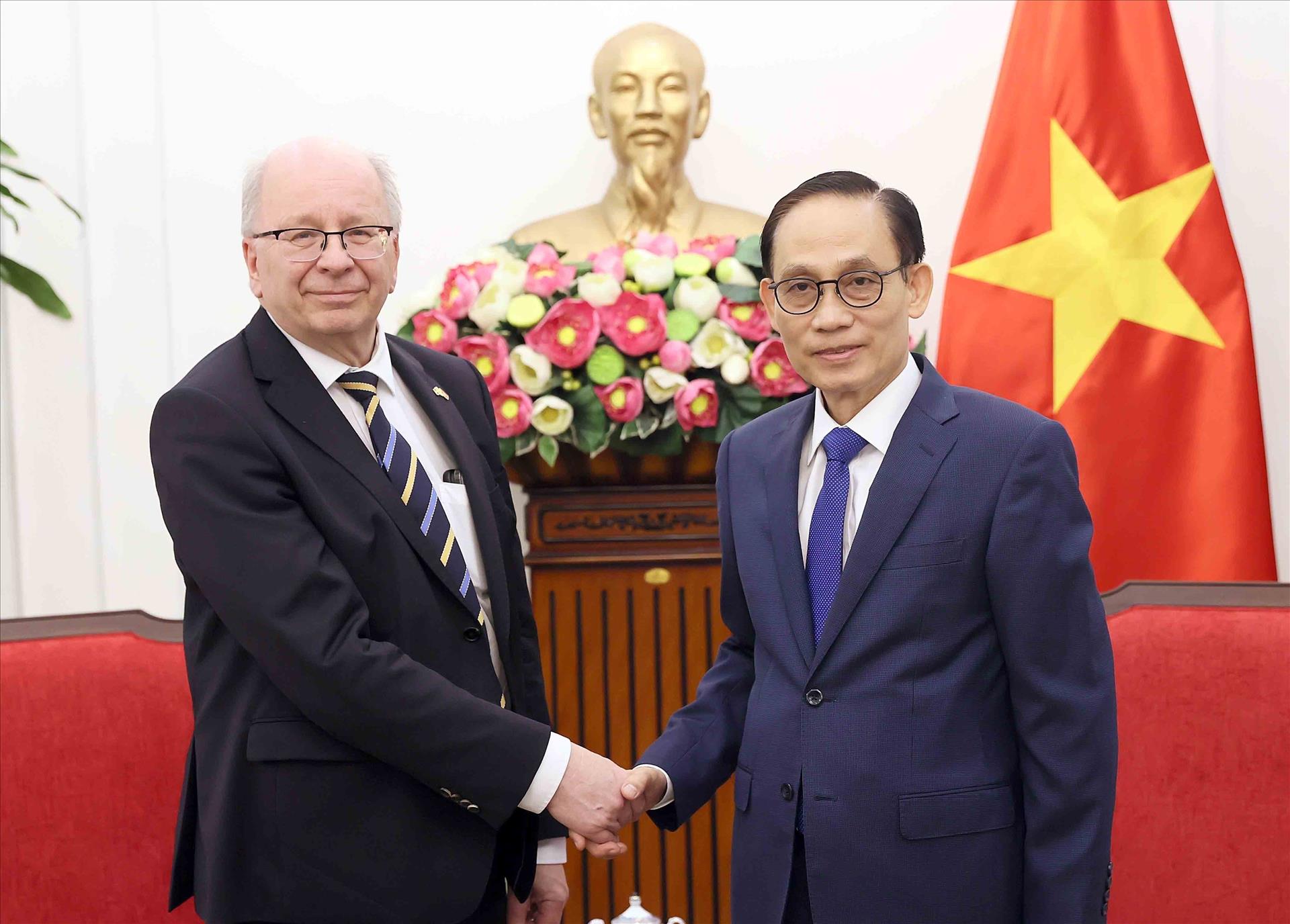
Trung made the remarks while receiving Swedish State Secretary for Foreign Affairs Dag Hartelius in Hanoi on May 19 during the latter’s visit to Vietnam from May 18 – 19, where he co-chaired the second Vietnam – Sweden deputy foreign minister-level political consultation. The visit took place against the backdrop of increasingly positive bilateral ties, particularly following the establishment of a strategic partnership on science, technology and innovation in June last year.
He told the guest his belief that the visit and the outcomes of the political consultation would help strengthen political trust, enhance mutual understanding and create fresh momentum for the traditional friendship between Vietnam and Sweden to develop in a deeper, more substantive and more effective manner in the time to come.
The minister affirmed that Vietnam consistently treasures its traditional friendship with Sweden and deeply appreciates the support and solidarity extended by the Swedish Government and people during Vietnam’s most difficult periods, as well as throughout the country’s current development process.
He also suggested both sides step up the effectiveness of existing cooperation mechanisms while exploring new frameworks to further strengthen collaboration in science, research, culture and education.
For his part, Hartelius stressed that Sweden attaches great importance to its special, historic relationship with Vietnam, praising the country’s impressive socio-economic achievements in recent years and noting the positive feedback Swedish businesses have given regarding Vietnam’s investment and business environment.
The Swedish official commended bilateral cooperation in healthcare, and education - training, affirming the European nation’s desire to expand research collaboration, welcome more Vietnamese researchers and students, and share expertise in innovation, high technology and cybersecurity.
Hartelius also praised Vietnam’s active and responsible role at major international forums and conferences, including the 11th Review Conference of the Treaty on the Non-Proliferation of Nuclear Weapons (NPT) held recently in New York.
Both officials agreed to increase exchanges and contacts at all levels and across all channels, while effectively leveraging the strategic partnership on science, technology and innovation to implement concrete cooperation projects in healthcare, energy, green transition and sustainable development.
They also pledged to continue close coordination at international organisations and forums in support of multilateralism and the peaceful settlement of disputes in accordance with the United Nations Charter and international law.
Earlier the same day, Swedish State Secretary for Foreign Affairs Dag Hartelius and Vietnamese Deputy Minister of Foreign Affairs Le Thi Thu Hang co-chaired the second political consultation between the two foreign ministries.
Hang outlined Vietnam’s major development orientations for the coming period, highlighting the goal of maintaining high and sustainable growth during 2026 – 2030 based on science, technology, innovation and digital transformation. She also expressed her hope that both countries would continue to build upon the longstanding friendship cultivated by generations of leaders and citizens.
She voiced her wish for Sweden to launch more “lighthouse projects” in Vietnam, following symbolic cooperation initiatives such as the Vietnam National Children's Hospital and the Bai Bang paper mill, while emphasising the need to expand into new and practical areas of cooperation aligned with each country’s development priorities.
Hartelius stated that Vietnam is becoming an increasingly important and reliable partner of Sweden in the region and in global value chains, noting that Swedish enterprises are showing growing interest in the Vietnamese market and increasingly view Vietnam as one of Asia’s key growth markets.
He stated that Sweden stands ready to step up investment and provide suitable financial solutions for major green and sustainable infrastructure projects in Vietnam.
The Swedish State Secretary also agreed with proposals from the Vietnamese Deputy FM on strengthening cooperation across multiple sectors, particularly through effective implementation of the strategic partnership on science, technology and innovation signed during Prime Minister Pham Minh Chinh’s official visit to Sweden in June 2025.
It is also necessary to step up the effective implementation of high-level agreements, strive to increase bilateral trade turnover, and facilitate each side’s goods gaining greater access to one another’s markets as well as regional markets, he noted.
Both sides also agreed to expand cooperation in high technology, renewable energy, smart ports, circular economy, green logistics and sustainable urban development, while promoting high-quality workforce training, scholarships for Vietnamese students and joint research programmes between universities and research institutes of the two countries.
In healthcare, education, culture and people-to-people exchanges, the two sides agreed to continue implementing practical cooperation projects marking the 50th anniversary of Vietnam–Sweden healthcare cooperation. They also pledged to share experience in sustainable heritage management in support of Vietnamese cities within the UNESCO Creative Cities Network, including Hanoi, Hoi An and Da Lat, while encouraging greater people-to-people exchanges, locality-to-locality cooperation and business connectivity.
On this occasion, Hang urged Sweden to encourage remaining EU member states to ratify the EU – Vietnam Investment Protection Agreement (EVIPA) at an early date, while supporting the European Commission’s early removal of its “yellow card” warning against Vietnamese seafood exports. She also called for continued favourable conditions for the Vietnamese community in Sweden to live and work stably and integrate successfully into the host’s society.
Discussing regional and international issues of mutual concern, both sides affirmed their support for multilateralism and free trade, as well as the peaceful settlement of disputes and conflicts in line with international law and the UN Charter. They also stressed the importance of maintaining peace, stability, security, safety, and freedom of navigation and overflight in accordance with international law, particularly the 1982 United Nations Convention on the Law of the Sea (UNCLOS).
Both countries agreed to strengthen mutual support and close coordination at multilateral forums, especially the UN and ASEAN – EU frameworks, contributing to peace, stability and sustainable development in the region and the world./.