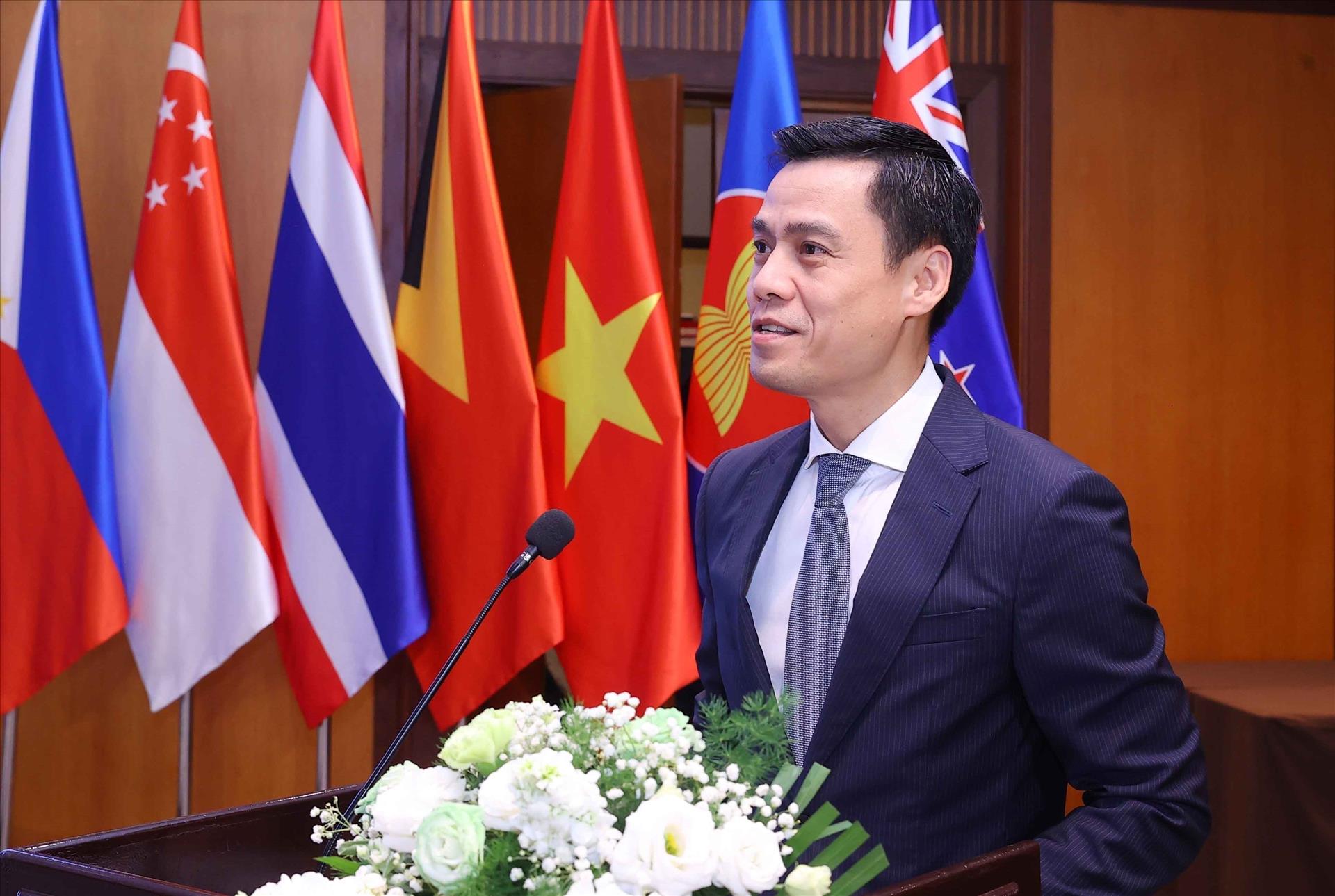
Vietnam remains committed to promoting more effective and substantive cooperation between ASEAN and New Zealand as well as the UK for the shared benefit of all sides, according to Deputy Minister of Foreign Affairs Dang Hoang Giang at two events held on the sidelines of the ASEAN Future Forum (AFF) 2026 in Hanoi on June 10.
The ASEAN-New Zealand Forum on Subregional Cooperation and a workshop marking the fifth anniversary of ASEAN-UK Dialogue Partnership relations (2021-2026) were hosted by Vietnam’s Ministry of Foreign Affairs in its capacity as coordinator of ASEAN’s relations with New Zealand and the UK for 2024-2027.
In his opening remarks at the ASEAN-New Zealand Forum, Giang noted that the Mekong subregion is facing increasingly serious challenges, including climate change, water security and food security, which require regional rather than unilateral responses.
As coordinator of ASEAN-New Zealand relations, Vietnam is committed to promoting a more effective and substantive ASEAN–New Zealand partnership, he said, stressing that political commitments must be translated into concrete action programmes that deliver tangible benefits for people.
Co-chairing the forum, Acting ASEAN SOM Leader of New Zealand, Alana Hudson described the Mekong as home to dynamic economies with rich cultural heritage, and one of the world's most important river systems, supporting the livelihoods of millions of people. However, she said the subregion also faces interconnected challenges related to climate change, water resource management, inclusive growth and economic resilience.
The forum offers an important opportunity for participants to exchange views, listen to one another and deepen their understanding of the region’s opportunities and challenges, she said.
Experts highlighted the strategic importance of subregional cooperation within the regional architecture and ASEAN cooperation framework. Discussions underscored the need to integrate Mekong cooperation more closely into ASEAN’s agenda and strengthen coordination and resources mobilisation among ASEAN’s dialogue partners, including leveraging New Zealand’s multilateral standing, technical expertise, practical experience and green financing resources.
Delegates pointed to New Zealand’s potential contributions to the Mekong sub-region, including in climate-resilient smart agriculture, environmental governance, land-resource management, drought- and salt-resistant crops, circular technologies and biotechnology supporting green transition efforts.
They recommended incorporating subregional cooperation priorities into the ASEAN-New Zealand Plan of Action 2026-2030, particularly under the People and Planet pillars; and enhancing the application of emerging technologies, including artificial intelligence; and establishing an annual ASEAN-New Zealand dialogue on subregional cooperation.
Participants agreed that subregional cooperation is not merely a development support issue but an essential component to ensure ASEAN’s resilience, prosperity and inclusive development.
At the ASEAN-UK workshop, delegates reviewed progress made since the UK became an ASEAN’s Dialogue Partner in 2021.
In his speech, Giang, who is also head of the ASEAN Senior Officials' Meeting (SOM) delegation of Vietnam, described that the partnership as a significant milestone reflecting the shared interest of ASEAN and the UK in maintaining peace, stability, cooperation and prosperity in the region.
The achievements recorded over the past five years have laid a solid foundation for cooperation, he said, including greater UK engagement in ASEAN-led mechanisms and stronger support for ASEAN Community-building efforts.
The value of ASEAN-UK relations lies in their practical contribution to ASEAN’s priorities and strengthening the region’s adaptability and resilience, Giang stressed.
UK Parliamentary Under-Secretary of State for Foreign, Commonwealth and Development Seema Malhotra reaffirmed the UK’s commitment to deepening ties with ASEAN and voiced strong support for ASEAN’s central role in the regional architecture and the ASEAN Outlook on the Indo-Pacific (AOIP).
Many delegates stressed that, ASEAN and the UK should recalibrate their priorities to better adapt to emerging challenges, deepen practical cooperation, and deliver more tangible benefits to people, businesses and the two regions in the years ahead.
Participants generally agreed that while the partnership is progressing in the right direction, its strategic potential remains far from fully realised. They called for closer strategic dialogue, broader cooperation and more flexible mechanisms to address emerging regional challenges.
Priority areas identified included global governance, economic resilience, supply-chain security, critical minerals, maritime domain awareness, emerging technologies, digital governance, green finance, renewable energy and port infrastructure.
Young leaders also shared proposals for expanding cooperation in technology, science and AI, reflecting the aspirations of young generations for the region’s future.
On the sidelines of the events, Giang held bilateral meetings with senior representatives from China, Japan and the UK to discuss bilateral cooperation and coordination within frameworks for cooperation between ASEAN and its partners./.