In the News
Vietnam ready to work with Canada to build substantive Strategic Partnership: Top leader
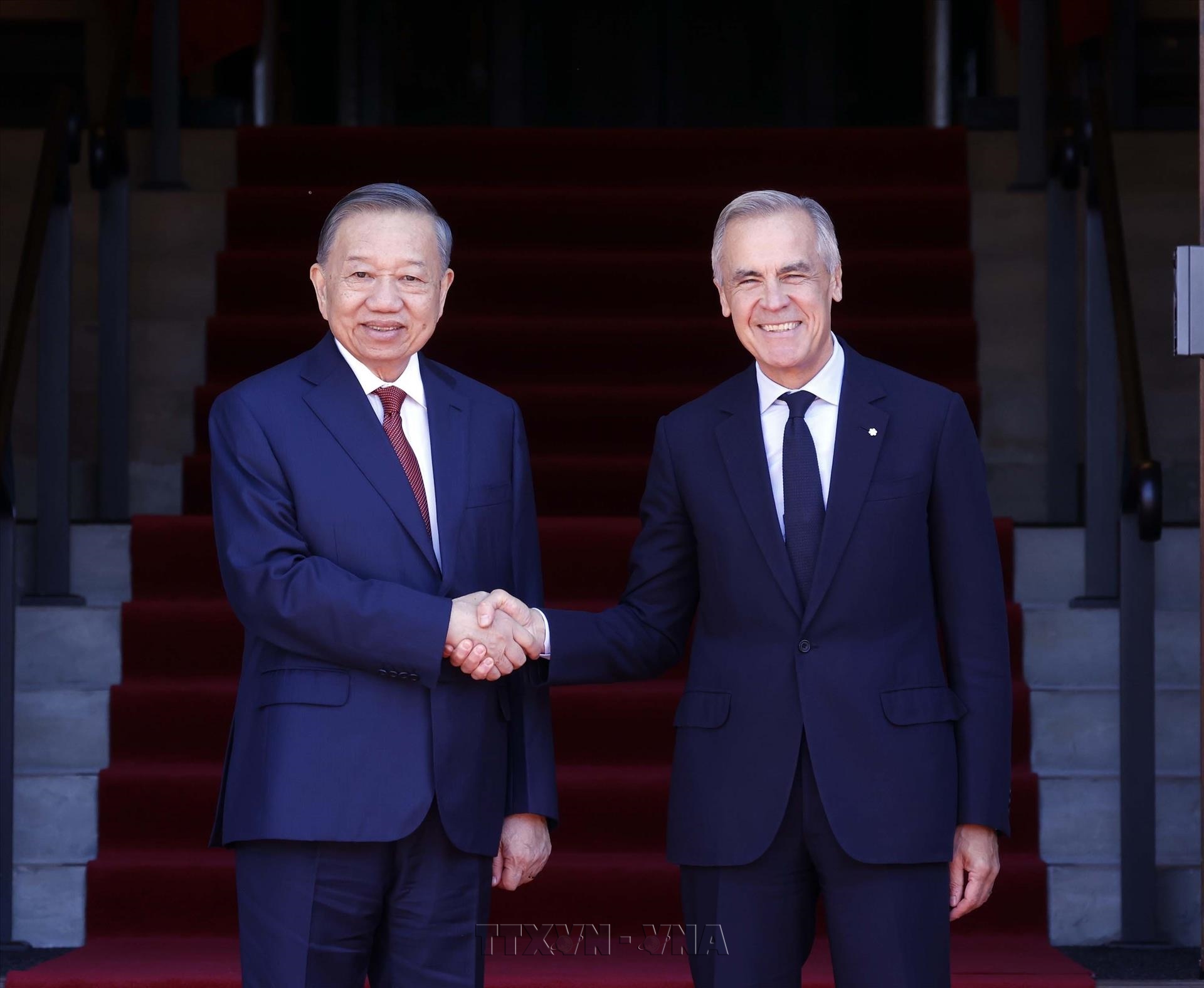
Vietnam is ready to work with Canada to build a substantive Strategic Partnership that brings practical benefits to the peoples of both countries and contributes to the international community, General Secretary of the Communist Party of Vietnam Central Committee and President To Lam has said.
Delivering a policy speech on the Vietnam–Canada Strategic Partnership in a changing world at the Parliament of Canada in Ottawa on September 24 afternoon (local time), the top Vietnamese leader said the two countries' decision to elevate their relations to a Strategic Partnership comes as a result of more than five decades of friendship and cooperation, reflecting their commitment to jointly investing in the future.
He stressed that the Strategic Partnership should help the two sides better understand each other, coordinate more effectively and deliver tangible results for businesses and people.
General Secretary and President Lam said the world is undergoing profound changes, requiring countries to strengthen their capacity to adapt while safeguarding development achievements.
For Vietnam, he said, its response has been shaped by its history and renewal experience. Having paid a heavy price for peace, Vietnam
remains committed to a foreign policy of independence, self-reliance, self-strengthening, cooperation and common development, while defending righteousness, justice, and what is right on the basis of international law and the United Nations Charter.
With more than 3,000km of coastline, Vietnam also aims to become a strong maritime nation, develop its economy from the sea while protecting marine ecosystems and coastal livelihoods, expand cooperation in marine science and global ocean governance, and contribute to global sea and ocean governance.
General Secretary and President Lam said Vietnam's new development path will create more opportunities for cooperation with Canada. The combination of Canada's knowledge, technology and resources with Vietnam's market, abundant and increasingly skilled workforce and development efforts could help the two countries co-create quality products, services and jobs.
That serves as the foundation of mutual benefit for the two countries' relationship to advance further and grow increasingly solid.
The Vietnamese leader called for regular exchanges and contacts, particularly at the high level, as well as early and frank consultations on developments affecting the interests of each side. He urged the two countries to soon translate the Strategic Partnership into an action plan with clear priorities, agencies in charge of implementation, and timelines.
They should step up exchanges among parliamentary committees, parliamentary friendship groups and young parliamentarians, along
with the sharing of legislative experience in such areas as artificial intelligence governance, data protection, workers' rights and support for small- and medium-sized enterprises.
He said defence and security cooperation should be deepened in a manner consistent with the policies, needs and capabilities of each country.
In economic cooperation, the General Secretary and President noted that Vietnam has been Canada's largest trading partner in ASEAN for more than a decade.
They need to make more effective use of the Comprehensive and Progressive Agreement for Trans-Pacific Partnership (CPTPP), to help businesses, particularly small- and medium-sized ones, access each other's markets, meet standards and participate more deeply in supply chains. They should also promote bilateral trade with sustainable growth and harmonious interests, he recommended.
Vietnam also welcomes greater opportunities for Canadian goods, services and technologies, particularly agricultural products, food, clean technology and education, he said, adding that Vietnam supports the early conclusion of negotiations on a Canada–ASEAN Free Trade Agreement.
In addition, the two countries should facilitate tourism, study, research and cultural and artistic exchanges, expand training links and exchanges of lecturers and students, promote cooperation between educational institutions in credit and qualification recognition in line with each country's regulations, and strengthen coordination in regional and international mechanisms.
Vietnam and Canada share interests in maintaining peace, stability, security, safety and freedom of navigation and overflight in the East Sea, and in settling disputes by peaceful means in accordance with international law, including the 1982 United Nations Convention on the Law of the Sea.
General Secretary and President Lam said on its journey to becoming a developed country, Vietnam hopes to have Canada as a partner, he said, expressing his hope that Canada will see Vietnam as a natural, close and trusted partner in Southeast Asia.
He said the two countries could work together to become strong maritime nations and create lasting links between North America and
Southeast Asia, the Pacific and Indian oceans, development and innovation, and peace and prosperity.
The Vietnamese leader said the world will continue to change and called on Canadian parliamentarians to continue to support bilateral cooperation so that today's vision could be translated into concrete actions and results tomorrow.
Vietnam is ready to work with Canada to build a substantive Strategic Partnership, bringing practical benefits to the peoples of both
countries and contributing to the international community, he affirmed.
In her remarks, Canadian Minister of Foreign Affairs Anita Anand said this is a very important moment for Vietnam and Canada as they reaffirm their commitments to the Indo-Pacific region. The two countries have decided to elevate their relations to a Strategic Partnership, which extends beyond trade to cooperation in education and training, innovation, people-to-people exchanges and many other areas.
The two sides will make use of this Strategic Partnership to further deepen their engagement with the Indo-Pacific region, she said, noting the Vietnamese community in Canada also contributes to this connection, enriching the diversity of Canadian society.
The Canadian official said the Strategic Partnership framework opens up opportunities for the two countries to further expand cooperation for the prosperity and security of the Indo-Pacific region. Vietnam is a leading member of ASEAN and plays a highly dynamic role in the region. Going forward, the two sides will continue to work together at both bilateral and multilateral levels for their mutual benefit.
She added Vietnam is one of Canada's major trading partners and a member of the Comprehensive and Progressive Agreement for Trans-Pacific Partnership (CPTPP), while both countries share the goal of an open, stable and prosperous Indo-Pacific region. Canada looks forward to concluding a Canada–ASEAN Free Trade Agreement in the near future.
The minister said Canada wishes to promote the energy transition, provide reliable energy supplies and give technological support to Vietnam.
Vietnam is a very important part of Canada's foreign policy, she went on, stating that the new Strategic Partnership framework will help shape priorities and bolster investment, innovation and security, opening a new chapter in bilateral relations./.