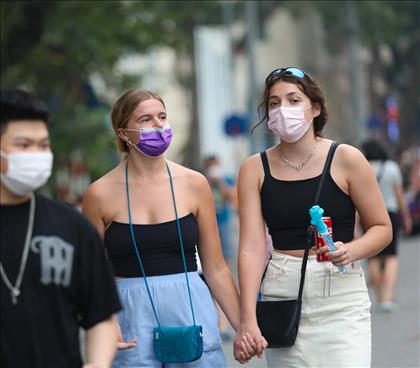

Amid sweeping changes in the global economy, society, environment, technology and demographics, the United Nations Population Fund (UNFPA) has chosen "Realising the hopes and aspirations of young people – today and for the future" as the theme of World Population Day 2026. The theme underscores the growing international recognition of young people as the largest generation in history and their crucial role in addressing demographic challenges and advancing sustainable development.
Population challenges facing Vietnam
According to the UN’s World Youth Report 2026, the global population exceeds 8.2 billion, including some 1.3 billion people aged 15-24. However, young people now account for a shrinking share of the world's population, declining from 17.8% in 2000 to 15.6% in 2025 and projected to fall to 13.3% by 2050.
Despite their potential, many young people continue to face barriers to education, employment, healthcare and development opportunities, while also coping with climate change, digital transformation and socio-economic uncertainties. These trends highlight the need for greater investment in the youth to help countries adapt to demographic change.
Deputy Minister of Health Do Xuan Tuyen said Vietnam currently has nearly 70 million people aged 15-64, giving the country the advantage of a golden population structure. This presents a valuable opportunity to improve the quality of its workforce, drive economic growth and support national development.
However, delayed marriage, declining fertility and the growing number of young people choosing not to have children pose long-term challenges, including labour shortages, faster population ageing and mounting pressure on socio-economic development. Other concerns include an imbalanced sex ratio at birth, teenage pregnancy and child marriage in some ethnic minority communities. Notably, Vietnam's population is ageing at an increasingly rapid pace.
According to Tuyen, while there was one older person for every two children in 2024, within the next five decades there are expected to be four older people for every two children. These demographic shifts will not only affect the population work but also have a direct impact on the quality of the workforce, social security system and the country's sustainable development goals. In response to these emerging challenges, young people are not only the primary beneficiaries of population policies but also a key force in helping realise the country's population and development objectives.
Dao Nhat Duy, Vice President of the Vietnam Youth Federation in Hung Yen province, said population education, reproductive and premarital healthcare, and happy family building should help young people develop a stronger sense of responsibility toward themselves, their families and society. He also stressed the need to modernise communication through digital platforms and social media to better engage young audiences and promote reliable information.
Empowering youth union members and young people to take an active role in public awareness campaigns will help foster responsible lifestyles, contributing to improvements in population quality and the quality of future workforce, he said.
Promoting people-centred policies
Countries are increasingly shifting from policies focused on population size to people-centred approaches that safeguard individuals' rights to education, healthcare, employment and family life. This is also an approach recommended by many international organisations in shaping population policies.
UN Resident Coordinator in Vietnam Pauline Tamesis said that when young people have access to quality education, decent jobs, affordable housing, healthcare and equal opportunities to share family responsibilities, they are better able to build the lives and families they aspire to. When these conditions are not guaranteed, young people will face barriers to achieving their aspirations, and no society can prosper under such circumstances.
She noted that Vietnam is at a pivotal stage of demographic transition, benefiting from its largest-ever generation of young people while simultaneously entering a period of rapid population ageing. As the demographic dividend will not last indefinitely, investing in the youth should be viewed as a shared responsibility across society.
Vietnam is also translating this approach into practice through the ongoing refinement of its population policies.
Tuyen said the 15th National Assembly adopted the Law on Population and approved the National Target Programme on Healthcare, Population and Development for the 2026-2035 period, providing a stronger legal framework for policies related to population nationwide.
He asked for effective implementation of the new law and the national target programme, stronger public communication, wider application of digital technologies, improved demographic forecasting and closer coordination among ministries and localities to ensure adequate resources and effective policy execution.
As Vietnam adapts to demographic change, experts held that empowering young people through education, healthcare, employment and family support will be essential to transforming the country's demographic advantage into a motivation to the country’s sustainable development./.