Vietnam and India should strengthen maritime cooperation, enhance capacity-building and promote resource sharing to maintain a peaceful, stable and secure maritime environment based on international law in the Indo-Pacific region.
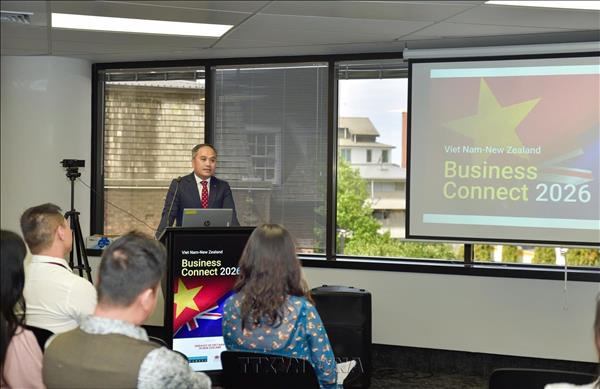
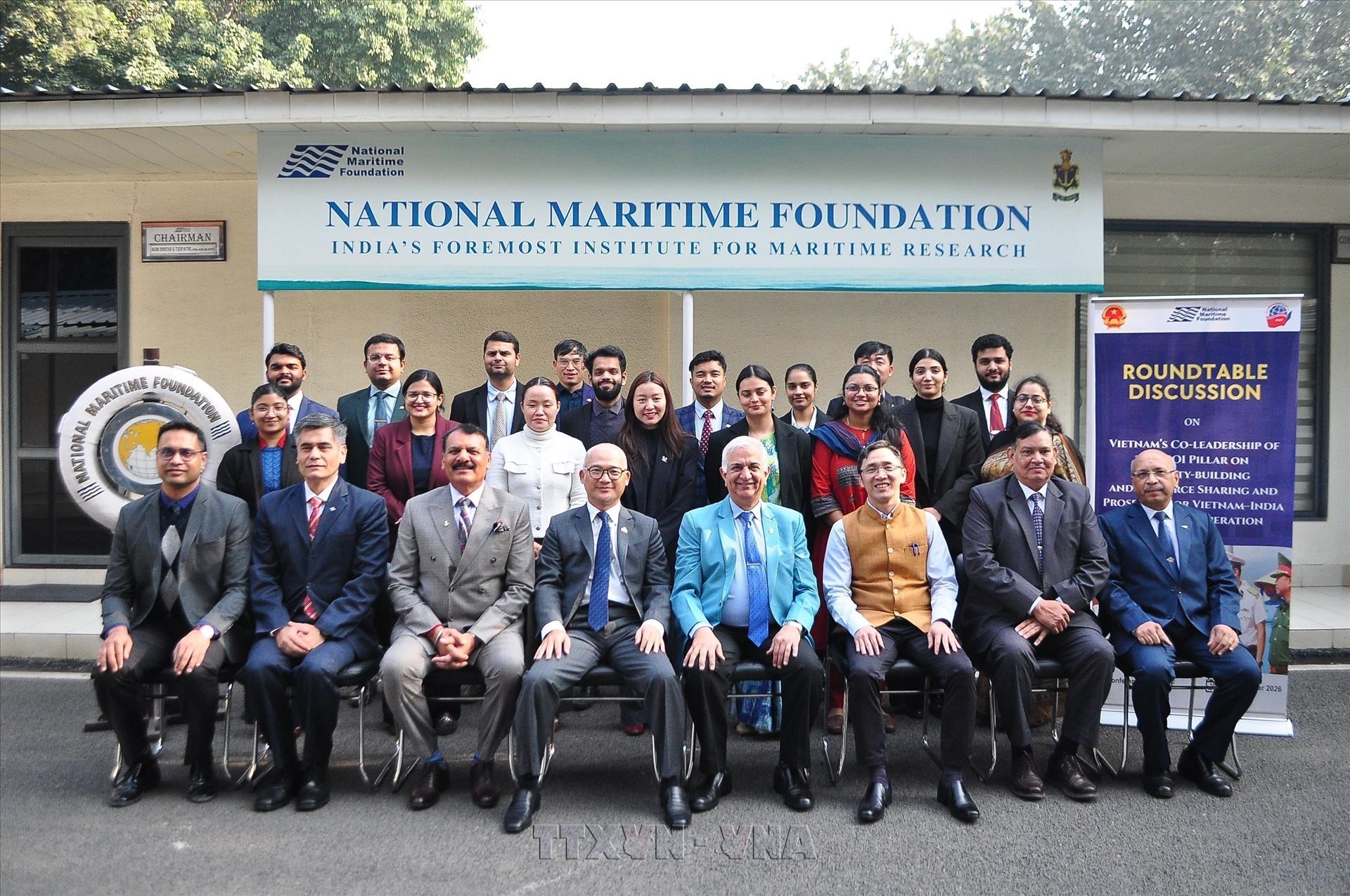
The message was highlighted at a roundtable discussion on Vietnam’s role as co-lead of the “capacity building and resource sharing” pillar of India's Indo-Pacific Oceans Initiative (IPOI), and prospects for bilateral maritime cooperation. The event was jointly organised by the Vietnamese Embassy in India and the India-based National Maritime Foundation (NMF) on November 26.
In his opening remarks, Vietnamese Ambassador to India Trinh Minh Manh said maritime security and the stability of shipping routes are vital to coastal countries and the global economy amid intertwined challenges including maritime disputes, piracy, illegal, unreported and unregulated (IUU) fishing, environmental pollution, natural disasters and seafarer protection.
He called for stronger cooperation in raising maritime domain awareness, sharing information and building law enforcement capacity, stressing that common threats require collective efforts.
Vietnam and India share strategic interests and a commitment to peace, stability and a rules-based maritime order. Bilateral cooperation has expanded, covering naval exchanges, port calls, coast guard coordination, maritime security dialogues, officer training, hydrography, marine research, search and rescue, and environmental protection.
Vietnam’s participation in the IPOI and co-leadership of its fourth pillar of “capacity building and resource sharing” reflect its commitment to proactively contributing to regional maritime cooperation mechanisms, providing opportunities to promote practical initiatives and tap into each country's experience and strengths, the ambassador said.
Admiral Dinesh K. Tripathi, NMF Chairman and former Chief of the Indian Naval Staff, highlighted the progress of the bilateral maritime partnership, built on trust through port visits, delegation exchanges and maritime exercises.
He noted that shipping lanes connecting the Indian Ocean, Southeast Asia and the East Sea are vital to global trade and energy flows, but face growing challenges from strategic competition, grey-zone activities, IUU fishing, threats to undersea infrastructure and climate change.
Emphasising the need for practical and regular cooperation mechanisms, he proposed institutionalising maritime manpower training, increasing information sharing and maritime domain awareness through mechanisms such as the Information Fusion Centre – Indian Ocean Region (IFC-IOR), and promoting joint technology development, maintenance and technical resource sharing.
He said capacity building should go beyond equipment provision to include personnel training, independent analytical capabilities, institutional coordination and improvements to legal frameworks.
Presenting Vietnam’s orientations, Dr Vu Hai Dang, Acting Director of the Centre for Maritime Diplomacy at the Diplomatic Academy of Vietnam, said the country aims to become a strong maritime nation through sustainable marine economic development, advanced science and technology, and modern ocean governance.
Its IPOI priorities include upholding international law, strengthening maritime security and law enforcement, sharing information, and boosting coordination in search, rescue and disaster relief. Vietnam also seeks cooperation in offshore renewable energy, shipbuilding, marine tourism, aquaculture, biotechnology and artificial intelligence application in ocean governance.
Dang said that as a co-leader of the IPOI's fourth pillar, Vietnam could contribute through workshops and training programmes for regional countries, sharing experience in shipbuilding, aquaculture, marine spatial planning and law enforcement, and promoting joint research on biodiversity, the blue economy and climate change adaptation.
NMF researcher Sushmita Sihwag proposed focusing bilateral cooperation on maritime domain awareness, law enforcement, humanitarian assistance and disaster relief, shipbuilding, hydrography, oceanography and aquaculture. She also suggested establishing focal points for coordination and specialised working groups, exploring a Vietnam–India IPOI partnership fund and launching pilot projects for eventual regional expansion.
NMF senior research fellow Colonel Ranendra Singh Sawan shared India’s experience in human resources training, technology transfer and maritime cooperation, citing deep-sea exploration training for more than 130 personnel from 16 countries and maritime information-sharing activities involving 85 countries.
Participants agreed that capacity building and resource sharing should link maritime security with scientific and technological cooperation, marine economic development and environmental protection.
Vietnam’s co-leadership of the IPOI’s fourth pillar alongside India, the European Union, Germany and the Netherlands is expected to further strengthen the two countries’ Enhanced Comprehensive Strategic Partnership and contribute to a peaceful, stable, free, open and prosperous Indo-Pacific region./.