Vietnam is implementing 19 cooperation projects with the IAEA in different areas, including agriculture, healthcare, nuclear safety and security, and physical and chemical sciences. The initiatives demonstrate how nuclear technologies can contribute to socio-economic development.
Since becoming a member of the IAEA since 1957, Vietnam has actively participated in most international conventions under the agency’s framework.
Najat Mokhtar, IAEA Deputy Director General and Head of the Department of Nuclear Sciences and Applications, said Vietnam - IAEA cooperation reflects the sustained efforts of generations of Vietnamese scientists to harness nuclear science and technology for socio-economic development.
She also reaffirmed the agency’s commitment to supporting Vietnam in ensuring the safety and security of the peaceful use of atomic energy, while encouraging the country to engage more actively in IAEA initiatives.
Between 2018 and 2023, the IAEA directly supported 17 national projects in Vietnam, while the country also joined 67 regional and interregional projects under the Regional Cooperative Agreement (RCA) and other cooperation frameworks. The cooperation helped strengthen Vietnam's human resources, enhance its nuclear safety and security infrastructure, and advance the application of nuclear techniques for socio-economic development.
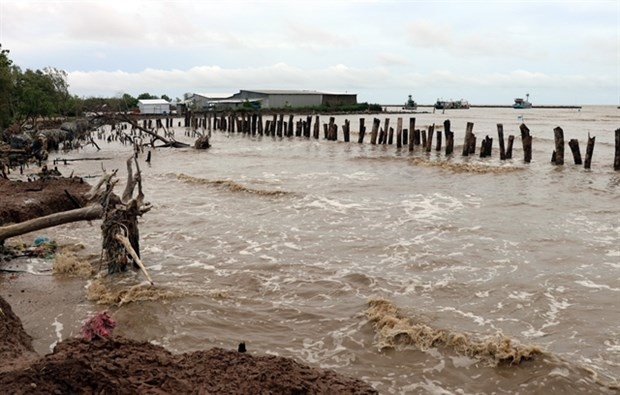
Since 2023, the IAEA and the Vietnam Atomic Energy Institute (VINATOM) have worked together to assess and monitor marine pollution and climate change impacts along Vietnam’s coastline. The project supports the protection of fisheries resources, safeguards coastal livelihoods and improves early detection of marine pollution.
Minister of Science and Technology Vu Hai Quan said Vietnam places great importance on the development of nuclear science and technology, viewing it as one of the key pillars of the national energy structure. He noted that nuclear science and technology has delivered tangible benefits in agriculture, water resource monitoring, industry, healthcare, and standardisation of measurement systems.
According to VINATOM President Tran Chi Thanh, Vietnam is expanding the use of radiation technologies in cancer treatment, mutation breeding for crop development, food irradiation and sterile insect techniques to control pests affecting fruits such as lychee and dragon fruit. The institute is also promoting research cooperation to broaden nuclear technology applications for socio-economic development.
VINATOM is a long-standing member of the IAEA’s Analytical Laboratories for the Measurement of Environmental Radioactivity (ALMERA) network. In 2026, VINATOM’s Nuclear Research Institute assumed a new role in a regional project to train laboratories across Asia-Pacific to apply harmonised advanced techniques for measuring radioactivity in seawater, helping ensure reliable environmental monitoring and coordinated responses to pollution incidents.
Nguyen Hoang Linh, Director of the Vietnam Agency for Radiation and Nuclear Safety under the Ministry of Science and Technology, said the IAEA’s support is particularly important as Vietnam implements its strategy for the peaceful use of atomic energy through 2035 with a vision to 2050, develops the Ninh Thuan 1 and Ninh Thuan 2 nuclear power projects, and builds a nuclear science and technology research centre.
Vietnam and the IAEA have signed the Country Programme Framework (CPF) for technical cooperation in developing atomic energy applications for 2022–2027. The two sides are preparing the next cooperation framework, focusing on practical, feasible and priority programmes that deliver tangible benefits./.