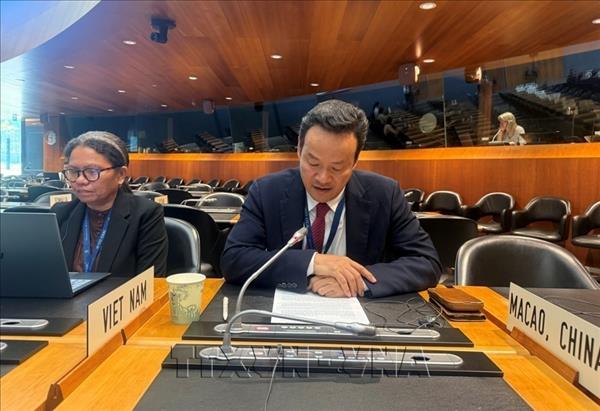
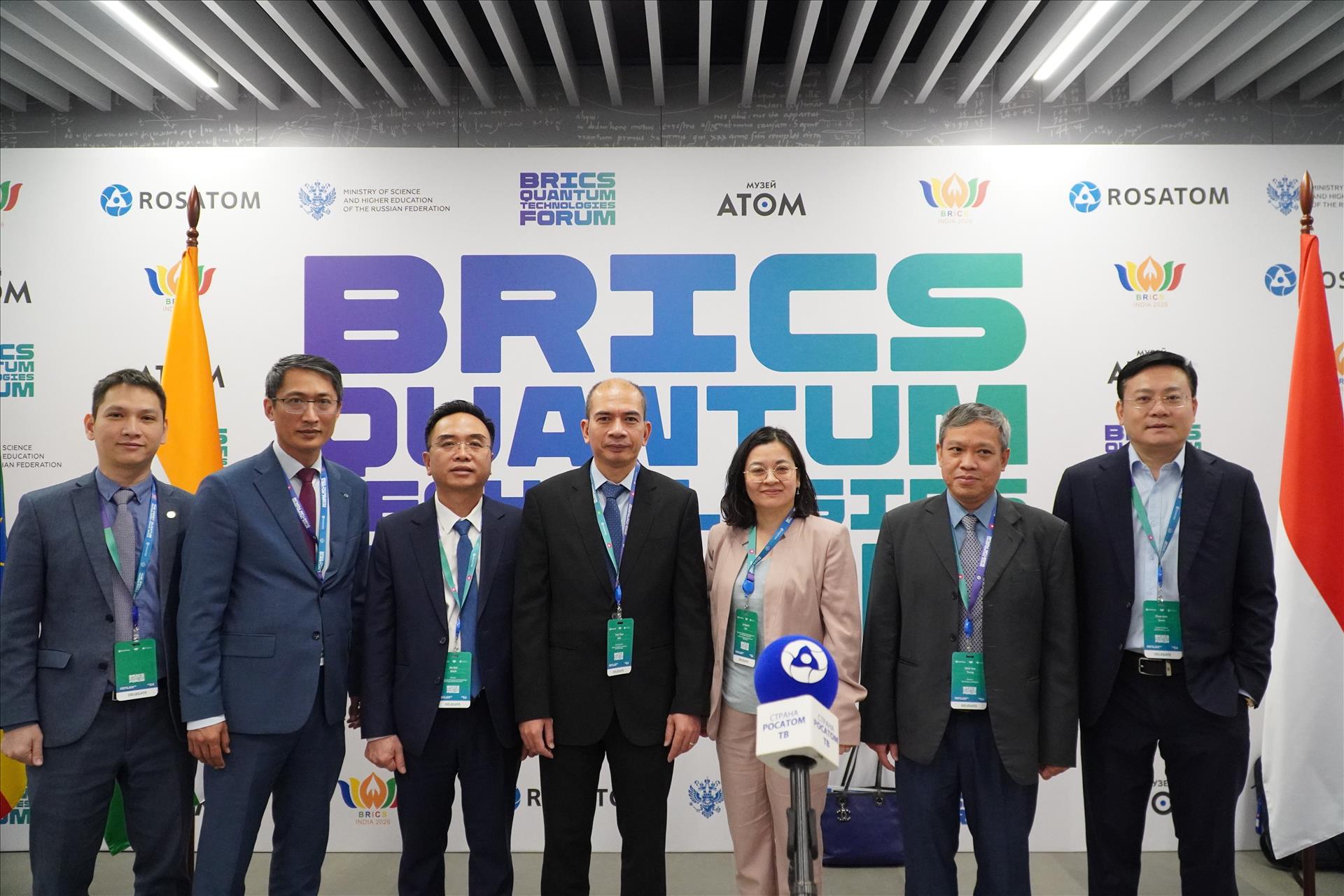
Co-hosted by the Russian Ministry of Science and Higher Education and the State Atomic Energy Corporation Rosatom, the event drew more than 300 attendees from BRICS countries and partner nations, providing a platform for policymakers, scientists, research institutions, universities, and tech enterprises to debate the latest in quantum science and technology.
A VAST report was delivered by Director of the Institute of Physics Assoc. Prof. Dr. Dinh Van Trung, outlining Vietnam’s approach to advancing quantum science and technology.
Leveraging Vietnam’s strengths in maths, theoretical physics and computational science, VAST is zeroing in on research areas that match national capabilities, including quantum simulation, algorithms, materials, sensing, post-quantum cryptography and information security apps.
Alongside open discussions, the Vietnamese delegation held bilateral and multilateral meetings with international counterparts to share views on Vietnam’s quantum development, global trends and partnership opportunities inside the BRICS framework.
Addressing a plenary session, Russian Minister of Science and Higher Education Valery Falkov stressed the ample potential for scientific and educational cooperation among BRICS nations in the quantum domain. Collaboration between Russian research institutes and universities under national quantum computing and quantum communications roadmaps has enabled substantial progress in the field, he said.
Director General of Rosatom Alexey Likhachev underscored the importance of advanced technologies in ensuring national sovereignty. He pointed to Russia’s extensive experience in exporting hi-tech capabilities through nuclear energy projects, which have helped partner countries develop new industries, bolster workforce training, and advance scientific research.
Likhachev also confirmed Russia’s readiness to share that expertise with partners.
Members of the BRICS Nuclear Energy Platform issued a joint statement recognising quantum computing’s growing role in shaping the future of energy, and called for tighter cooperation among BRICS countries to accelerate quantum computing development and unlock nuclear energy’s full potential.
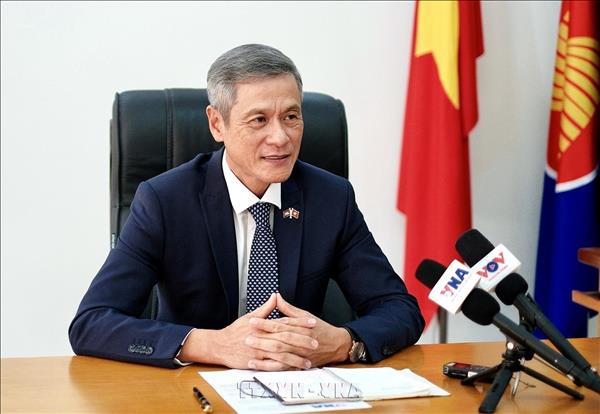
Talking with policymakers, scientists, and media at the forum, Anh said Vietnam is pursuing a focused approach to quantum technology, rather than trying to compete head-to-head with leading technology powers across the full spectrum of quantum research.
He said Vietnam’s strategy centres on cultivating a quality workforce, establishing strong research groups, bolstering shared research infrastructure, and expanding collaboration with leading international scientific centres, a step-by-step buildup of internal capability in a domain defined by long investment cycles and steep foundational science requirements.
Beyond policy and strategy discussions, the forum offered technical visits to some of Russia’s premier quantum research facilities, including the Russian Quantum Centre, the Cold-Ion Quantum Computing Laboratory, the Laboratory of Coherent Microoptics and Radiophotonics, the Lebedev Physical Institute, MISIS University, and a lab specialising in superconducting quantum technologies.
Participants described the international dialogue among nascent “quantum communities” at the Moscow forum as a critical first step toward a sustainable BRICS quantum ecosystem built on mutual respect, trust and equality.
The overall goal is to advance quantum technologies in ways that solidify the technological base of BRICS nations and accelerate industrialisation through quantum-driven innovation./.