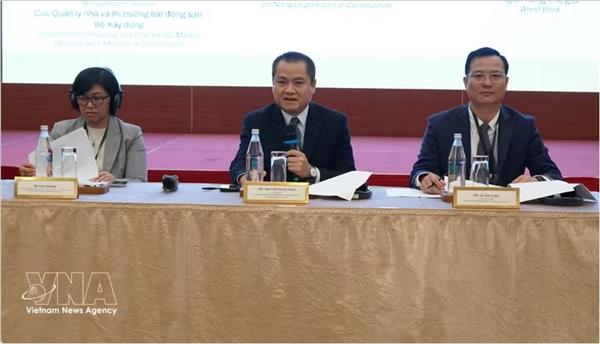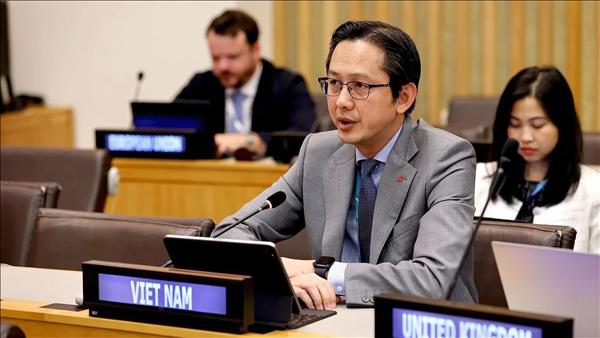
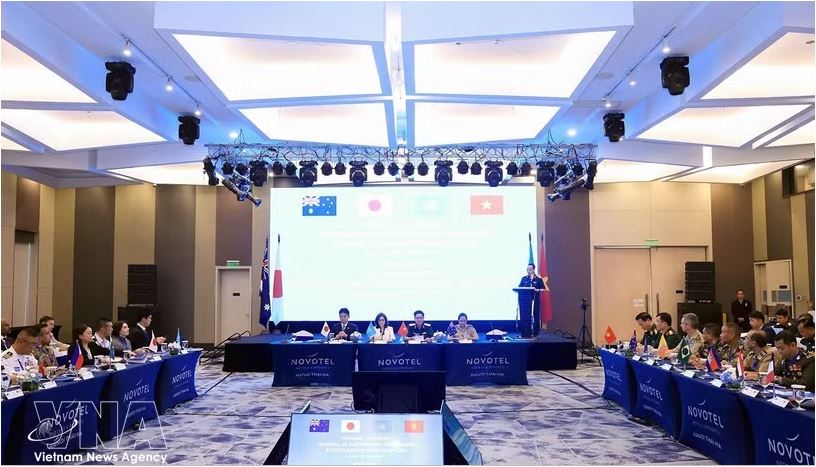
A stakeholders’ workshop of the “Triangular Partnership Programme” (TPP) was jointly organised in Hanoi on June 24 by Vietnam, the United Nations, Australia and Japan.
The event aimed to review the achievements and outcomes of the TPP, strengthen cooperation among existing and new partners, including personnel-contributing countries to UN peacekeeping operations and African Union peace support operations, as well as nations providing expertise and resources for the programme.
Discussions focused on improving training activities, expanding cooperation with regional organisations, particularly the Association of Southeast Asian Nations (ASEAN), and identifying measures to increase the programme’s effectiveness and impact in the years ahead.
This year’s workshop marked the return of the TPP to Vietnam, the first ASEAN member state to host TPP activities and training courses in 2019. Vietnam also pioneered the rotational hosting mechanism for TPP activities within ASEAN.
The event was also the first TPP stakeholders’ workshop held in the ASEAN region, underscoring the growing role of regional partners in strengthening peacekeeping capabilities and advancing collective efforts for peace and security.
Speaking at the opening ceremony, Major General Pham Manh Thang, Director of the Vietnam Department of Peacekeeping Operations under the Ministry of National Defence, said Vietnam has deployed 1,352 military personnel and police officers to UN peacekeeping missions over the past decade.
Vietnamese peacekeepers have demonstrated professionalism, discipline and a strong humanitarian spirit, earning the trust of mission leaders, local communities and international partners, he noted.
According to Thang, these achievements have been made possible not only through national efforts but also thanks to sustained support from the UN and international partners. Among them, the TPP has played a particularly important role by providing practical assistance in training, capacity building and operational readiness.
As host of this year’s workshop, Vietnam was proud to contribute to shaping the programme’s strategic direction for the coming years, he said.
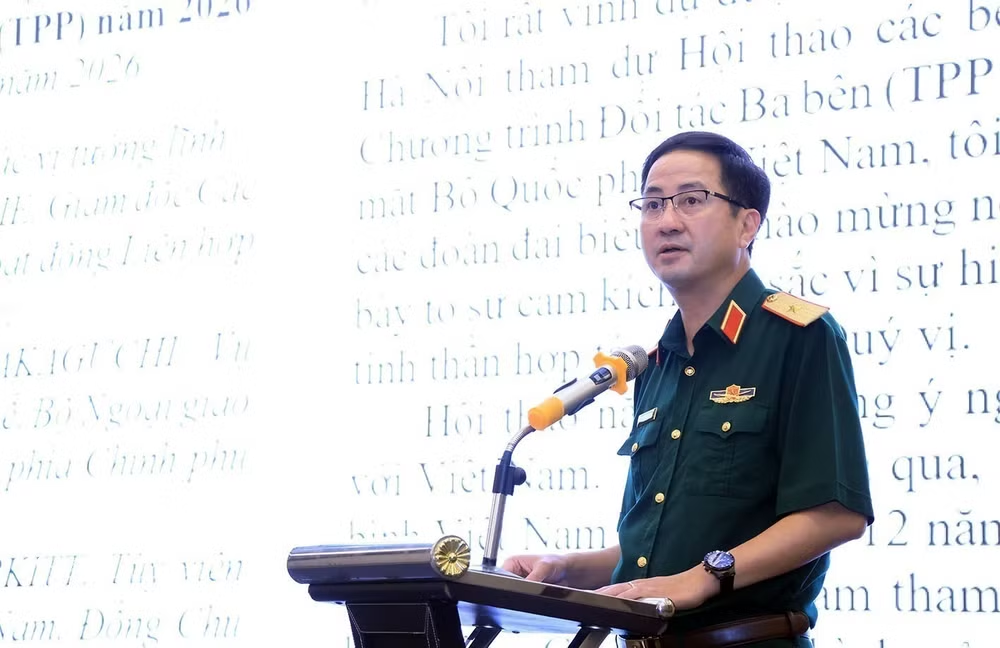
Against a backdrop of increasingly complex and rapidly evolving peacekeeping challenges, maintaining sustainable training quality and deployment-ready capabilities remains a major task. In this context, the role of the TPP is more important than ever, Thang stressed, reaffirming Vietnam’s readiness to work closely with all partners to advance these priorities and ensure that the programme continues to serve as a key pillar of international peacekeeping efforts.
Australian Defence Attaché to Vietnam Colonel Alana Burkitt highlighted the importance of ensuring peacekeepers possess the skills and capabilities needed to address both current and emerging challenges in the field.
She noted that Australia has consistently promoted practical, field-oriented cooperation across the region, including programmes with Vietnam aimed at strengthening peacekeeping preparedness before deployment.
According to Burkitt, partnerships forged through multilateral frameworks have demonstrated that no country can tackle growing peacekeeping security challenges alone. Sustainable partnerships remain the foundation of effective peacekeeping operations.
Co-chairing the workshop, Takuma Sakaguchi, Director of the United Nations Division at Japan’s Ministry of Foreign Affairs, described the event as an opportunity for participating countries to exchange practical experiences, share lessons learned and discuss ways to broaden partnership networks and strengthen cooperation with regional organisations.
He noted that 2026 marks the 70th anniversary of Japan’s admission to the United Nations, providing an opportunity for the country to reaffirm its commitment to multilateralism and international cooperation.
Giovanna Ceglie, Director of the Division for Special Activities under the UN Department of Operational Support (DOS), described the TPP as the department’s flagship initiative and the UN’s largest capacity-building and operational support programme in the peacekeeping field.
Through training activities, knowledge-sharing and professional partnerships, the programme has helped member states develop critical capabilities that directly contribute to mission effectiveness and the safety of peacekeepers. Its ability to adapt continuously to member states’ priorities and operational requirements has been a key factor behind its success and will remain essential in addressing future capability needs, she said./.