The city defines the low-altitude economy as economic activities conducted below 1,000 metres, including urban air mobility using electric vertical take-off and landing (eVTOL) aircraft, UAV-based logistics, emergency and medical services, helicopter tourism, smart surveying and mapping, and enabling technology ecosystems such as digital infrastructure, intelligent flight management and UAV manufacturing.
UAVs are expected to become a multi-billion-dollar industry and a key driver of the digital economy. Against this backdrop, Vietnam sees UAV development as an urgent priority to master core technologies and build a new hi-tech industrial sector—laying the groundwork for Hanoi’s policy and planning directions.
Strategic dual-use orientation key to UAV growth
According to the Ministry of Science and Technology, the national UAV strategy rests on four core pillars - developing UAVs as a transformative industry for low-altitude transport; adopting a dual-use approach that integrates civilian and defence applications; prioritising technological mastery and self-reliance in design and core technology manufacturing; and positioning the State as a market shaper while businesses drive innovation and global competitiveness.
The strategy targets three main application areas. In smart agriculture, UAVs will be used for crop monitoring, seeding and precision spraying, particularly in key farming regions such as the Mekong Delta. In logistics, drones are expected to enable automated delivery, improve supply chains and connect remote communities. In smart cities, UAVs will support traffic and environmental monitoring, 3D mapping and urban search-and-rescue operations.
The deployment will also target three key fields: energy and infrastructure, defence and security, and designated testing zones.
Several localities have already moved ahead. Dien Bien has become the first province to propose a sandbox model for UAV-enabled low-altitude economic activities, while Ho Chi Minh City has approved a resolution allowing drone pilots to operate at speeds of up to 100 km/h to foster innovation and inform future regulation.
Hanoi’s direction for UAV development
The revised Capital Law, approved by the 16th National Assembly on April 23, introduces the concept of a “low-altitude economy,” which is framed not merely as an industrial policy, but as a new domain of spatial governance, akin to the management of underground space.
The drafting agency said efforts to institutionalise the low-altitude economy will be approached cautiously and in stages, starting with a pilot mechanism. The pilot framework would allow Hanoi to trial civil UAV services, smart logistics, and eVTOL operations on a limited scale.
Hanoi also proposes establishing a regulatory sandbox mechanism, including a policy testing framework, conditional exemptions from certain administrative regulations within a controlled scope, strict safety standards, and decentralised low-altitude airspace management.
In the context of digital transformation and emerging technologies, Hanoi could pilot the exploitation of low-altitude airspace within a controlled scope, establish a legal sandbox for new aviation technologies, and set up close coordination mechanisms between civilian and defence authorities. The pilot programme should be limited in terms of location, duration, and scope of operations, accompanied by an independent evaluation mechanism.
According to Vu Anh Tu, Director of FPT UAV under FPT Group, the global UAV market has reached hundreds of billions of US dollars, growing at around 30% annually, and is being identified as a strategic industry by major economies such as the US, China and Europe. Vietnam, he noted, is now at a “golden time” to enter this field.
The low-altitude economy can give rise to an entirely new industry in Vietnam, spanning not only UAV manufacturing but also components such as chips and sensors, flight management platforms and 3D digital mapping, as well as services in operations, insurance and training, with applications extending to agriculture and other sectors./.
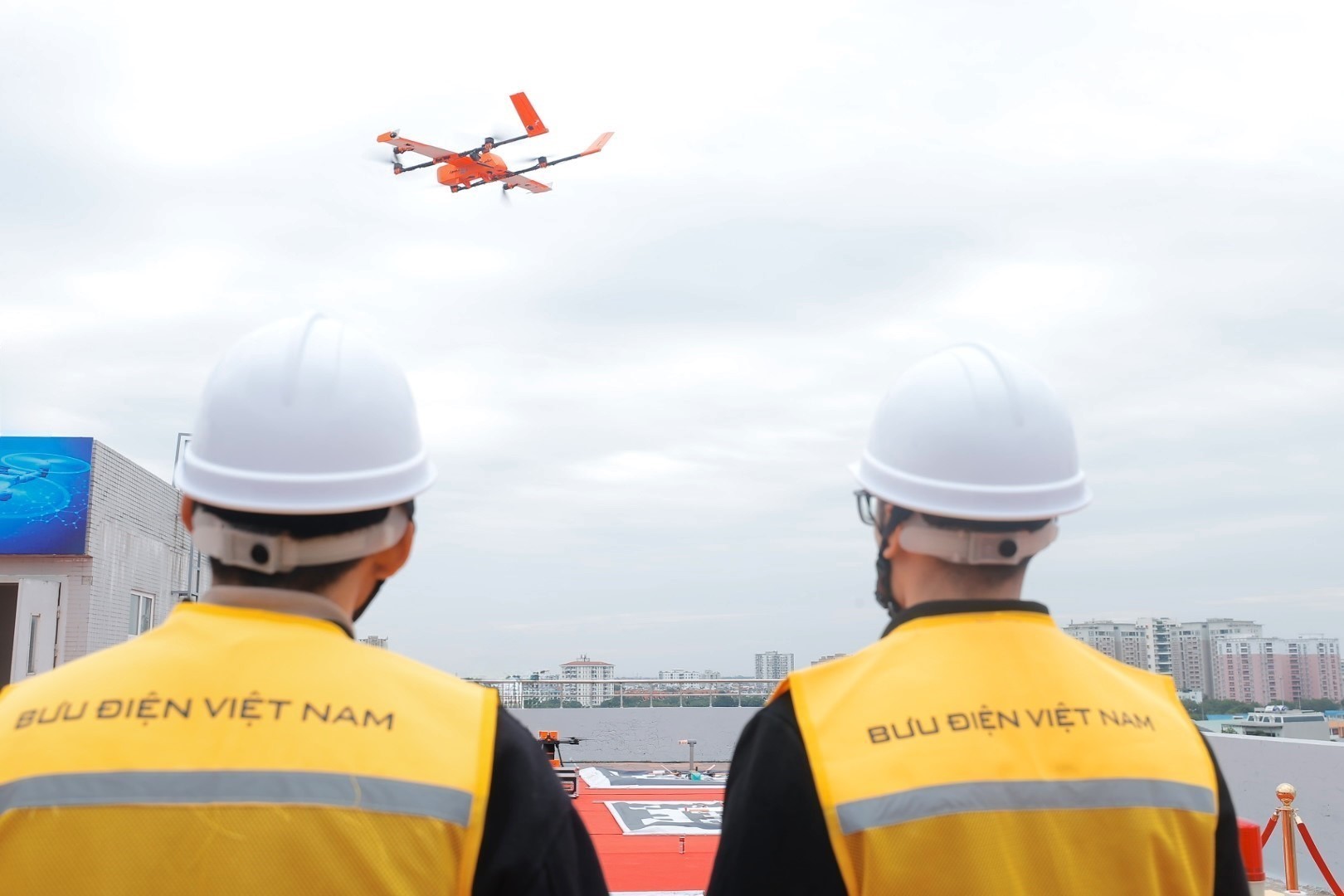
UAVs are expected to become a multi-billion-dollar industry and a key driver of the digital economy. Against this backdrop, Vietnam sees UAV development as an urgent priority to master core technologies and build a new hi-tech industrial sector—laying the groundwork for Hanoi’s policy and planning directions.
Strategic dual-use orientation key to UAV growth
According to the Ministry of Science and Technology, the national UAV strategy rests on four core pillars - developing UAVs as a transformative industry for low-altitude transport; adopting a dual-use approach that integrates civilian and defence applications; prioritising technological mastery and self-reliance in design and core technology manufacturing; and positioning the State as a market shaper while businesses drive innovation and global competitiveness.
The strategy targets three main application areas. In smart agriculture, UAVs will be used for crop monitoring, seeding and precision spraying, particularly in key farming regions such as the Mekong Delta. In logistics, drones are expected to enable automated delivery, improve supply chains and connect remote communities. In smart cities, UAVs will support traffic and environmental monitoring, 3D mapping and urban search-and-rescue operations.
The deployment will also target three key fields: energy and infrastructure, defence and security, and designated testing zones.
Several localities have already moved ahead. Dien Bien has become the first province to propose a sandbox model for UAV-enabled low-altitude economic activities, while Ho Chi Minh City has approved a resolution allowing drone pilots to operate at speeds of up to 100 km/h to foster innovation and inform future regulation.
Hanoi’s direction for UAV development
The revised Capital Law, approved by the 16th National Assembly on April 23, introduces the concept of a “low-altitude economy,” which is framed not merely as an industrial policy, but as a new domain of spatial governance, akin to the management of underground space.
The drafting agency said efforts to institutionalise the low-altitude economy will be approached cautiously and in stages, starting with a pilot mechanism. The pilot framework would allow Hanoi to trial civil UAV services, smart logistics, and eVTOL operations on a limited scale.
Hanoi also proposes establishing a regulatory sandbox mechanism, including a policy testing framework, conditional exemptions from certain administrative regulations within a controlled scope, strict safety standards, and decentralised low-altitude airspace management.
In the context of digital transformation and emerging technologies, Hanoi could pilot the exploitation of low-altitude airspace within a controlled scope, establish a legal sandbox for new aviation technologies, and set up close coordination mechanisms between civilian and defence authorities. The pilot programme should be limited in terms of location, duration, and scope of operations, accompanied by an independent evaluation mechanism.
According to Vu Anh Tu, Director of FPT UAV under FPT Group, the global UAV market has reached hundreds of billions of US dollars, growing at around 30% annually, and is being identified as a strategic industry by major economies such as the US, China and Europe. Vietnam, he noted, is now at a “golden time” to enter this field.
The low-altitude economy can give rise to an entirely new industry in Vietnam, spanning not only UAV manufacturing but also components such as chips and sensors, flight management platforms and 3D digital mapping, as well as services in operations, insurance and training, with applications extending to agriculture and other sectors./.