Illustrative image. Photo: VNA
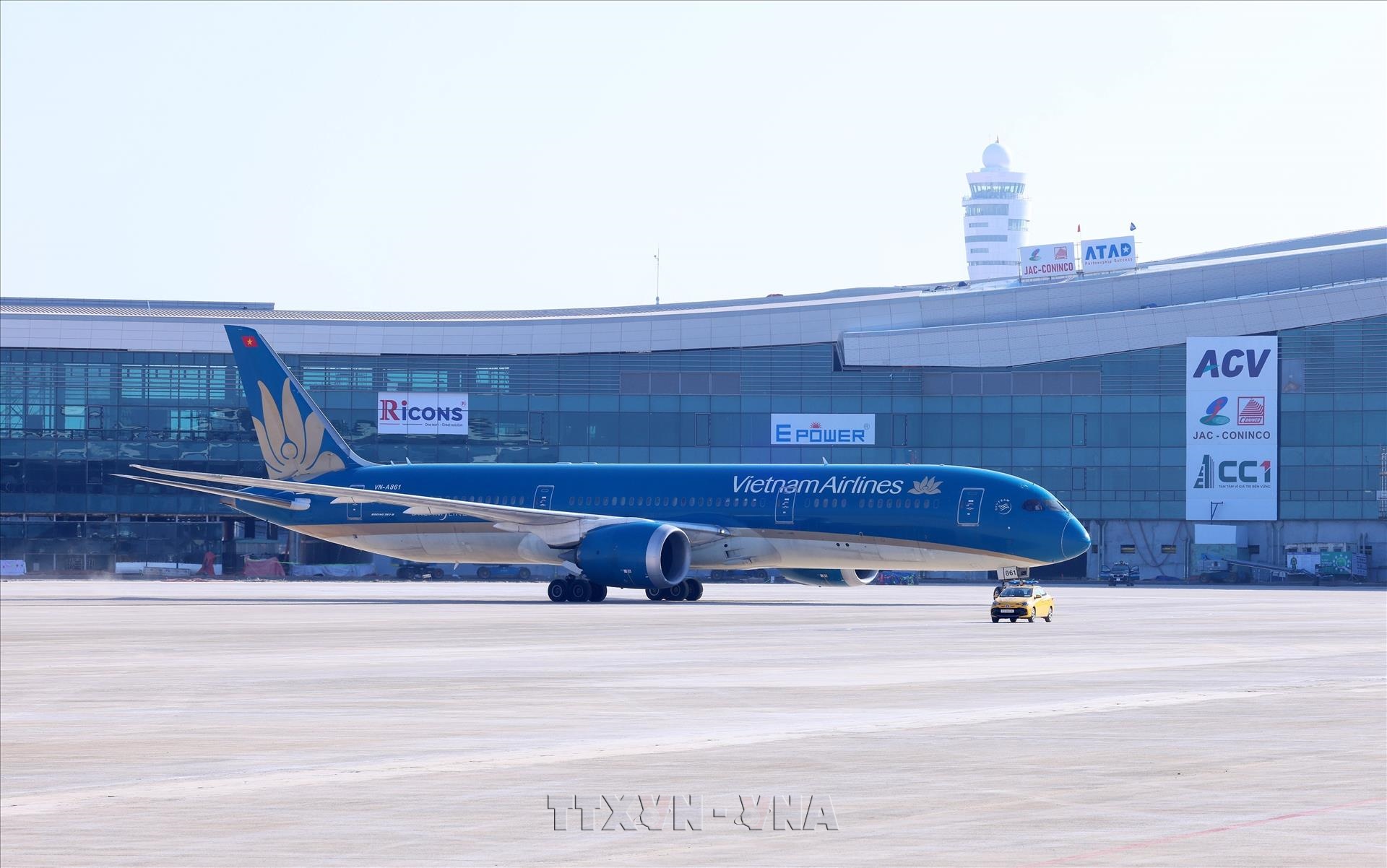
The addition forms part of the airline’s strategy to strengthen connectivity in high-demand international markets by increasing frequencies on existing routes and offering passengers greater flexibility in flight schedules.
From Hanoi, the airline will raise the frequency of its Hanoi–Taipei (Taiwan) route from seven to 11 flights per week. The Hanoi–Osaka (Japan) route will also see 11 flights per week, from seven, between October 26 and November 30, before increasing to 14 from December 1, equivalent to two daily services.
The airline is also expanding its Northeast Asia network from Da Nang. Since July 1, the Da Nang–Seoul (the RoK) route has operated 14 weekly flights. Meanwhile, frequencies on the Da Nang–Tokyo (Japan) and Da Nang–Osaka (Japan) routes increase to 11 and five flights per week, respectively.
To mark the expansion, Vietnam Airlines has launched a promotional round-trip fare programme. Tickets on the Hanoi–Taipei route are available from 7.724 million VND (293 USD), while round-trip fares between Hanoi and Osaka start from 14.66 million VND, inclusive of taxes and fees.
The promotion applies to tickets issued by July 31. Travel on the Hanoi–Taipei route must be completed by July 31, while journeys between Hanoi and Osaka are valid through December 31.
The increase in flight frequencies comes as demand for travel between Vietnam and Northeast Asia remains robust. The region continues to be one of Vietnam Airlines’ most important international markets, serving a broad range of travel purposes, including tourism, investment, trade, family visits and people-to-people exchanges.
According to the National Statistics Office under the Ministry of Finance, the RoK was Vietnam’s second-largest source of international visitors in the first half of 2026, with more than 2.16 million arrivals. Japan and Taiwan also remained key markets, sustaining stable two-way passenger flows between Vietnam and Northeast Asia./.