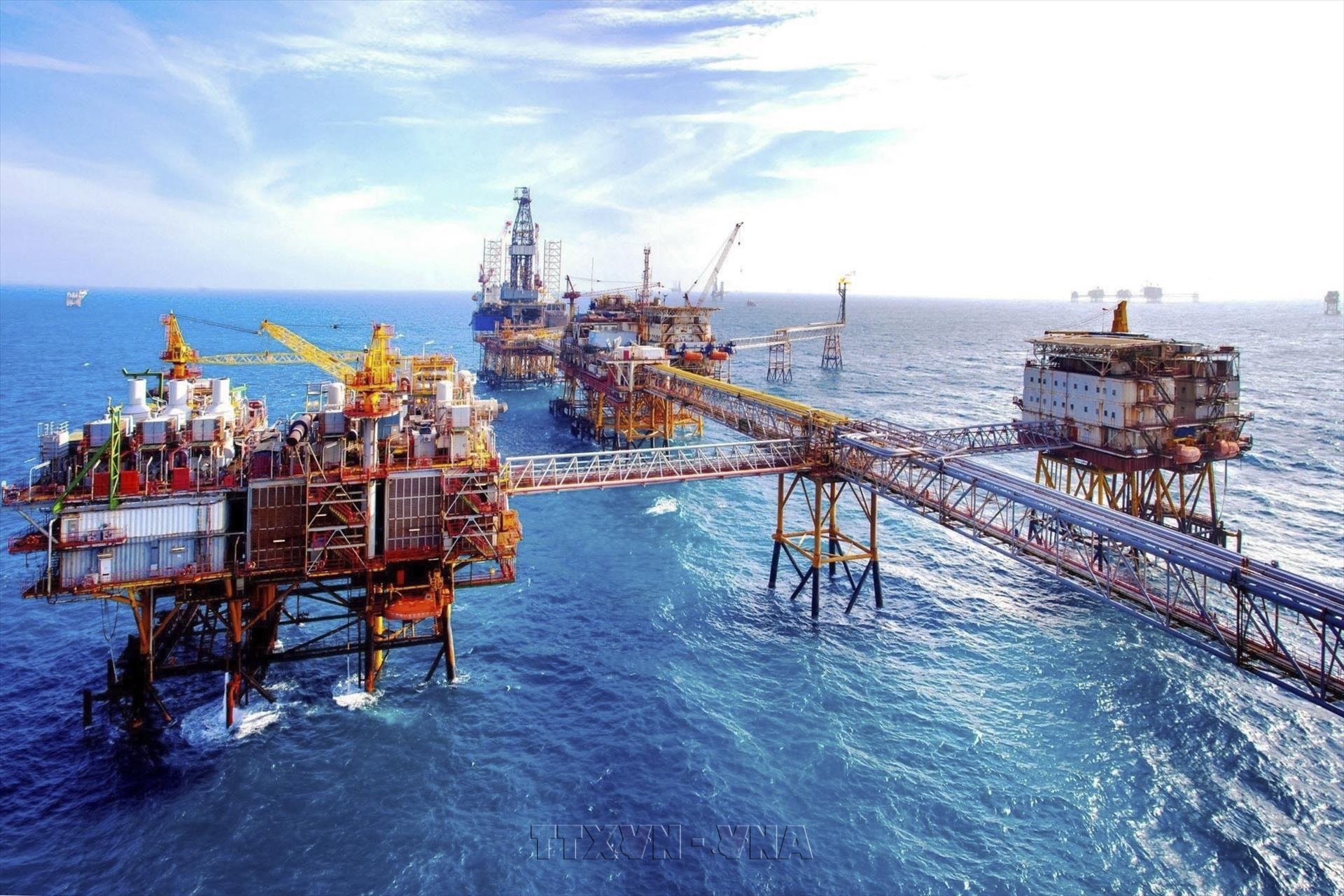
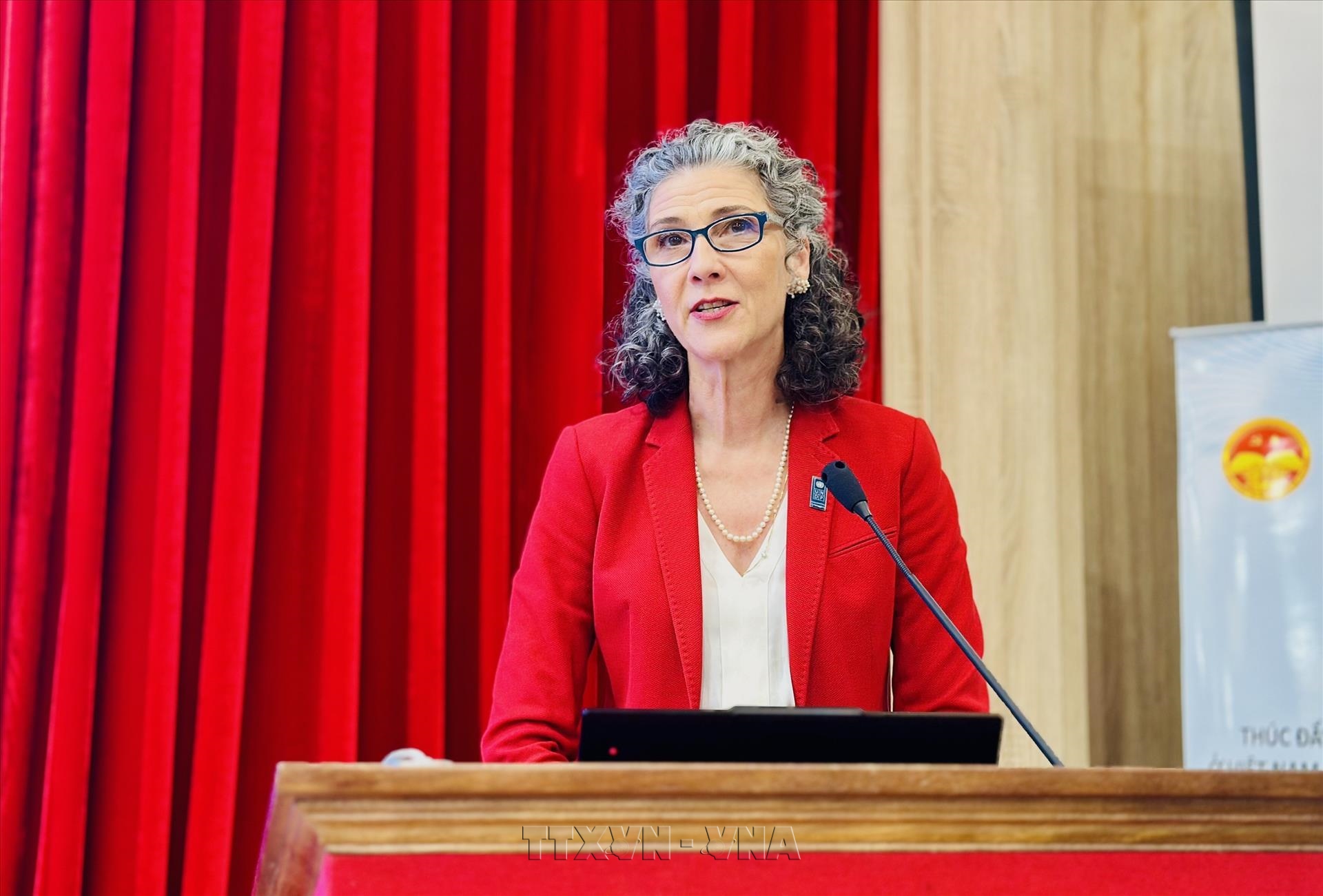
Vietnam needs to translate its policy foundations into concrete actions, promote modern marine governance, develop a blue marine economy and mobilise resources effectively to create sustainable livelihoods for coastal communities, according to Ramla Khalidi, Resident Representative of the United Nations Development Programme (UNDP) in Vietnam.
Talking to VietnamPlus e-newspaper, Khalidi said Vietnam had particularly strong advantages for developing its marine economy, noting that the country's strategic position was reflected not only in its more than 3,260km coastline but also in its connectivity with regional and global economic, energy and ecological flows.
She described the sea as a strategic asset of Vietnam, saying its extensive maritime area and location along major global shipping routes provide favourable conditions for trade, logistics, port services and stronger connections with regional and global markets.
According to Khalidi, Vietnam also has significant potential to become a hub for green and low-carbon industries. Its offshore wind potential is estimated at more than 1,000GW, while opportunities in areas such as green hydrogen, blue shipping and climate-resilient infrastructure could create new growth drivers and support the country's commitment to achieving net-zero emissions by 2050, she said.
She also highlighted Vietnam's rich marine natural capital, with more than 11,000 marine species and important ecosystems such as coral reefs, seagrass beds and mangrove forests. These ecosystems directly support the livelihoods of more than 4 million people working in fisheries and have significant carbon storage capacity, she noted.
If Vietnam continues to promote innovation, strengthen integrated marine governance and effectively mobilise public and private investment for nature-based solutions, it can realise its ambition of becoming a strong, prosperous and sustainable maritime nation in the 21st century, she stressed.
Turning policy foundations into concrete actions
Khalidi said that nearly eight years after Resolution No. 36-NQ/TW was issued, Vietnam had made important progress in laying the foundations for green and sustainable marine economic development.
She noted that Resolution No. 20-NQ/TW of the third meeting of the 14th Party Central Committee on building and developing Vietnam into a strong maritime nation requested a major shift in mindset, from tapping the sea to modern marine governance and from fragmented sectoral development to integrated governance of national maritime space.
However, she said there remains a significant gap between Vietnam's considerable marine potential and its ability to turn that potential into economic, social and environmental value on a broader scale.
She recommended four priorities for the coming period - strengthening coordination in marine spatial governance and translating plans into effective actions; accelerating marine conservation; developing marine data infrastructure and addressing obstacles in the allocation of marine areas; and further developing green financing mechanisms for the marine economy.
Khalidi stressed that blue marine economic development should not only deliver environmental benefits but also generate clear economic value. UNDP's Blue Economy Scenarios for Vietnam estimates that under blue economy development scenarios, the marine economic sectors could generate 70.1 billion USD in 2030, equivalent to up to 35% of the national GDP and about 34% higher, or 23.5 billion USD more than under conventional development.
She therefore emphasised the need to turn established policy foundations into concrete actions so that Vietnam can generate greater value from the sea while maintaining a healthy ocean and ensuring sustainable livelihoods for coastal communities.
Five potential blue economy models
Khalidi said UNDP had identified five groups of blue economy models with potential in Vietnam: high-tech fisheries and aquaculture; community-based ecotourism; blue ports; marine renewable energy; and nature-based models such as blue carbon and marine conservation.
These models can combine economic growth and livelihood creation with ecosystem protection and restoration, while increasing the value of marine resources, she noted.
To develop and scale up these models, however, Vietnam needs to address several gaps, including a shortage of effective implementation mechanisms and sufficiently attractive economic and financial instruments, fragmented inter-sectoral coordination, limited capacity for model design at the local level, and data gaps in monitoring, reporting and verification (MRV) systems.
She also stressed that different models have different investment cycles, risk profiles, profitability and capital requirements. Therefore, financial policies and instruments need to be sufficiently flexible to reflect the specific characteristics and readiness of each model.
Alongside this, Vietnam needs flexible incentives and specialised green financial instruments, stronger inter-sectoral coordination, improved local governance capacity and a more complete MRV data system, she said.
A transparent and stable policy environment is also important to reduce risks, strengthen investor confidence and ensure local communities can participate in and benefit from the transition, Khalidi added.
Lessons from Norway
Referring to international experience, Khalidi said Norway offered notable lessons for Vietnam in combining large-scale marine economic development with ecosystem protection.
She highlighted Norway's science-based integrated marine governance, including integrated management plans for strategic waters such as the Barents Sea, Norwegian Sea and North Sea, supported by inter-ministerial and inter-sectoral coordination to allocate marine space for oil and gas, offshore wind, fisheries, shipping and conservation.
In shipping and energy, Norway has promoted fleet electrification and green ports while leveraging its oil and gas capabilities and infrastructure to support offshore wind development. Transparent and shared marine data has also provided a foundation for updating planning and supplying reliable information for long-term investment decisions, she said.
For Vietnam, Khalidi said these experiences underscored the need to move from approving the National Marine Spatial Plan to effective implementation and stronger inter-sectoral coordination; upgrade marine economic value chains through technology, quality improvement, traceability and greater value addition; and develop green financial instruments to mobilise private resources. She also stressed the need to strengthen data and measurement tools at the local level.
UNDP has begun developing the Vietnam Provincial Blue Economy Index (VN-BEI), drawing on international measurement frameworks and the experience of pioneering countries. The index will cover 21 coastal localities across four pillars - economy, society, environment and governance - to help monitor growth quality and progress towards a greener economy, attract sustainable investment, thus improving transparency and supporting evidence-based policymaking, she stated./.