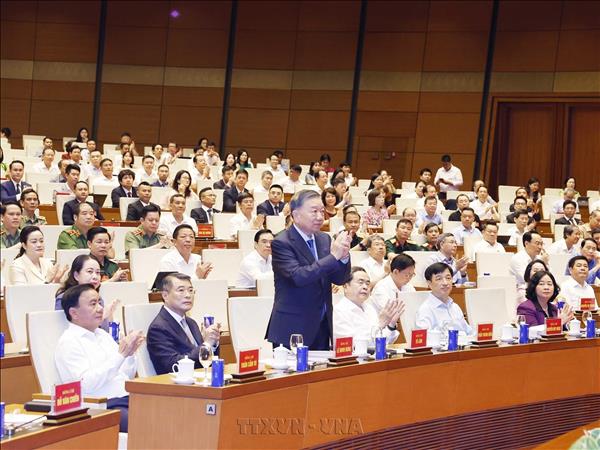
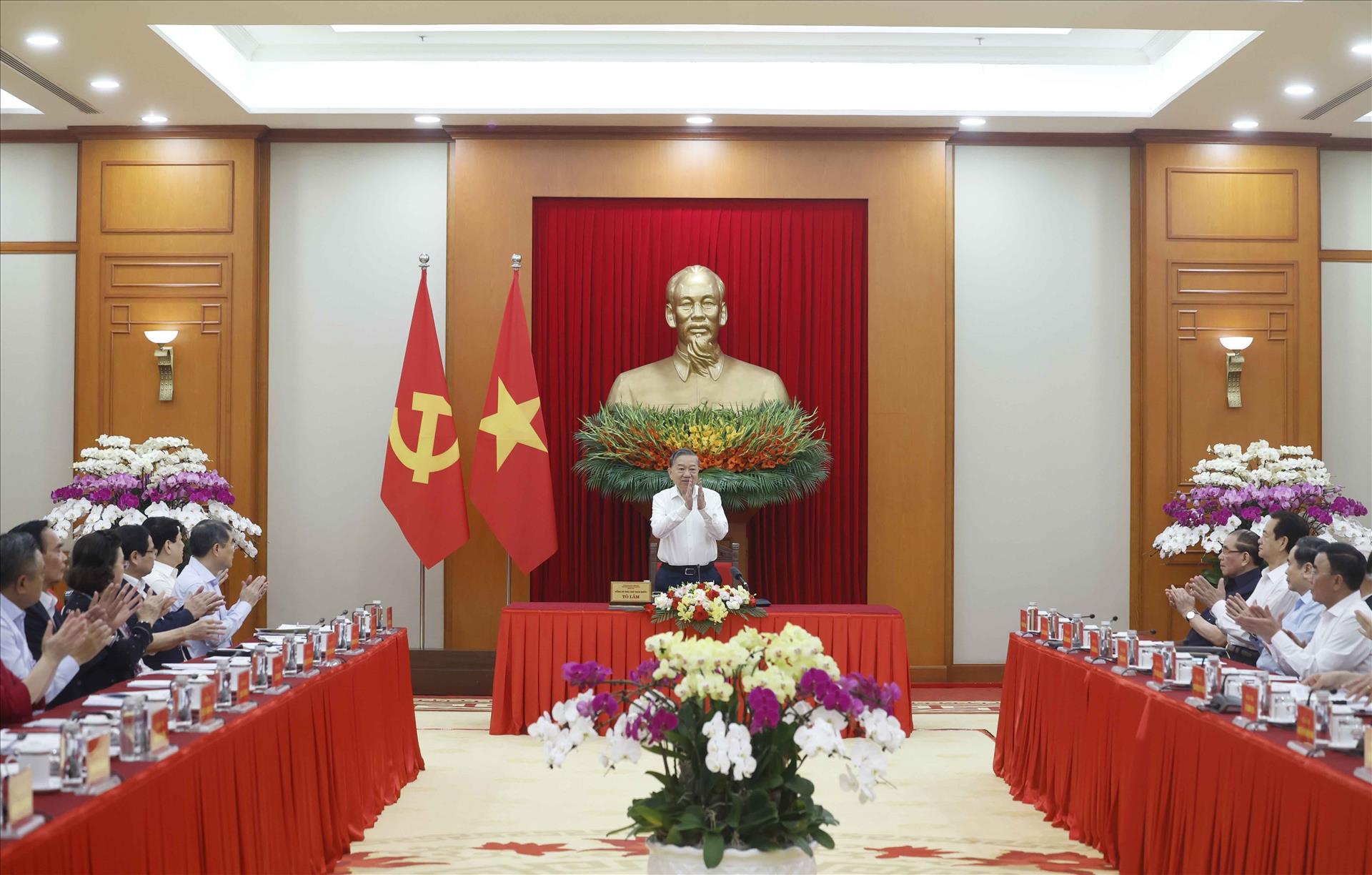
He made the statement in Hanoi on May 14 while chairing the first meeting of a steering committee tasked with reviewing the Party’s century-long leadership of the Vietnamese revolution, mapping strategic directions for the next century, and evaluating four decades of the Platform on National Construction in the period of transition to socialism. He described it as an especially important political task of profound theoretical, practical, political, ideological, and organisational significance.
With an enormous workload to be handled alongside other major tasks, he demanded an immediate shift to a more urgent, scientific, substantive, deadline-driven, product-oriented, and clearly accountable way of working. The overriding imperative, he stressed, is to break free of administrative inertia, curtail low-yield meetings, end broad assignments without clear responsibility, and ensure the review does not deteriorate into mere status reports or simple historical compilations.
The 100-year review, he said, must go far beyond a chronological recounting of events. What matters is answering major questions: Why was the Party able to steer the nation through historic turning points and secure such major accomplishments? What factors decided the revolution’s victories? Absent the leadership of the Communist Party of Vietnam and President Ho Chi Minh, would the cause of national liberation, reunification, and development have achieved the remarkable successes seen today? Which lessons of strategic and enduring significance should be distilled, inherited, and carried forward in the new era? Which shortcomings must be acknowledged frankly, assessed objectively, and rectified? What is the national development vision for the next 100 years? Which pillars will guarantee the Party’s enduring strength, the nation’s lasting vitality, and the socialist regime’s sustainability?
According to him, assessing 40 years of the Platform for National Construction in the period transition to socialism is not a review of a document but an effort to further clarify Vietnam’s development model, its model of socialism, and its path toward socialism, together with the major, law-governed relationships that arise in the process of socialist construction. The work must also build a body of theoretical and practical arguments to serve as a foundation to develop a new national development platform and safeguard the Fatherland in the new era.
Commending the key orientations proposed by the editorial team, he directed that they be concretised in a detailed outline capable of conveying the Party’s core, consistent, and strategically visionary messages, elevating the report into a development manifesto for the Party in the new era. Every sentence and word, he stressed, must carry ideological depth; every element must reflect strategic thinking and vision; and every conclusion must inspire and drive action.
On methodology, he underscored the tight integration of theory and practice. National-level reviews must be closely linked to those conducted at local and sectoral levels. Localities tied to major revolutionary historical events, large-scale movements, innovative development models, and strategically important areas in national defence, security, foreign affairs, economy, and culture should receive thorough, specialised reviews with dedicated outputs, avoiding superficial or formalistic action.
Independent, objective, open-minded, and selective study of international experience suited to Vietnam’s conditions is also essential, he said.
The review process, he stressed, must go hand in hand with broad and effective public communication, turning it into an extensive political and ideological campaign across the Party, the general public, and the army.
Throughout the review, he demanded genuine objectivity, scientific rigor, and openness. Achievements must be presented accurately, comprehensively, and convincingly, while shortcomings and weaknesses must be confronted directly, properly assessed, and analysed in depth, with a focus on subjective causes./.