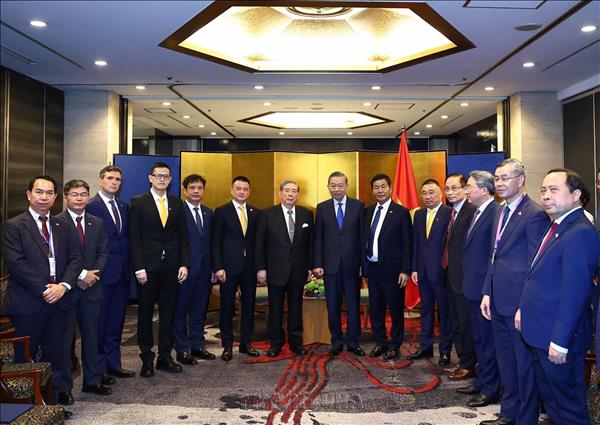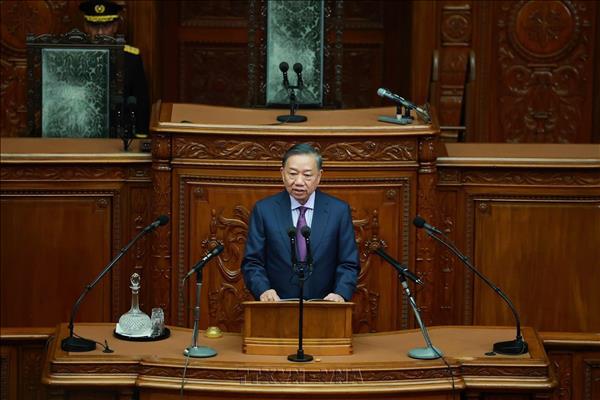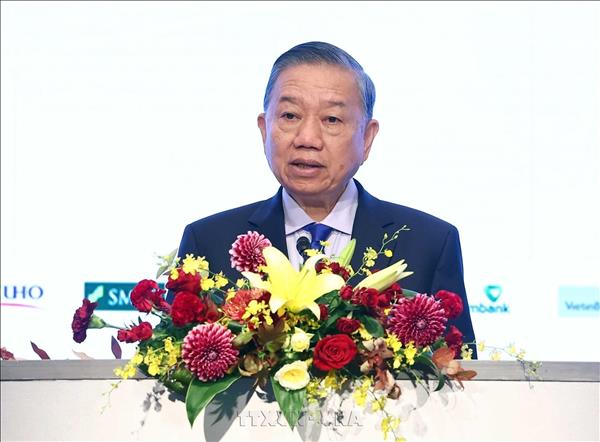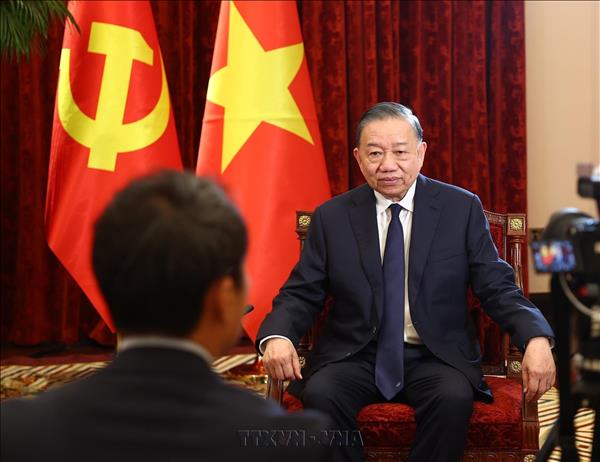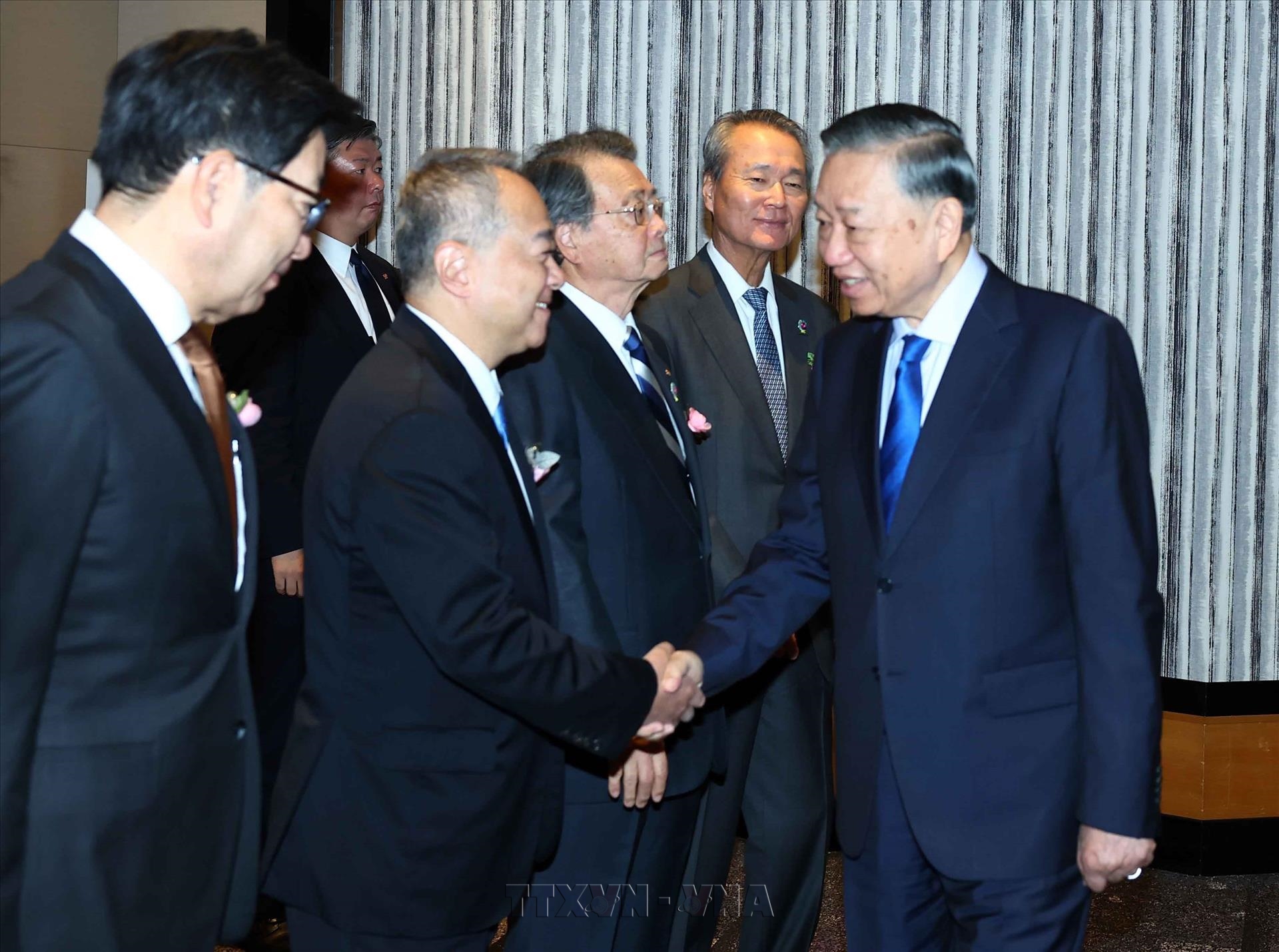
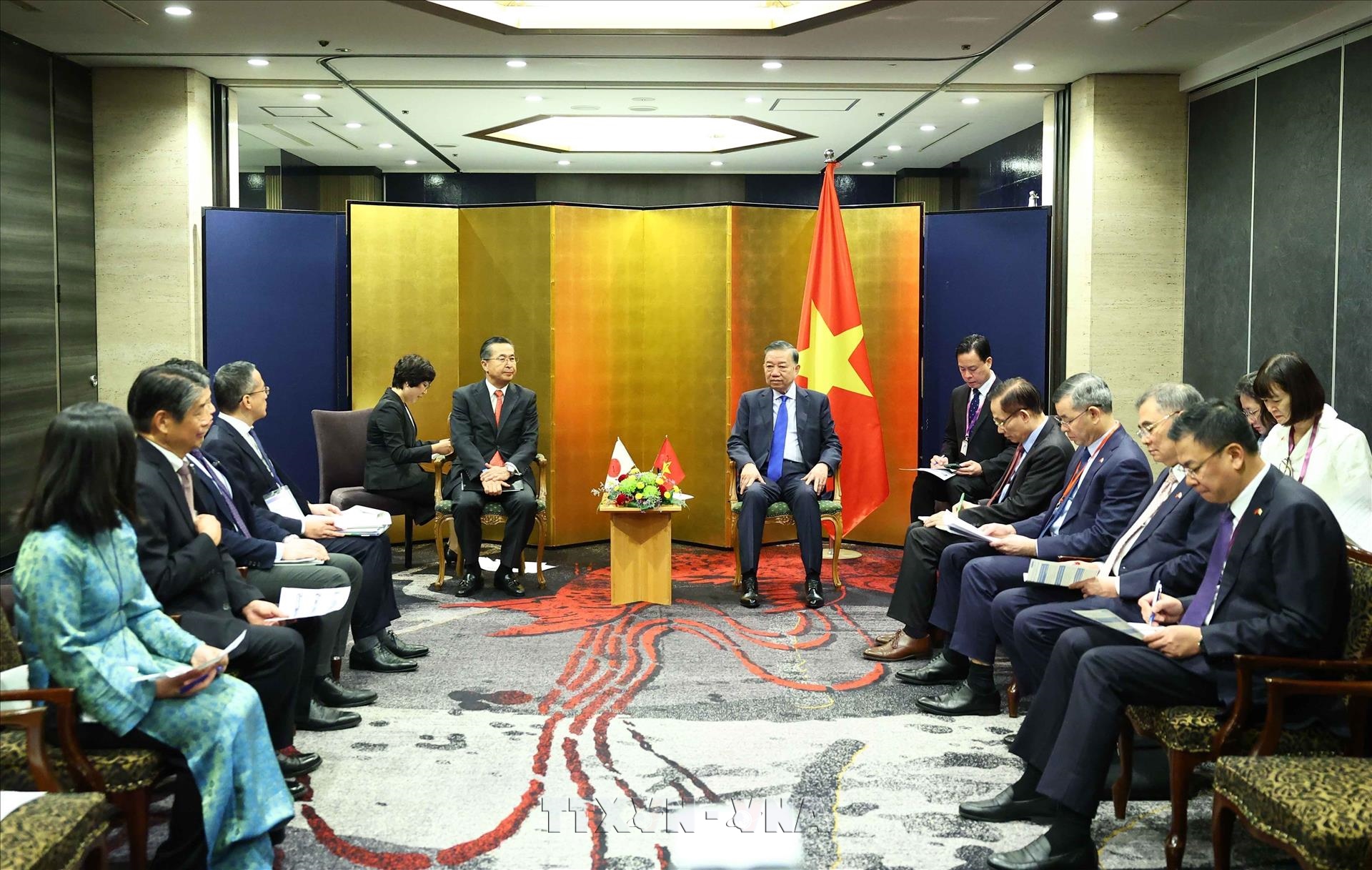
General Secretary of the Communist Party of Vietnam Central Committee and President To Lam met with leaders and senior representatives of major Japanese businesses in Tokyo on November 9 morning (local time), calling for moving beyond traditional technology transfer towards co-creation and deeper integration into value and supply chains.
The Japanese side included Chairman of the Japan Chamber of Commerce and Industry (JCCI) Kobayashi Ken, Chairman of the Japan Business Federation (Keidanren) Tsutsui Yoshinobu, and representatives of major member companies of Keidanren, which groups more than 1,500 leading enterprises with strong reputations and extensive influence in the world.
The top Vietnamese leader spoke highly of the candid and heartfelt views shared by Japanese firms, describing the dialogue as a vivid demonstration of the Japanese business community’s deep interest, sincere goodwill and long-term commitment to Vietnam’s development.
Vietnam attaches special importance to its traditional friendship with Japan, he stated, affirming that Vietnam wishes to further consolidate and elevate the bilateral cooperation framework to deliver more substantive and sustainable benefits to the peoples of both countries.
He stressed that economic, trade and investment ties are the strongest driving force and a solid pillar linking the two nations, and that Vietnam is working to make this cooperation more balanced in the coming years.
Keidanren’s members, he said, are key partners in this process, serving not only as an important channel for investment and advanced technologies but also helping promote sound business practices, including credibility, discipline, occupational safety and environmental protection.
Amid the current global context, General Secretary and President Lam stressed the need to move beyond traditional technology transfer towards co-creation and deeper integration into value and supply chains, thereby promoting high-quality growth and strengthening both countries’ strategic autonomy for shared prosperity.
He urged Keidanren members, especially leading corporations, to regard Vietnam as a long-term strategic partner rather than simply a manufacturing base or potential market.
The two sides should join hands in developing products, piloting new models, advancing strategic technologies and building high-tech ecosystems for semiconductors, AI and large-scale data centres, he said.
Sharing Vietnam’s development priorities, the leader suggested Japanese businesses boost investment in smart infrastructure, green energy and logistics projects, and green industries. He also called for joint research and development of new technologies to reduce emissions, ensure energy security at reasonable costs and maintain the economy’s competitiveness.
Other areas for cooperation include developing a modern financial – banking ecosystem and capital market meeting international standards, as well as high-tech healthcare, pharmaceuticals and biotechnology, he suggested.
General Secretary and President Lam affirmed that Vietnam's commitment to maintaining political and social stability, accelerating institutional reforms, simplifying administrative procedures and removing bottlenecks to create a transparent, consistent legal framework protecting investors’ legitimate rights and interests.
The country will also ensure stable supply of electricity and water, telecommunications infrastructure, cleared land and skilled human resources, he added.
Keidanren’s representatives expressed their hope that Vietnam will play a greater role in the regional economic architecture, help ensure supply chain resilience, maintain free trade, improve the investment environment and strengthen bilateral cooperation mechanisms.
They briefed the Vietnamese delegation on their investment and business activities in the Southeast Asian nation, highlighted their capabilities and proposed new areas and ideas for cooperation and investment in the time to come. They pledged to create long-term value and support Vietnam’s sustainable economic growth.
The Japanese side also spotlighted the benefits of business partnerships, from investment and job creation to technology transfer, workforce training, management capacity building and innovation. They pledged to support Vietnam’s sustainable development through collaboration in high-skilled workforce training, technology transfer, transport and urban infrastructure, industrial parks, energy development and digital transformation./.