In the News
Talent development, attraction, utilisation must be part of national development strategy: Top leader
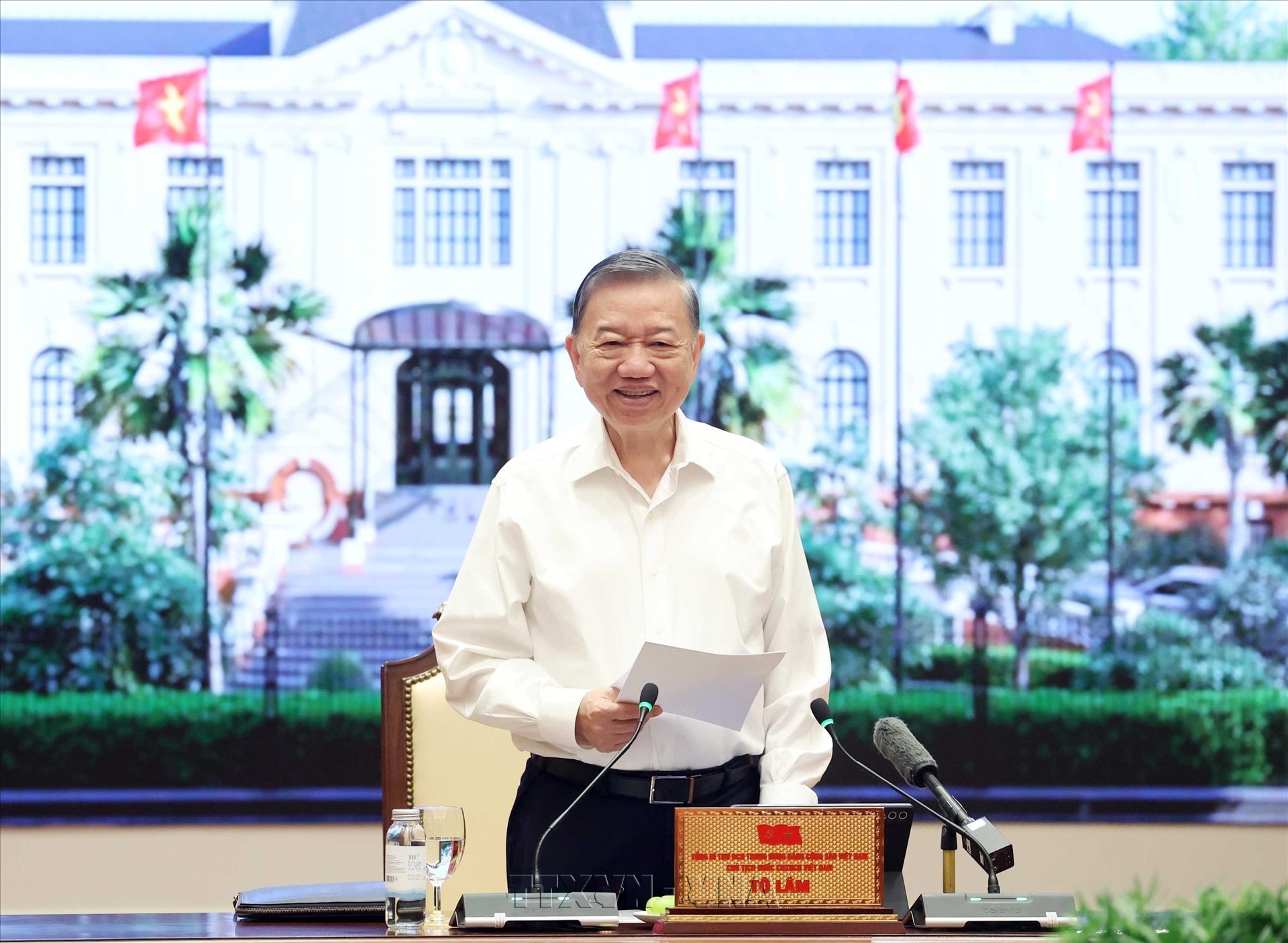
General Secretary of the Communist Party of Vietnam (CPV) Central Committee and President To Lam on August 24 chaired a working session with the Government’s Party Committee and relevant agencies on the national strategy for attracting, utilising and developing talent in key sectors and fields that contribute to rapid and sustainable national development in the new era.
General Secretary and President Lam stressed that talent is a particularly strategic national resource, and that the development, attraction and utilisation of talent must be placed within the overall national development strategy, with national interests and the implementation of strategic tasks as the highest priorities.
He called for a focus on sectors, fields, programmes, projects and works that are decisive to the country’s self-reliance, competitiveness and rapid, sustainable development.
The top leader emphasised that talent should be identified and assessed primarily based on qualities, actual capabilities, creative thinking, concrete products and achievements, professional reputation and contributions, rather than being equated with people holding advanced degrees, academic titles or management positions, or those with long years of service.
The criteria should be consistent in principle while remaining flexible to the specific characteristics of each sector and field and the requirements of each task, je said, adding talent development should be matched with the need to address specific challenges, with requirements made public to identify the right people capable of delivering solutions.
He requested the Government, ministries, sectors and localities to clearly identify major problems requiring talent to solve, together with specific objectives, expected outputs, deadlines, resources, authority and assessment criteria. Policies on remuneration, he said, must be commensurate with capabilities, assigned tasks and actual results.
Resources should be concentrated on strategic tasks, centres of excellence, strong research teams, young talent training and the attraction of leading experts, he stated, adding that the utilisation of talent must be accompanied by clearly defined tasks, authority, resources and responsibility for results. Each key talent should be assigned a comprehensive package covering objectives, decision-making authority, the right to select collaborators, infrastructure, data, funding, remuneration, responsibilities and expected outputs. Importantly, strategic talent must also be responsible for building institutional capacity by developing teams, training successors, transferring knowledge, standardising processes and creating data and intellectual property assets.
He called for expanding opportunities for talent to contribute and move between institutions and sectors, and creating an open, flexible, dynamic and, above all, effective working environment. Vietnamese representative agencies abroad should play a greater role in identifying and connecting experts and building networks of partners in concrete fields where the country has needs.
The top leader also called for a truly competitive mechanism to attract international talent, including considering the issuance of a “Vietnam Talent Visa” with a transparent one-stop procedure and clear processing deadlines. Such a mechanism should comprehensively address issues relating to salaries, residence, employment, taxation, housing, health care, education and recognition of qualifications for talented individuals and their families.
General Secretary and President Lam called for the development of digital management infrastructure and a national talent database interconnected with education, science and technology, employment and labour-market data. The system should support forecasting, talent identification and matching talented people with national development tasks.
He also stressed the importance of specialised training programmes for gifted students, stronger international cooperation in strategic fields, greater autonomy for universities and research institutes alongside accountability, and a stronger role played by businesses in identifying talent needs, training, research, investment and commercialisation.
Concluding the session, the top leader requested that the national strategy be further refined to be concise, focused and capable of delivering substantive institutional breakthroughs.
The ultimate goal, he stressed, is to generate new projects, technologies, businesses, policies and values, build a workforce capable of driving rapid, sustainable and self-reliant national development, and create opportunities for all capable Vietnamese people to be identified, developed and given chances to contribute to the country./.