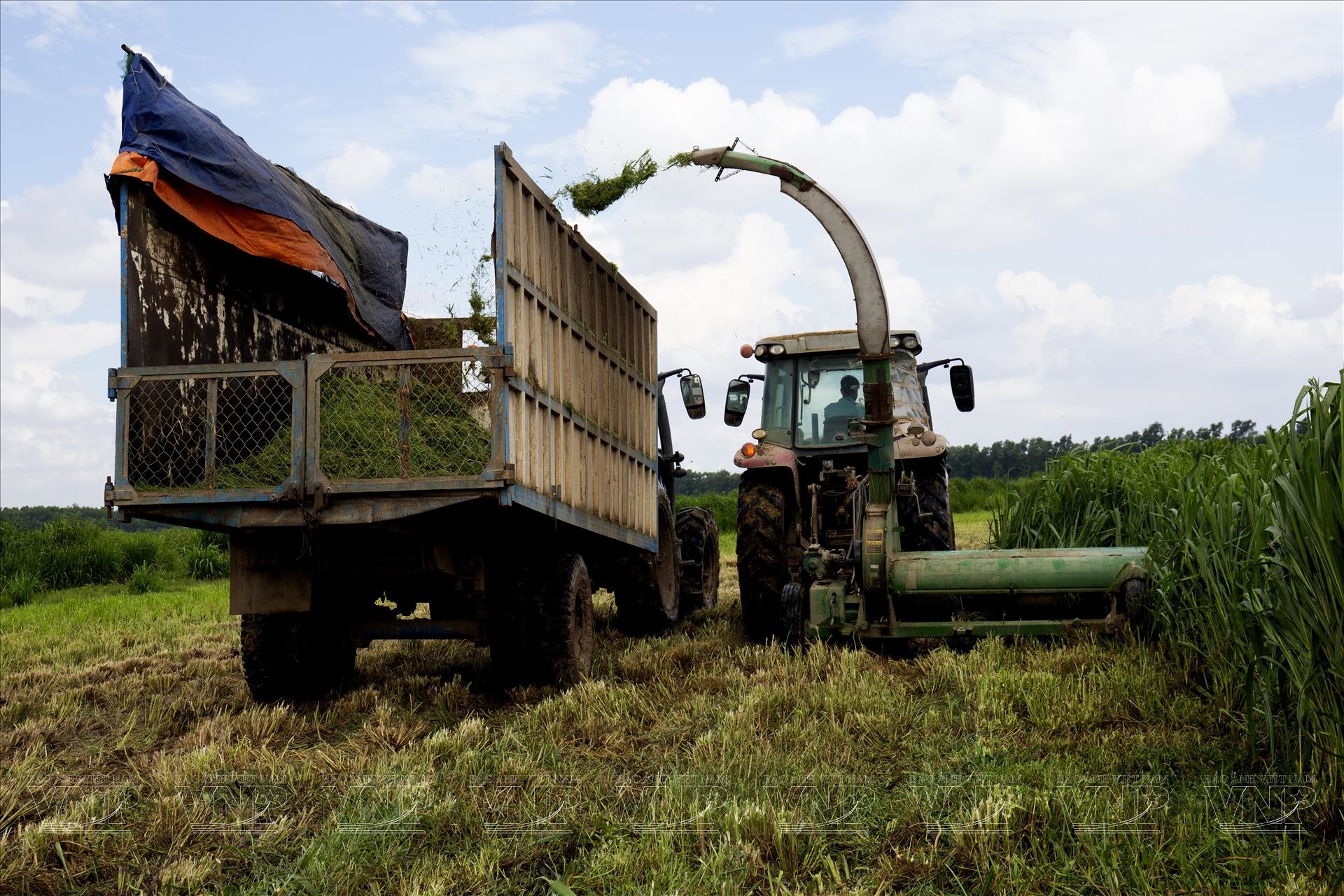
At Vinamilk farms, grass fields are cultivated using organic methods without pesticides or chemical fertilizers, ensuring a clean food source for the dairy herds. Photo: VNP
Dr. Nguyen Xuan Duong, Chairman of the Animal Husbandry Association of Vietnam (AHAV), said the country still has considerable growth potential as milk consumption per capita remains below the regional average. However, he noted that long-term development depends on building a strong domestic dairy farming sector.
Rapid advances in biotechnology, breeding, nutrition, farm management and digital technologies are creating new opportunities for businesses. Yet Vietnam’s dairy farming industry remains fragmented and has not fully secured its raw milk supply, leaving producers heavily reliant on imported milk powder for reconstituted products.
The sector also faces challenges in consumer awareness, as the nutritional benefits of fresh milk are still not widely recognised. While fresh milk is consumed daily in many countries at prices comparable to common beverages, regular milk consumption in Vietnam has yet to become mainstream.
To overcome these constraints, leading dairy companies have stepped up investment in domestic raw material development as a core competitive strategy.
Vinamilk has emerged as a leading example, expanding both its domestic footprint and export markets through proactive investment in fresh milk supply chains. CEO Mai Kieu Lien said internationally certified eco-farm systems and self-sufficient high-quality raw milk sources have become the company’s “launchpad” for maintaining market leadership and expanding globally.
The strategy has delivered strong results. In the first quarter of 2026, Vinamilk reported consolidated revenue of more than 16.15 trillion VND (620 million USD), up 24.6% year-on-year, while net profit surged 55% to nearly 2.5 trillion VND, fulfilling a quarter of its annual profit target. Domestic operations remained the main growth driver, supported by distribution restructuring, brand repositioning and expansion of premium product lines, including 100% fresh milk and Green Farm products.
At the same time, TH Group, through its TH true MILK brand, has helped shift consumer preferences towards natural fresh milk instead of reconstituted dairy products. Its pioneering investments have encouraged broader participation in dairy farming, contributing to a rising share of domestically sourced fresh milk.
Recognising the strategic importance of self-sufficiency, Deputy Prime Minister Bui Thanh Son recently signed a decision approving the dairy industry development strategy through 2030, with a vision to 2045.
The strategy targets annual industry growth of 12-14% by 2030, with processed liquid milk output reaching 4.2 billion litres annually. Domestic fresh milk production is projected to hit 2.6 billion litres per year, meeting 60-65% of processing demand, while milk powder output is expected to reach 245,000 tonnes annually. Per capita milk consumption is targeted at 40 litres per year.
Looking ahead to 2045, the industry aims for annual growth of 5-6%, processed milk output of 9.7 billion litres and domestic raw milk production of 8 billion litres, enough to satisfy 80-85% of local processing demand. Milk powder output is expected to rise to 415,000 tonnes, while annual milk consumption per capita is projected to reach 100 litres.
To support these goals, the strategy prioritises the expansion of dairy herds through concentrated farming models combined with cooperatives and household farms that meet international standards on disease prevention and food safety. The plan also seeks to reduce dependence on imported raw materials.
In parallel, the industry will focus on market research and the development of high-value-added products such as infant formula, nutrition products for the elderly and specialised dairy products. The school milk programme will prioritise fresh milk, helping improve nutrition access for children in disadvantaged and ethnic minority communities.
The strategy also encourages dairy producers to capitalise on free trade agreements (FTAs), diversify export markets and remove technical barriers to trade. Green production, circular economy practices and greenhouse gas reduction are also key priorities as the industry works towards Vietnam’s net-zero emissions target by 2050./.