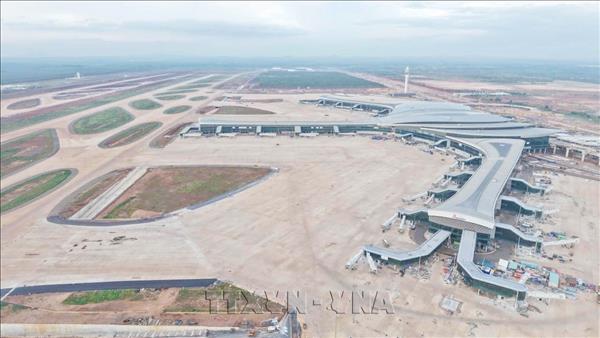
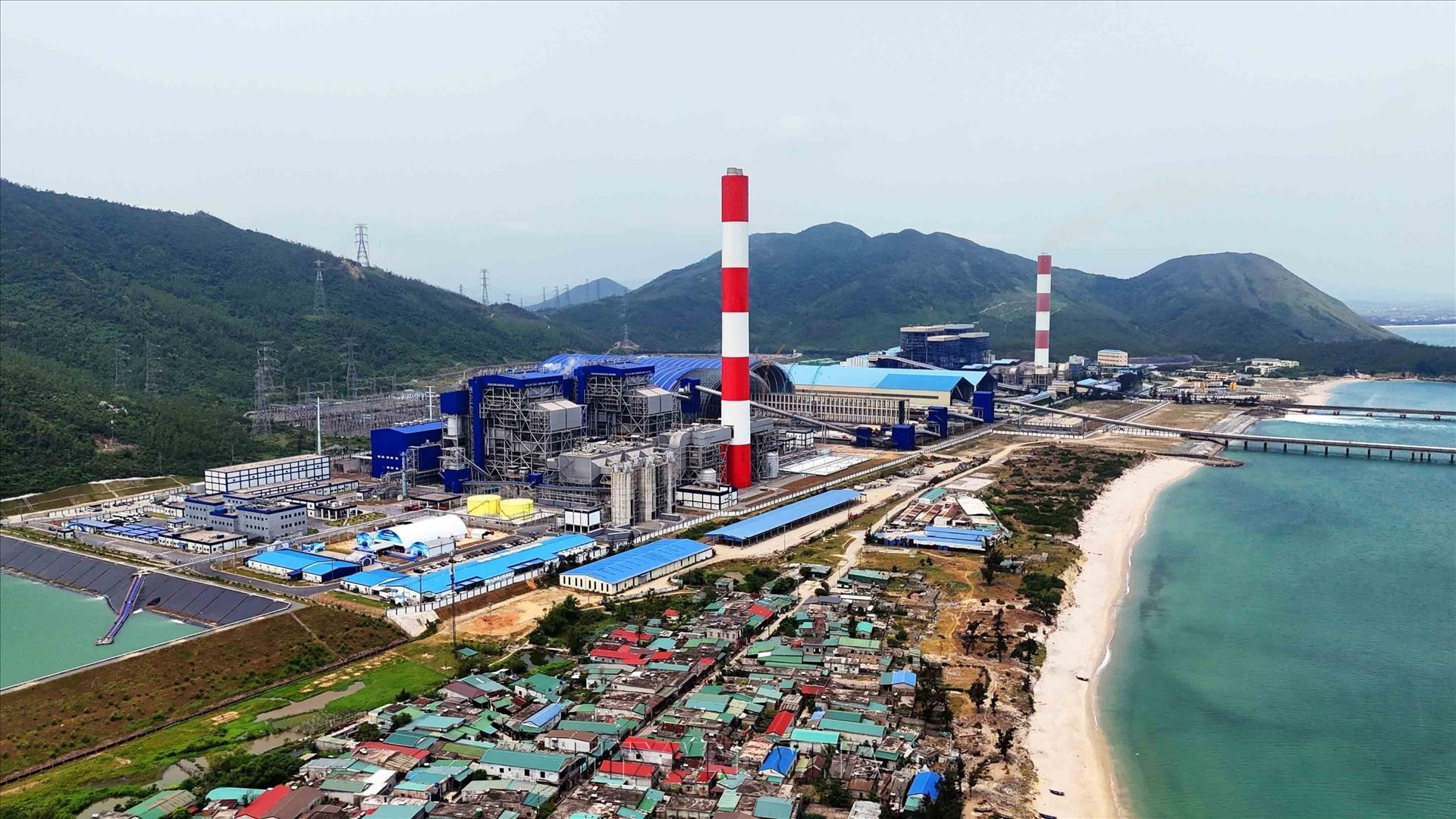
The Vung Ang Thermal Power Plants at the Vung Ang Economic Zone. Photo: VNA
The adjustment aims to create a more rational development framework to maximise the zone’s potential and advantages while providing a legal foundation for construction management and ensuring sustainable development.
Under Decision No. 1487/QD-TTg signed by Permanent Deputy Prime Minister Pham Gia Tuc signed on August 5, the zone covers 22,781ha and is expected to support Ha Tinh’s socio-economic growth by building a modern and interconnected technical and social infrastructure system, developing urban spaces, adapting to climate change and improving land-use efficiency.
The economic zone is expected to host a population of about 181,000 by 2030 and 249,000 by 2050.
The planned construction land area is expected to reach 13,139ha by 2030, accounting for 58% of the economic zone’s natural area, and expand to 14,785ha by 2050, equivalent to 65%.
The adjustments are on spatial development orientation, land use and technical infrastructure.
Accordingly, Vung Ang will focus on developing concentrated industrial zones, seaports and logistics facilities, together with urban areas, services, social infrastructure and ecological spaces.
The zone’s functional structure will include industrial and port areas, logistics and port-related services, urban and service centres, coastal tourism areas, ecological spaces, green areas and water landscapes, as well as technical infrastructure hubs.
The Vung Ang Economic Zone serves as an industrial nucleus of Ha Tinh which significantly helped the central province recorded gross regional domestic product (GRDP) growth of 12.79% in the first six months of 2026, the highest nationwide.
Permanent Deputy Chairman of the provincial People’s Committee Tran Bau Ha said that the province has prioritised infrastructure development, improved the utilisation of deep-water port facilities, expanded transport connectivity and developed industrial land resources to attract and facilitate the operation of large-scale projects to drive growth.
The locality plans to further develop the Vung Ang Economic Zone into a regional centre for industry, energy, seaports and logistics and establish the Vung Ang Free Trade Zone to enhance trade connectivity, attract investment and strengthen the economic zone’s role in regional development./.