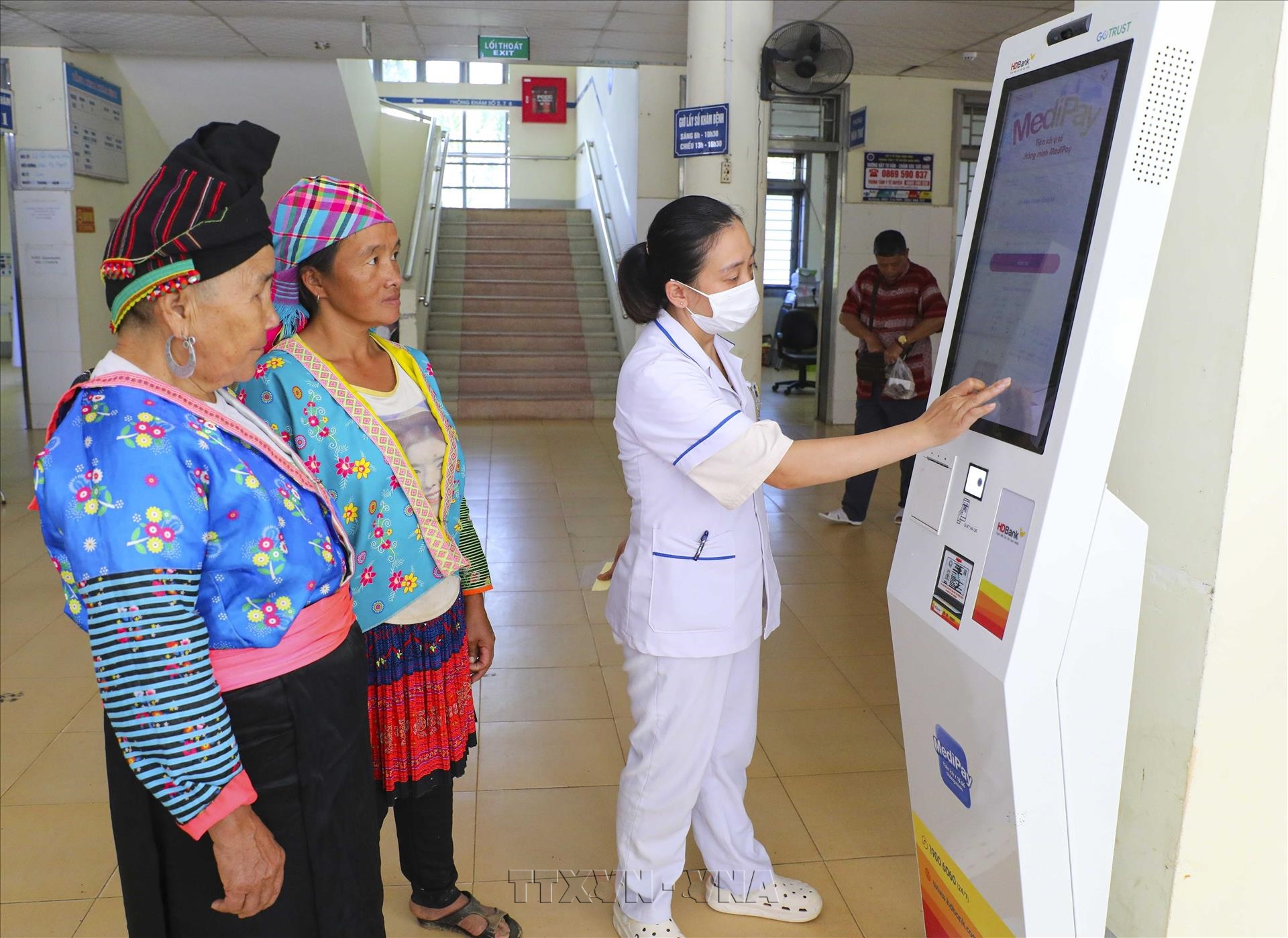
Medical staff assist a patient with registering for a medical examination using a chip-based citizen ID card at Thanh An Medical Center in Dien Bien Province. Photo: Xuan Tu/VNA
Directive No. 29/CT-TTg says Vietnam has made encouraging initial progress in implementing the Politburo's Resolution No. 57-NQ/TW on science, technology, innovation and national digital transformation, contributing to socio-economic development and earning international recognition.
However, many tasks remain behind schedule or overdue, while budget disbursement, particularly for digital transformation, has been slow due to incomplete policies, weak implementation, limited capacity at the grassroots level and insufficient leadership in some agencies and localities.
To address these shortcomings, the directive requires strict implementation of the Party's major policies, particularly Resolution No. 57-NQ/TW and Conclusion No. 18-KL/TW adopted at the second plenum of the 14th Party Central Committee, while reaffirming science, technology, innovation and digital transformation as key drivers of productivity, competitiveness and sustainable economic growth.
Under the directive, the PM instructed ministers, heads of ministerial-level agencies and provincial and municipal leaders to treat science, technology, innovation and digital transformation as a top political priority, stressing that faster disbursement must go hand in hand with efficiency, transparency and the prevention of waste and corruption.
To address these shortcomings, the directive requires strict implementation of the Party's major policies, particularly Resolution No. 57-NQ/TW and Conclusion No. 18-KL/TW adopted at the second plenum of the 14th Party Central Committee, while reaffirming science, technology, innovation and digital transformation as key drivers of productivity, competitiveness and sustainable economic growth.
Under the directive, the PM instructed ministers, heads of ministerial-level agencies and provincial and municipal leaders to treat science, technology, innovation and digital transformation as a top political priority, stressing that faster disbursement must go hand in hand with efficiency, transparency and the prevention of waste and corruption.
Agency heads will be held directly accountable for implementation progress and budget execution.
The Ministry of Science and Technology has been tasked with reviewing and proposing amendments or new policies to create a more favourable environment for scientific and technological development, innovation and digital transformation by the fourth quarter of 2026.
The Ministry of Finance and the Ministry of Science and Technology will also review budget, public investment and financial regulations, simplify procedures, expand decentralisation while strengthening oversight, and improve funding allocation, payment and settlement mechanisms for science, technology and digital transformation projects.
Ministries, central agencies and local authorities must urgently review all science, technology, innovation and digital transformation projects funded in 2026, categorising them into those ready for implementation, those requiring bottleneck removal, and those no longer feasible, with particular attention to shared digital platforms, databases and projects financed from 2025 revenue surpluses carried over into 2026.
Provincial and municipal authorities are instructed to immediately address implementation and funding bottlenecks at the commune and ward levels, ensure efficient use of resources and complete these tasks by July 2026.
They must also assess local capacity for the procurement of digital technology services in support of digital transformation, provide technical support to grassroots administrations and, where appropriate, centralise procurement of complex shared digital systems at the provincial level.
The Ministry of Science and Technology, in coordination with the Ministry of Finance, must complete a review of funding needs for 2025-2026 by the end of July to prioritise strategic projects rather than fragmented investment.
The directive says funding should focus on projects with broad economic impact, particularly strategic technologies listed under the Prime Minister's Decision No. 21/2026/QD-TTg, technologies capable of addressing major national challenges, commercially viable innovations, and upgrades to national research centres and key laboratories.
For digital transformation, priority will be given to developing national data infrastructure, large-scale national and sectoral databases, shared digital platforms, and digital projects supporting the operation of the two-tier local government model./.