
Within the framework of the “Xuan Que huong” (Homeland Spring) 2026 programme, many outstanding overseas Vietnamese expressed their strong interest in and appreciation for the Politburo's Resolution No. 80-NQ/TW dated January 7, 2026, on the development of Vietnamese culture.
They affirmed that culture is the spiritual foundation and a vital endogenous strength of the nation, while underscoring the important role of overseas Vietnamese in preserving and spreading national cultural identity and promoting the image of Vietnam and its people to the world.
Preserving identity, ties with homeland
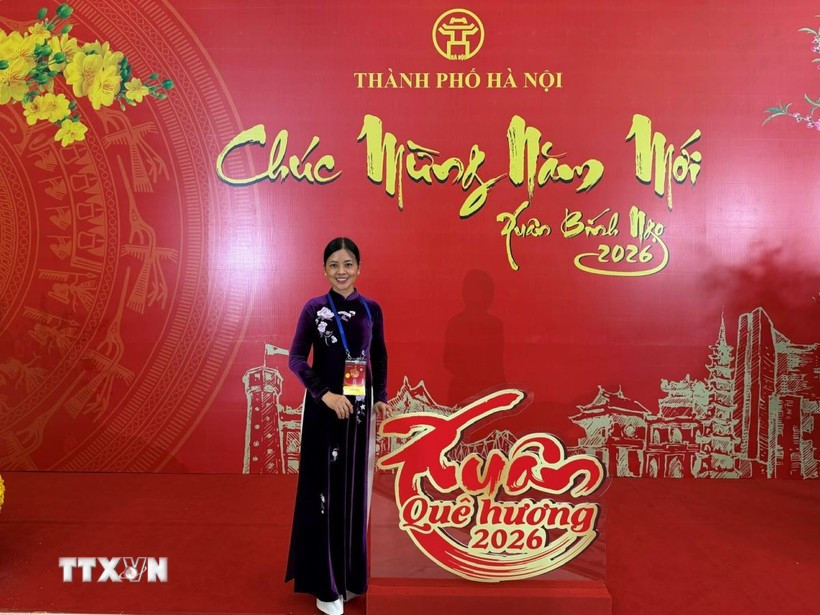
Le Thi Thuong, Principal of the Cay Tre (Bamboo) Vietnamese Language School and Chairwoman of the Vietnamese Association in Japan’s Kansai region, said that the Vietnamese language and national culture are the “roots” that help overseas Vietnamese preserve their identity and maintain bonds with the homeland. Safeguarding the Vietnamese language enables younger generations to understand their origins, history and culture, while nurturing a natural and sustainable love for the Fatherland, she noted.
Commenting on Resolution No. 80-NQ/TW, Thuong described it as timely and strategically significant, as culture is both the spiritual foundation of society and an important source of national soft power in the context of international integration. The resolution clearly highlights the role of overseas Vietnamese, identifying the preservation and promotion of the Vietnamese language as a central task and a crucial “connecting thread” linking communities abroad with the homeland.
She stressed that expanding Vietnamese language education carries long-term practical value. Proficiency in Vietnamese helps young overseas Vietnamese deepen their understanding of Vietnam’s culture and people, access official information, and engage more actively in exchanges, learning, knowledge connectivity and professional cooperation with the country.
In recent years, the Vietnamese community in Japan has actively organised language classes, cultural and educational activities, and Vietnamese language clubs for second- and third-generation Vietnamese children. Notably, cooperation between Hanoi National University of Education and the Vietnam–Japan Economic Cooperation Promotion Association to organise Vietnamese language proficiency assessments and certification in Japan has helped standardise evaluation, encourage language use and expand opportunities for study, work and exchanges with Vietnam.
Strengthening durable links between overseas Vietnamese and homeland
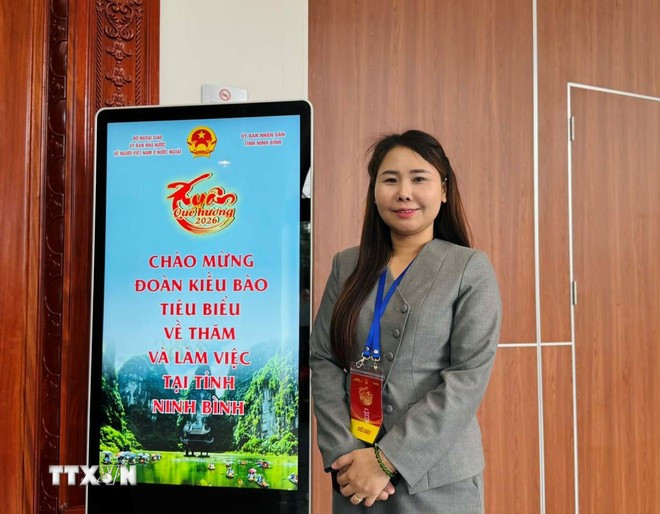
Nguyen Thi Lien, Head of the Vietnamese Language Club in Malaysia and Vice Chairwoman of the Vietnamese Women’s Association in Malaysia, said Resolution No. 80-NQ/TW reflects an important orientation to reinforce durable links between overseas Vietnamese and the homeland. She emphasised that language and culture are key identities of a nation, especially for second- and third-generation Vietnamese born abroad.
Maintaining the Vietnamese language and cultural practices, she said, helps younger generations build a solid spiritual foundation, avoid identity crises and recognise their belonging to a distinct history and tradition. Vietnamese also serves as a vital bridge connecting generations within families and communities, enabling the transmission of traditional values and narrowing cultural gaps.
Beyond preservation within the community, activities such as teaching Vietnamese, organising traditional New Year (Tet) celebrations, festivals and cultural events help spread Vietnamese culture internationally and foster greater understanding and respect from host societies. Language proficiency also allows overseas Vietnamese to follow domestic developments, strengthen ties with the homeland and create favourable conditions for cooperation, investment and intellectual contributions.
Lien noted that younger overseas Vietnamese increasingly view Vietnamese not only as a means of family communication but also as an asset for education, careers and international engagement. This reflects a shift from solely “preserving roots” to combining cultural preservation with integration and personal development in the new context, contributing to the effective and sustainable implementation of Resolution No. 80-NQ/TW, she said./.