The Ho Chi Minh City tourism sector’s robust growth is increasingly intertwined with the expanding role of overseas Vietnamese (OVs), who are helping draw international visitors and promote the image of a dynamic, compassionate metropolis.
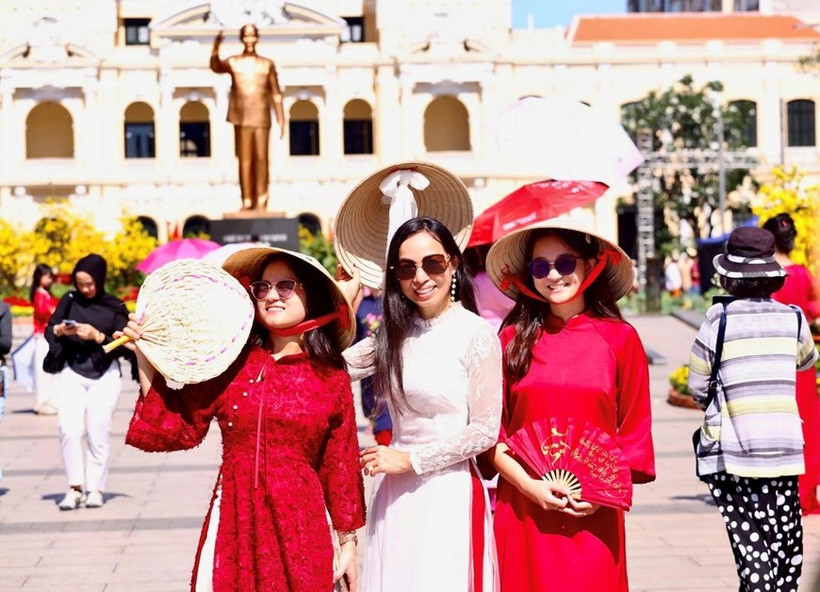
According to the municipal Department of Tourism, during the nine-day Lunar New Year (Tet) holiday in 2026, total tourism revenue reached 12.15 trillion VND (over 463 million USD), up 42.9% year-on-year. The city recorded 4.32 million visitor arrivals, a rise of 35%, including 170,000 international arrivals, up 51.7%.
Inbound travel during the holiday period saw strong growth in urban sightseeing, cultural and culinary experiences, and inter-regional tours, trends that align closely with the city’s strategy to develop modern, creative urban tourism.
In 2025, the city welcomed nearly 8.6 million international visitors, up 40.3%, with OVs making a notable contribution. Ho Chi Minh City aims to tie tourism development more closely to cultural-historical values and distinctive local products, targeting its transformation into a leading creative tourism hub in Asia by 2030. Within this vision, maximising the “bridge” role of OVs is considered key to combining cultural promotion with the attraction of high-quality visitor flows.
Nguyen Thi Thanh Thuy, an OV based in Germany, said that each visit home includes exploring historic landmarks in the city centre, cruising along the Saigon River, and travelling by high-speed boat from Bach Dang wharf to Vung Tau to see relatives. Such close and refreshing experiences, she noted, motivate her to introduce the city to international friends and Vietnamese communities abroad.
Beyond individual stories, OV associations are organising cultural exchange activities that nurture travel demand rooted in emotional and cultural connections. Dinh Thi Minh Ha, based in Sydney and co-founder of the VietAus Cultural Exchange Organisation (VACEO), whose family resides in Phu Nhuan ward, said she makes a point of discovering new tourism products on each return and has witnessed visible changes in the city’s urban landscape. Her regular engagement with her homeland provides authentic material for introducing Ho Chi Minh City in cultural exchange programmes across Australia.
Through performances of traditional musical instruments, showcases of national costumes, and presentations on Vietnam’s people and culture at cultural centres, schools and community events in Sydney, the image of Ho Chi Minh City has become increasingly familiar to local audiences. As appreciation for Vietnamese culture deepens, so does the desire to experience its major urban centres firsthand, with Ho Chi Minh City emerging as a flagship destination.
With their understanding of both local traditions and international contexts, OVs are proving to be an effective “soft bridge” in promoting the city globally, contributing to rising international arrivals and reinforcing Ho Chi Minh City’s position as a creative, globally integrated and culturally rich urban tourism destination./.