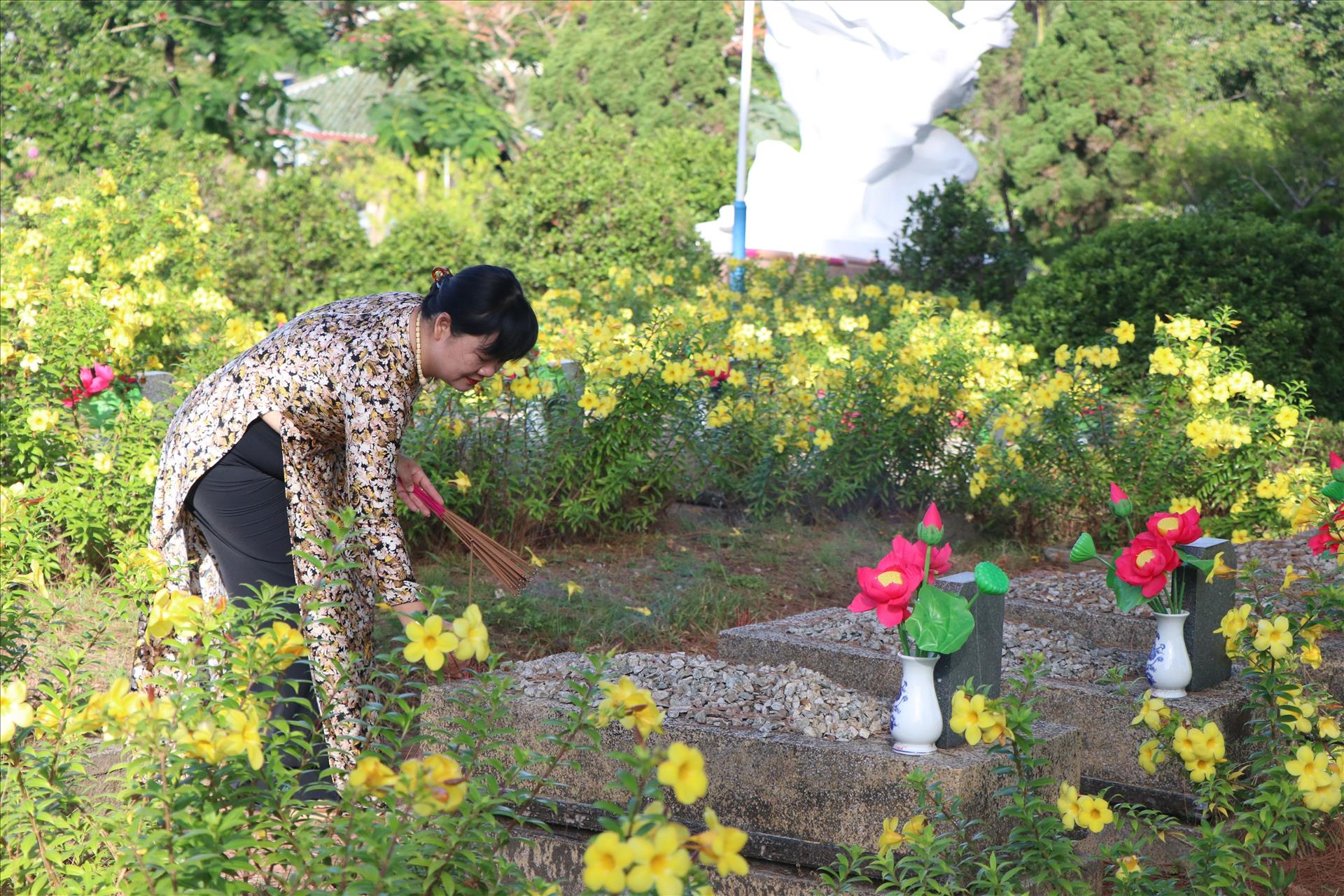
Incense is burned to pay tribute at the graves of fallen soldiers at the Hue City Martyrs' Cemetery. Photo: VNA
A program to collect biological samples from unidentified martyrs' remains for DNA analysis was launched at the martyrs' cemetery of Hue city on June 16 as part of the Government-launched nationwide 500-day campaign to accelerate the search for, recovery and identification of martyrs' remains.
The programme, organised by the Steering Committee for the Search, Recovery and Identification of Martyrs' Remains of Hue city in coordination with the People's Committee of An Cuu ward, will see the excavation, digitisation of information, biological sample collection and restoration of gravesites for 1,456 unidentified martyrs' graves through August 14.
Vice Chairman of the Hue People's Committee Nguyen Van Manh said the central city has stepped up efforts to search for, repatriate and identify martyrs' remains by reviewing and digitising grave records, collecting information from martyrs' relatives and preparing for DNA testing.
He said the large-scale sampling campaign will help build a national DNA database for martyrs, providing a foundation for future identity verification while helping restore the names of unknown fallen soldiers and easing the decades-long anguish of their families.
Under technical procedures issued by the Ministry of National Defence, excavation teams collect samples before reburying the remains and restoring the gravesites. Sampling teams verify grave records, identify grave locations, record information, photograph the sites and archive the data. All stages of the process are carried out under strict protocols to ensure accuracy and facilitate future DNA analysis.
Colonel Ha Van Ai, Deputy Political Commissar of the Hue Military Command, said the work is being conducted carefully and scientifically despite challenging weather conditions. Priority is being given to cemeteries in flood-prone areas while personnel are working during cooler morning and late afternoon hours to ensure both progress and safety.
On the occasion, Vice Chairman Manh, together with leaders of the municipal Military Command and local authorities, offered flowers and incense at the memorial monument at the Hue martyrs' cemetery in tribute to the soldiers who sacrificed their lives for national liberation, reunification and the defence of the Fatherland./.
He said the large-scale sampling campaign will help build a national DNA database for martyrs, providing a foundation for future identity verification while helping restore the names of unknown fallen soldiers and easing the decades-long anguish of their families.
Under technical procedures issued by the Ministry of National Defence, excavation teams collect samples before reburying the remains and restoring the gravesites. Sampling teams verify grave records, identify grave locations, record information, photograph the sites and archive the data. All stages of the process are carried out under strict protocols to ensure accuracy and facilitate future DNA analysis.
Colonel Ha Van Ai, Deputy Political Commissar of the Hue Military Command, said the work is being conducted carefully and scientifically despite challenging weather conditions. Priority is being given to cemeteries in flood-prone areas while personnel are working during cooler morning and late afternoon hours to ensure both progress and safety.
On the occasion, Vice Chairman Manh, together with leaders of the municipal Military Command and local authorities, offered flowers and incense at the memorial monument at the Hue martyrs' cemetery in tribute to the soldiers who sacrificed their lives for national liberation, reunification and the defence of the Fatherland./.