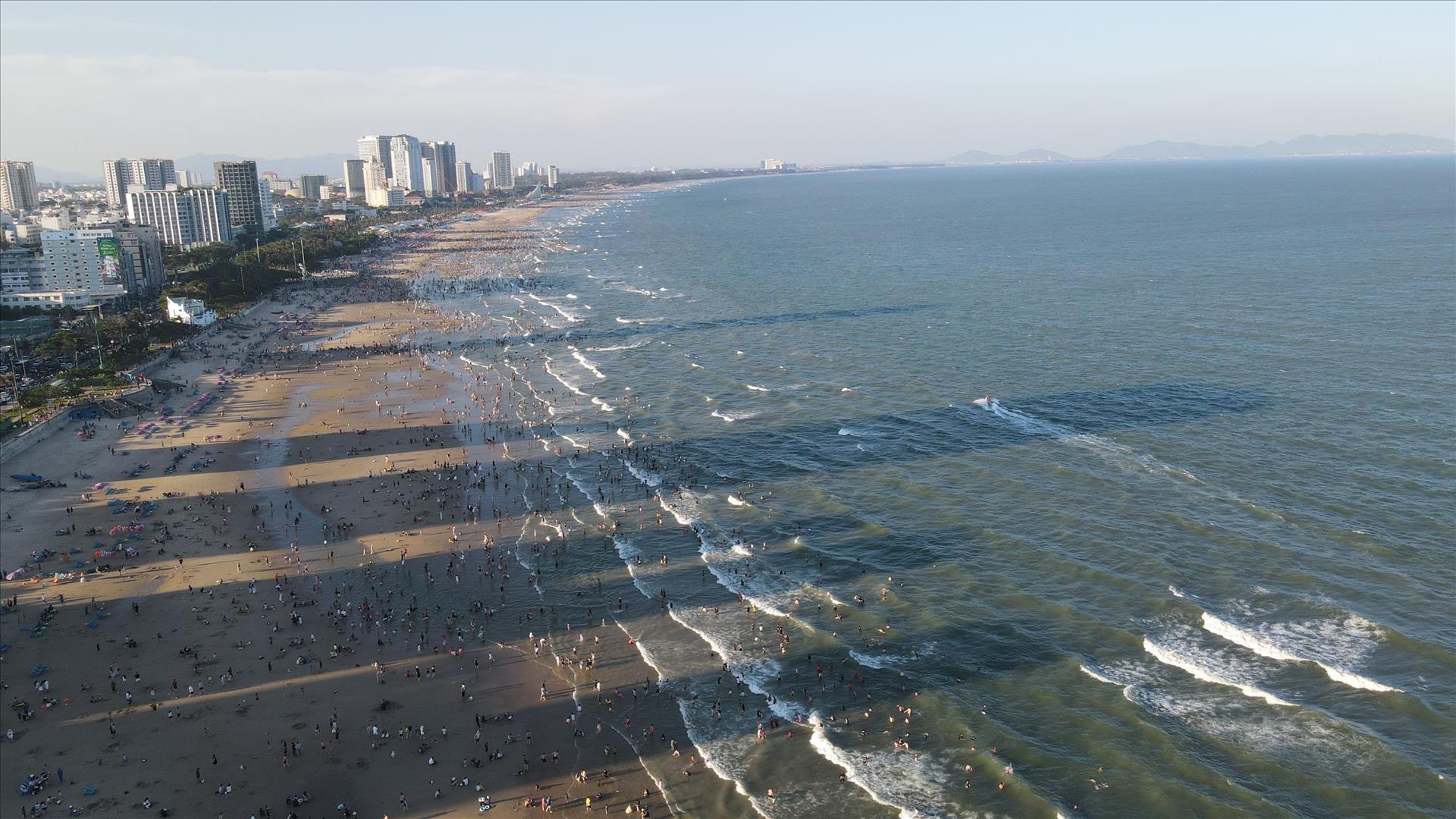
Ho Chi Minh City welcomed nearly 1.7 million visitors and generated 8.7 trillion VND (330 million USD) in tourism revenue in nine days from the Hung Kings Commemoration Day break to the Reunification Day and May Day holiday (April 25–May 3), leading the country in both arrivals and tourism earnings.
The strong performance reflects not only seasonal demand but also changing travel trends, with new tourism products, immersive experiences and short-distance travel gaining popularity.
A multi-sensory tourism experience
Since early April, the city’s tourism sector has introduced nearly 1,000 new tourism products and services. Among the highlights is a helicopter sightseeing tour offering aerial views of the city. Each 40-minute flight costs more than 4 million VND per passenger and uses AW-189 and EC-155B1 helicopters.
This month, VinaGroup Travel, the operator of the helicopter tours, is expected to launch packages combining helicopter travel with golfing experiences and dinner cruises.
Among younger travellers, active lifestyle products such as the “Saigon Run – Paddle – Chill” programme are drawing strong interest by combining sports, sightseeing and relaxation. Metro-connected tours to destinations such as Suoi Tien Tourist Area and Van Thanh Tourist Area have also become popular among families.
Free walking tours, night city tours, Cho Lon discovery tours and local lifestyle experiences are also attracting visitors, alongside vintage car tours branded as “Retro Rides” and heritage-themed programmes such as “Saigon – A Century of Heritage”.
The southern metropolis is also seeing rising numbers of international visitors, with around 190,000 foreign arrivals recorded during the nine-day period.
David Miller, a visitor from Australia, said he was impressed by the city’s diverse tourism offerings after joining a river tourism route combined with sightseeing in the downtown area.
Pham Huy Binh, Director of the municipal Department of Tourism, said the post-merger expansion has created opportunities to develop an “integrated tourism space” based on three pillars - urban, industrial and marine-island tourism.
Under the strategy, the central urban area will focus on cultural, festival and event tourism; the Can Gio – Vung Tau area will promote eco-tourism, resorts and cruise tourism; while the former Binh Duong area will develop industrial tourism, craft village tourism and river-based eco-tourism.
The city’s strength lies in its ability to simultaneously develop multiple tourism segments within one unified destination, ranging from MICE tourism and cultural-historical tourism to waterway tourism, beach resorts, eco-tourism and creative industries, Binh said.
Another emerging trend is demand from foreign business travellers for industrial tours combined with investment environment research in the former Binh Duong area, opening up opportunities for industrial tourism linked with investment promotion.
Expanding infrastructure, improving connectivity
Tourism authorities have continued diversifying products and improving service quality to sustain growth momentum.
A recent survey trip organised by the municipal Department of Tourism identified Long Son commune as having strong potential for community-based tourism linked to local cultural preservation, including traditional livelihoods such as salt-making, fishing and coastal lifestyles.
Alongside new tourism products, large-scale tourism and real estate projects are increasingly attracting domestic and foreign investors.
Located about 120km from the city centre, Ho Tram commune has emerged as a promising tourism destination, attracting a series of multi-billion-USD projects in recent years.
According to local authorities, the locality has approved 41 tourism projects covering more than 660 hectares. Of these, 12 are operational with total investment exceeding 5.5 billion USD, while 24 others are under construction or completing procedures with registered capital of 1.8 billion USD. Another five projects worth around 3 billion USD are seeking investors.
The projects are being developed and managed by major real estate groups and internationally recognised hotel brands, including Le Palmier Ho Tram, Melia Ho Tram Beach Resort, Madison Ho Tram, Wonderland Ho Tram, Camelina Beach Resort, Charm Ho Tram and Hyatt Regency Ho Tram Residences.
Transport infrastructure is also becoming a key driver for tourism growth. According to the municipal Department of Tourism, the nearly 54km Bien Hoa – Vung Tau Expressway will significantly boost eastern tourism development by shortening travel time from Dong Nai and central Ho Chi Minh City to coastal areas, while easing congestion on National Highway 51.
Meanwhile, the DT994 coastal road linking Vung Tau and Lam Dong is being expanded to form a continuous tourism corridor connecting resorts in Ho Tram, Binh Chau, Long Hai and Phuoc Hai.
New infrastructure projects, architectural heritage sites, museums, traditional markets, street food, creative spaces and festivals are helping shape a distinctive tourism identity and encouraging visitors to stay longer in the city./.