Ho Chi Minh City is building on nearly three decades of experience in English-language education as it prepares to gradually make English a second language in schools, with a focus on improving teaching quality, investing in educational infrastructure and creating an English-speaking learning environment.
The southern metropolis became the first locality in Vietnam to launch an intensive English language programme in 1998, before gradually expanding it across the school system. It subsequently introduced elective and universal English courses and programmes to improve English proficiency. In 2014, the city took another pioneering step by implementing an integrated English-Vietnamese curriculum under Project 5695, allowing students in public schools to study mathematics and science in English alongside the national curriculum.
The programme has produced encouraging results by equipping students with subject knowledge and language skills while fostering the ability to use English naturally as a second language.
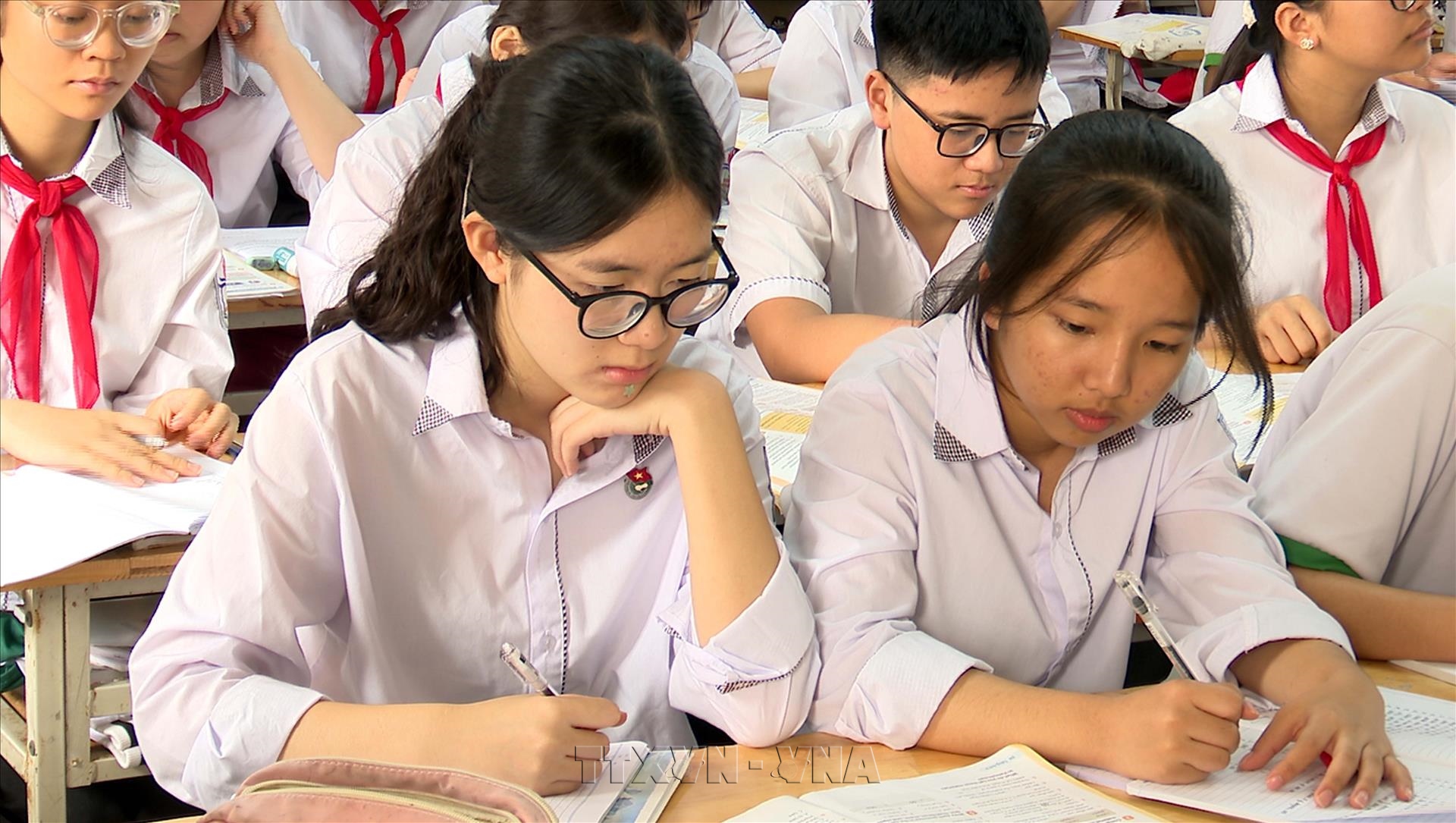
English education has been expanded across all levels, including preschool. More than 206,800 preschool children, accounting for over half of those enrolled in early childhood education institutions, now participate in English familiarisation programmes. At the general education level, English is taught under the 2018 national curriculum, while more than 90% of public schools offer enhanced English or bilingual programmes. Many schools also teach mathematics and science in English through Project 5695 or socialised education programmes involving native-speaking teachers.
Beyond increasing English teaching hours, a growing number of schools have begun piloting lessons in other subjects taught in English, helping students develop confidence and familiarity with the language through everyday classroom use.
Marie Curie High School is among the schools creating an English-speaking environment across its campus. According to Principal Nguyen Tran Khanh Bao, bilingual Vietnamese-English signs, administrative documents and school forms enable both teachers and students to interact with English daily. With more than 3,400 students in 80 classes, the school has expanded English clubs and international exchange activities while assessing the English proficiency of teachers and students to develop appropriate training and teaching plans.
Despite these achievements, the municipal Department of Education and Training acknowledges that expanding English education evenly across the city remains challenging. Differences in infrastructure, digital facilities, access to English-speaking environments and resource mobilisation exist among localities. At the preschool level, English programmes are still largely delivered through socialised services, and some public preschools do not yet have full-time English teachers.
The city has also made significant progress in preparing its teaching workforce. Surveys show that more than 80% of primary and secondary English teachers have reached at least Level 4 under Vietnam’s foreign language competency framework. In contrast, more than half of English teachers at the high school level have attained Levels 5 or 6. The city has also assessed teachers' English proficiency in public schools to support long-term planning for training, recruitment and personnel deployment.
According to the municipal Department of Education and Training, however, the shortage of qualified teachers remains the biggest obstacle. The number of teachers capable of delivering subjects in English is insufficient in both quantity and quality. English proficiency among school administrators and teachers of other subjects also requires improvement. Policies on recruitment, professional development and incentives for teachers also need to be refined.
While the Ministry of Education and Training is finalising national standards for the initiative, Ho Chi Minh City is completing its own project on English a second language in schools with a vision to 2045.
The roadmap is divided into three phases. Between 2026 and 2030, the city will focus on building the necessary foundations, aiming for 40% of educational institutions to establish English-speaking environments and 20% to teach selected subjects in English. During 2031–2035, the city plans to expand implementation, with all education personnel meeting English proficiency standards and half of schools delivering programming in English. By 2045, it aims for 60–70% of educational institutions to implement integrated English programmes.
To achieve these goals, Ho Chi Minh City plans to introduce special mechanisms to attract high-quality English language teachers and native-speaking educators, promote public-private partnerships, modernise teaching materials, expand digital learning resources, and accelerate the application of digital technologies and artificial intelligence in education, creating a learning environment where English can increasingly be used as a natural second language./.