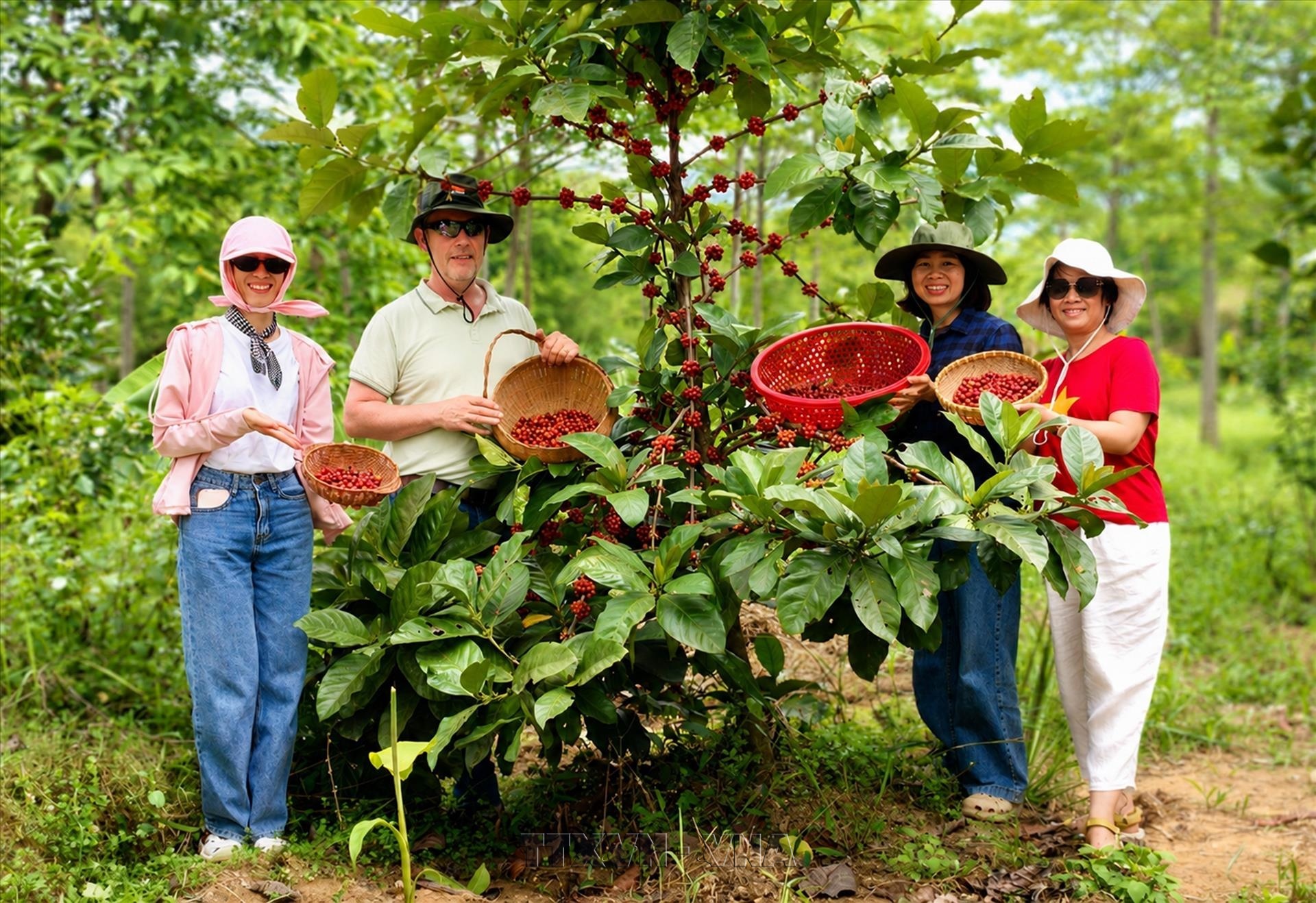
Khe Sanh develops tourism linked to its coffee growing areas. Photo: VNA
Coffee is emerging as one of the strongest examples of this trend.
Despite sharp fluctuations in global coffee prices last week, Vietnamese robusta prices remained firm at around 95,500 VND (3.65 USD) per kilogramme, up roughly 2,500 VND from the previous week and also the highest in many months. More notably, Vietnamese coffee certified under the European Union Deforestation Regulation (EUDR) is currently fetching about 50 USD more per tonne than conventional coffee in the EU market.
Vice Chairman of the Vietnam Coffee – Cocoa Association (VICOFA) Do Ha Nam said Vietnam is well positioned to benefit when the EUDR comes into full effect on January 1, 2027.
Although the regulation was originally scheduled for implementation in early 2025, it was postponed to allow exporting countries and businesses more time to prepare. Vietnam, however, has been among the best-prepared suppliers, he said.
"Vietnamese coffee already compliant with EUDR requirements is being sold at a premium of around 50 USD per tonne. Once the regulation is fully enforced, opportunities for Vietnam's coffee industry will become even greater," Nam said.
Thai Anh Tuan, General Director of Simexco DakLak, shared a similarly optimistic outlook, noting that many European buyers have already begun sourcing EUDR-compliant coffee despite the delayed implementation.
The company, moving to adhere to the EUDR early, has worked with provincial authorities to establish a digital database covering coffee-growing areas and around 20,000 farming households, allowing customers to trace products back to their origin. At the same time, it is expanding deep processing to increase product value, he said.
The EU remains Vietnam's largest coffee export market, accounting for nearly 41% of total export value. In 2025, Vietnam exported about 666,000 tonnes of coffee worth 3.6 billion USD to the bloc. However, compared with the coffee industry's value chain of the EU+ (comprising the EU, the UK, Norway and Switzerland), estimated at nearly 667 billion USD, experts say there is still significant room for Vietnamese coffee to increase both market share and value through higher quality, processing and packaging.
Beyond coffee, sustainability standards are becoming increasingly important across the agricultural sector.
The EU has introduced strict regulations not only on deforestation but also on illegal, unreported and unregulated (IUU) fishing. Meanwhile, other major markets, including the US and China, are tightening environmental and food safety requirements for imported agricultural products.
Vietnam has responded by promoting sustainable production models, including its one-million-hectare low-emission rice cultivation project in the Mekong Delta, which is expected to strengthen the competitiveness of Vietnamese rice in foreign markets.
Dang Phuc Nguyen, General Secretary of the Vietnam Fruit and Vegetables Association (VINAFRUIT), said although fruit and vegetable exports are not currently subject to the EUDR, exporters should prepare for expanding environmental requirements as green consumption becomes mainstream in Europe.
He noted that the EU is continuously tightening maximum residue limits for pesticides, meaning a single violation could place an exporter or even an entire country's products under closer scrutiny.
European consumers also increasingly favour products with biodegradable packaging, water-saving farming practices and lower greenhouse gas emissions. To access major supermarket chains, Vietnamese exporters must obtain internationally recognised certificates such as GlobalG.A.P., Organic or SMETA, he said.
Nguyen added that climate change and rising temperatures in Europe are creating growing demand for tropical fruits with high water content, including passion fruit, dragon fruit, seedless limes and fresh coconuts. Processed products such as frozen diced mango, frozen passion fruit cubes and frozen pineapple are also becoming increasingly popular, offering new opportunities for Vietnamese exporters able to meet evolving consumer preferences./.