The central city is encouraging fishermen to invest in larger, better-equipped vessels capable of longer offshore voyages while improving compliance with fisheries regulations. Local authorities are also facilitating access to preferential loans for vessel construction and upgrades.
In Tam Hai island commune, offshore fishing has become the backbone of the local economy. The commune operates a fleet of 24 offshore vessels, all equipped with communication systems and voyage monitoring systems (VMS), enabling fishermen to maintain contact at sea and avoid entering foreign waters.
One of the vessels, QNa-923787 TS, recently returned from its second long-distance fishing trip of 2026 with 17 tonnes of seafood. Thanks to proper onboard preservation, the catch maintained high quality, while the vessel's 12 crew members earned an average monthly income of 15 million VND (approximately 570 USD) each.
During the first half of 2026, fishermen in Tam Hai landed more than 1,700 tonnes of offshore seafood, achieving over half of the commune's annual target of 3,300 tonnes. Aquaculture production also reached more than 320 tonnes, equivalent to 70% of the year's target.
Authorities said all skippers and vessel owners have committed to complying with the Fisheries Law and local regulations on marine resource conservation, while vessels failing to meet legal requirements are barred from leaving port.
According to the municipal Department of Agriculture and Environment, 100% of fishing vessels measuring 15 metres or longer have installed VMS devices and completed mandatory vessel identification, significantly strengthening fisheries management and IUU fishing prevention.
The department said Da Nang currently has no fishing vessels detained by foreign authorities for IUU fishing violations. However, 426 fishing boats, mainly inshore, remain ineligible to operate because their fishing licences or inspection certificates have expired.
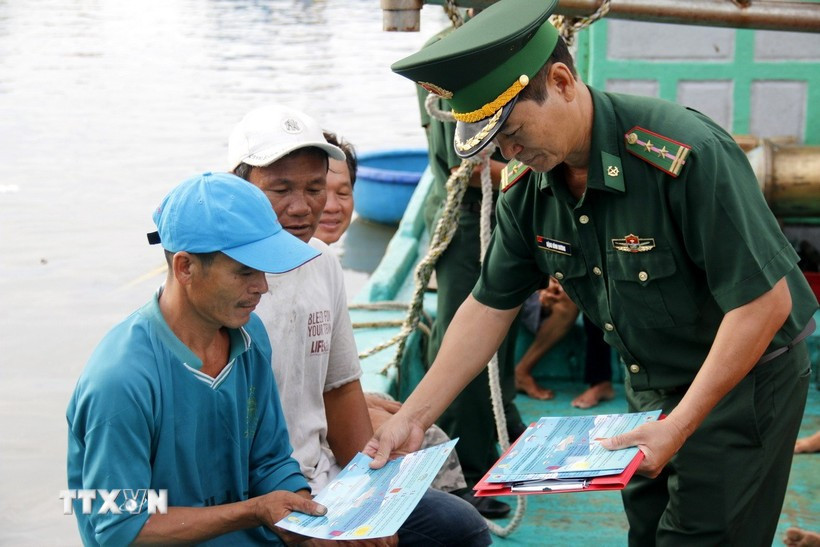
To address the issue, the city updates a weekly list of non-compliant and high-risk vessels, sharing it with local authorities and border guards to prevent them from going to sea. Relevant agencies have also been tasked with accelerating the renewal of licences and other required documentation for eligible vessels.
Da Nang has also adopted a fisheries development support programme for 2026–2030, offering financial assistance for hull insurance, VMS installation and subscription fees, the removal of unqualified vessels, and the conversion from trawl fishing to more sustainable fishing methods.
City leaders said the restructuring programme aims to reduce nearshore fishing, improve seafood traceability, ensure legal and responsible fishing practices, and ultimately contribute to the removal of the European Commission's "yellow card" relating to IUU fishing while strengthening fisheries as a key pillar of the local economy./.