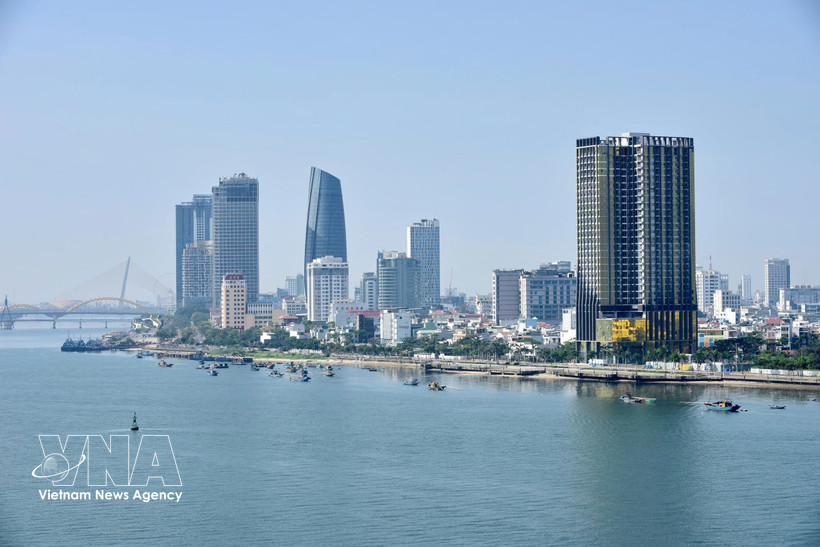
The Prime Minister’s approval of adjustments to six regional master plans for 2021–2030, with a vision to 2050, has created fresh development space for localities nationwide. Notably, under Decision No. 614/QD-TTg, the revised master plan for the south-central coastal and Central Highlands region identifies Da Nang as a key growth pole alongside provinces such as Quang Ngai, Khanh Hoa, Gia Lai, Dak Lak, and Lam Dong.
The region is envisioned to achieve rapid and sustainable development by 2030, strengthening linkages between coastal, highland, and border areas, while becoming an attractive destination for marine, ecological, and cultural tourism. Several localities are expected to lead the country in areas such as science and technology, innovation, logistics, and financial services.
For Da Nang, these planning adjustments, along with the city’s own revised master plan for 2021–2030 and vision to 2050, provide a crucial foundation for implementing strategic solutions. The city is also working on a broader master plan to 2045, with a vision to 2075, expected to be finalised this year.
Under its new orientation, Da Nang is no longer positioned solely as a tourism hub, but as a regional centre for science and technology, innovation startups, and international finance. It aims to develop a smart, eco-friendly city aligned with green transformation and the goal of net-zero emissions by 2050.
The city has set ambitious targets for 2026–2030, including annual GRDP growth of 11–12%, per capita GRDP of around 8,500 USD by 2030, and continued dominance of the service sector, accounting for over 64% of the economic structure. Industry and construction are projected to make up about 31%.
Total social investment is expected to grow by 14–15% annually, while state budget revenue and export turnover are projected to increase by around 10% and 10–12% per year, respectively.
According to Standing Vice Chairman of the municipal People’s Committee Ho Ky Minh, infrastructure development will play a central role in shaping new growth models, with the city leading in science and technology, marine economy, logistics, high-tech industries, and innovation.
To realise these goals, Da Nang is implementing special policies and removing bottlenecks to unlock resources. Administrative reform and faster project execution have been identified as top priorities, with efforts to streamline procedures, shorten appraisal timelines, and enhance accountability among project leaders.
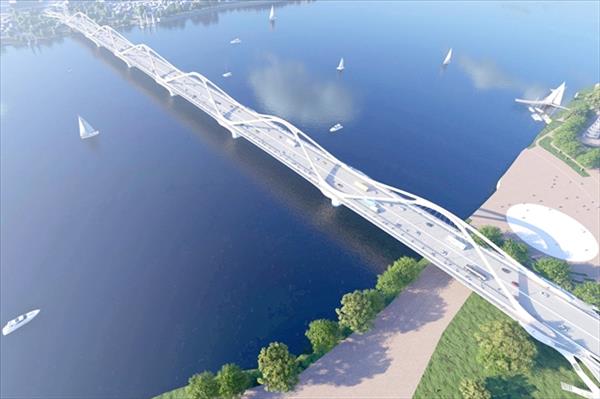
The city is accelerating key projects for 2026–2030, including upgrades to major transport routes such as the Nam Hai Van bypass, connections to Lien Chieu Port, National Highway 14D, and key urban intersections. Other projects include the Lien Chieu container port, a new international passenger terminal, high-end urban and tourism complexes, and energy projects.
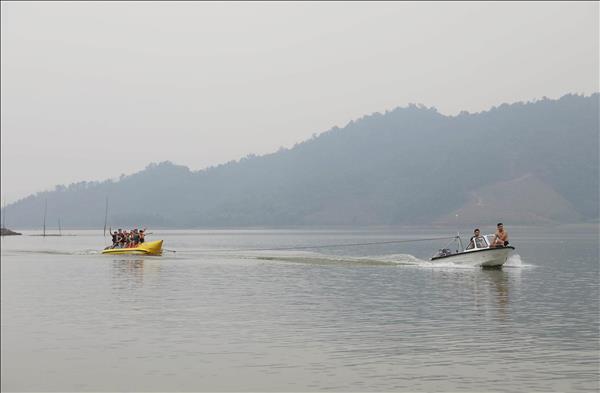
Amid global uncertainty, Da Nang is also adjusting its tourism strategy toward high-spending visitors from Northeast Asia, India, and Australia. From April to October, the city plans to operate 14 charter flight routes from Russia and CIS countries to offset potential declines in international arrivals.
At the same time, authorities are strengthening market monitoring and supply management to ensure stability, prevent disruptions, and maintain food and energy security.
Da Nang will step up efforts to attract foreign investment into key areas such as the international financial centre, free trade zone, and innovation sectors, while implementing major Party and National Assembly resolutions to create breakthroughs and sustain its push toward double-digit growth./.