However, to turn natural resources into sustainable livelihoods, the central city is striving to shift decisively from agricultural production towards an agricultural economy, with market demand and added value as key measures of success.
Following the merger, Da Nang’s agricultural and forestry development space has expanded significantly. Statistics from the municipal Department of Agriculture and Environment show that the city now has more than 203,000 hectares of agricultural production land, 442 farms, 654 cooperatives and 477 products under the One Commune, One Product (OCOP) programme.
Notably, 19 products have been exported, with export revenue projected to exceed 100 billion VND (3.86 million USD) in 2026. In addition, forests and land used for forestry cover more than 744,000 hectares, including over 688,000 hectares of natural and planted forests, providing a substantial foundation for developing the forestry economy and medicinal plant cultivation.
However, the scale of these resources has yet to translate into commensurate economic returns. Vu Thi Bich Hau, Deputy Director of the Da Nang Department of Agriculture and Environment, stressed that the current priority is not simply to expand production but to improve the quality of development and determine how much value each garden and farm could generate, as well as where there is further room to increase that value.
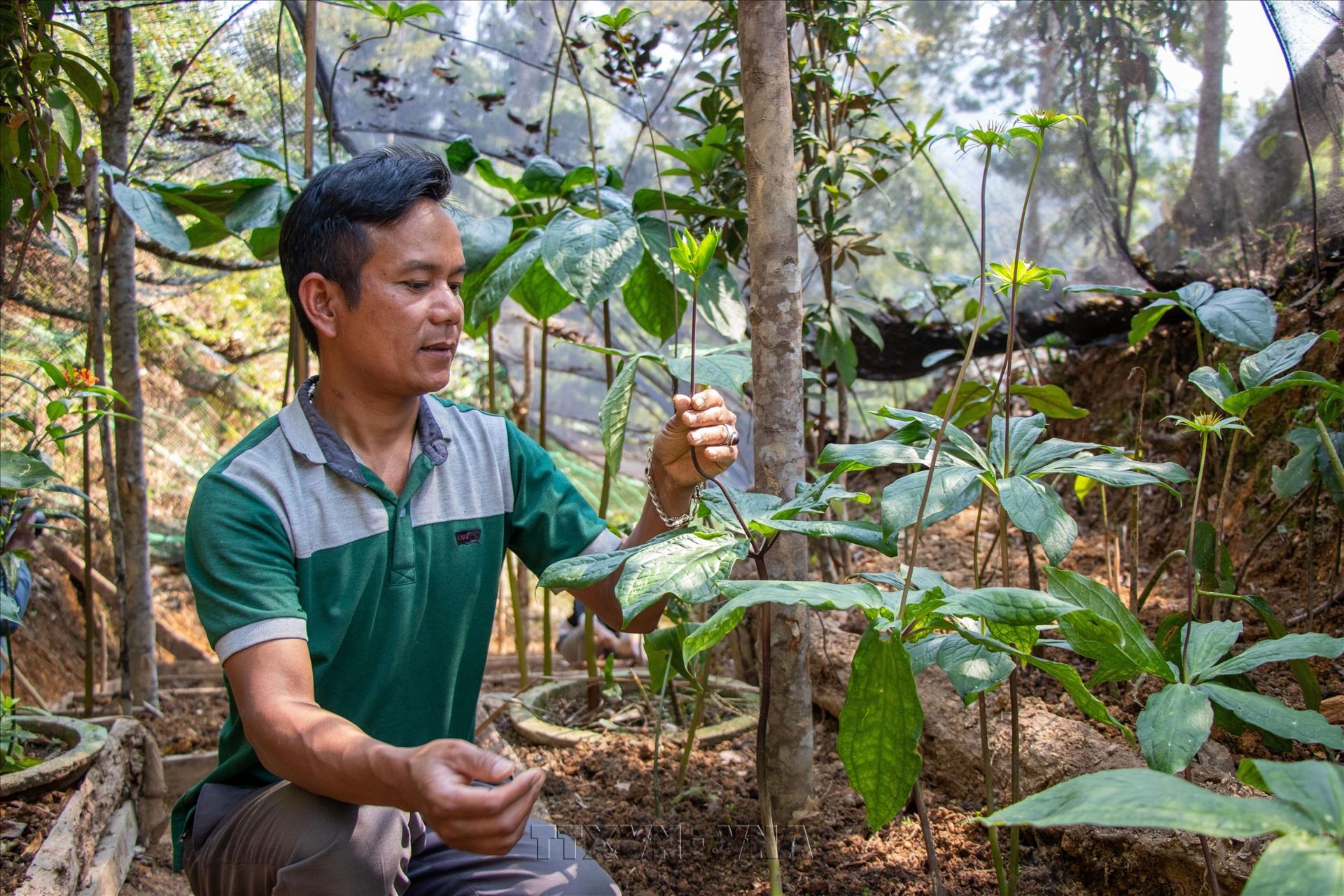
Growing medicinal plants under forest canopies, combined with livestock farming and ecotourism, is emerging as a key development path for mountainous communes, helping generate income while maintaining forest cover.
In the border commune of Hung Son, medicinal plants and tourism have been identified as breakthrough areas. Nguyen An, Chairman of the commune People’s Council, said the locality is focusing on helping residents cultivate medicinal plants under forest canopies, implementing payments for forest environmental services and exploring mechanisms to generate income from forest resources, including the potential of carbon credits.
The commune has successfully transplanted and trialled Ngoc Linh ginseng, while developing other valuable medicinal plants.
For cooperatives, ensuring short-term income to sustain longer-term investments is a top priority. Bh’ling Mieng, Director of the Loc Troi Agriculture, Medicinal Plants and Tourism Cooperative in Tay Giang commune, said medicinal plants such as “ba kich” (Morinda officinalis How) and Paris polyphylla take around five years to mature for harvesting. Relying solely on income from these crops will make it difficult for growers to sustain production.
The cooperative has therefore combined medicinal plant cultivation with livestock and poultry farming and on-site ecotourism to generate short-term cash flow.
In tourism, although the Loc Troi cooperative has been recognised as a tourist destination, it is not yet able to receive international visitors. Mieng called on the city to introduce an appropriate management framework to allow foreign tourists to stay at ecotourism sites near the border.
Building on the advantages of forests, gardens and indigenous knowledge, Da Nang has an opportunity to develop new value chains linking agriculture with processing and services. When residents can earn a sustainable living from forestry, local products have stable markets and a greater share of value remains within communities, the shift from agricultural production to an agricultural economy will begin to deliver genuinely sustainable development./.