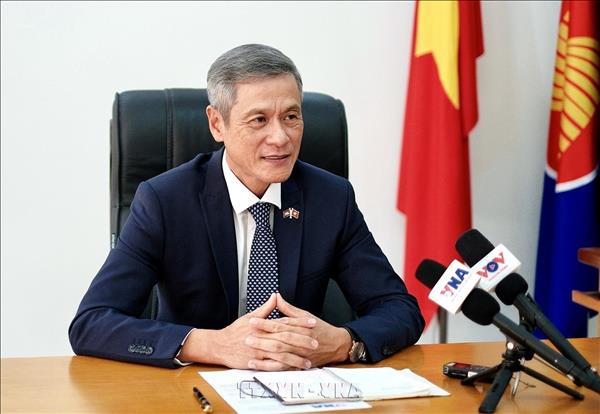
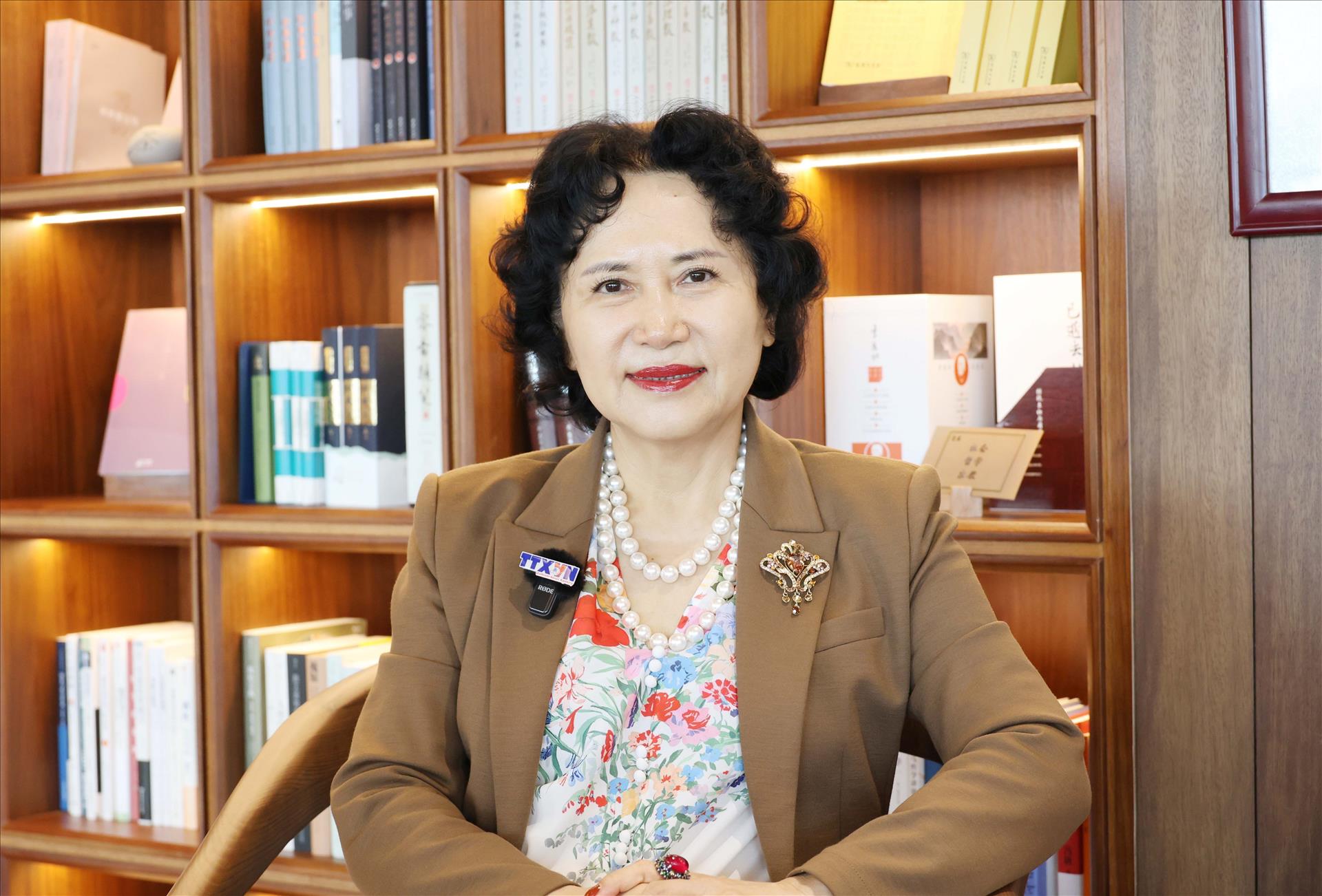
In an interview with the Vietnam News Agency correspondents in China, Tao Yitao, senior professor at Shenzhen University, former Deputy Secretary of the university’s Party Committee, and Director of the China Centre for Special Economic Zone Research, said the model reflects Vietnam’s strong commitment to simplifying administrative management.
According to Tao, one of the most significant advantages of the new system lies in its ability to improve governance efficiency through a flatter administrative structure.
First, eliminating intermediate levels and allowing provincial authorities to directly oversee commune-level administrations could, in theory, significantly reduce administrative costs and improve the transmission of policies.
Second, the model facilitates more direct allocation of resources and decentralisation of public services. By enabling resources to reach the grassroots level without unnecessary intermediary intervention, it can accelerate service delivery and contribute to improving people's living standards.
From the perspective of institutional economics, Tao said reducing administrative layers is not merely a matter of streamlining institutions. Rather, it involves a redistribution of governance responsibilities and transaction costs. Vietnam’s decision to abolish the district level and reorganise local administration into a two-tier provincial-communal structure reflects an ambitious political reform aimed at reducing information loss and addressing concentration of authority within traditional delegation chains.
The reform is intended to create a more direct connection between the State’s policy objectives and grassroots implementation.
The Chinese expert cautioned that one year is far too short a period to determine the ultimate success or failure of such a far-reaching reform. However, the model’s innovative nature lies in its willingness to move beyond dependence on a district-level system that has existed for centuries.
Its deeper significance is that it highlights a fundamental principle: administrative reform ultimately leads back to political reform. Unless power is effectively decentralised and accountability strengthened through legal mechanisms, simply adding or removing administrative layers may not be sufficient to achieve the intended goals of reform.
To address challenges in the coming years, Tao proposed three priorities for Vietnam’s next stage of reform to ensure stable and sustainable progress.
The first is to establish a scientifically balanced relationship between authority, financial resources and personnel so that responsibilities, powers and benefits remain aligned.
She argued that when provincial governments delegate responsibilities to commune-level administrations, they must also transfer corresponding financial resources. A standardised fiscal transfer system, for example, could help ensure that local governments possess sufficient capacity to perform public service functions. In addition, local authorities should be granted greater autonomy in personnel appointment and evaluation to strengthen self-governance.
Second, Vietnam should take advantage of digital technologies to compensate for the expanded management scope and build a digital government capable of overcoming organisational limitations.
Third, Tao emphasised the need to strengthen the professional capacity of grassroots civil servants. As administrative structures become leaner, management tasks at the commune level are becoming more complex. Enhanced training programmes and efforts to attract professional management talent, particularly in finance, urban planning and public services, would help improve local governments’ planning, implementation and emergency response capabilities.
The professor expressed confidence that as long as Vietnam remains committed to a people-centred development philosophy, its administrative reforms will deliver positive results. The country’s evolving governance model is opening new opportunities for the world to engage with Vietnam while enabling Vietnam to integrate more deeply with the world, further highlighting the attractiveness and vitality of its institutional development./.