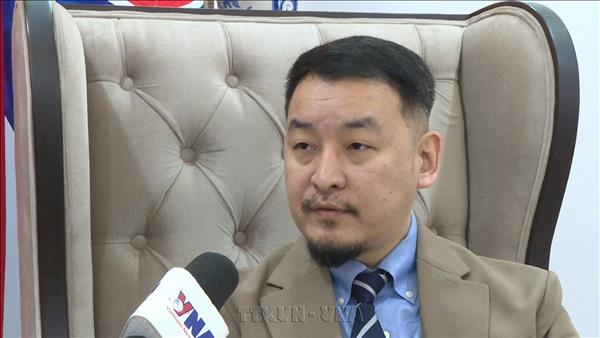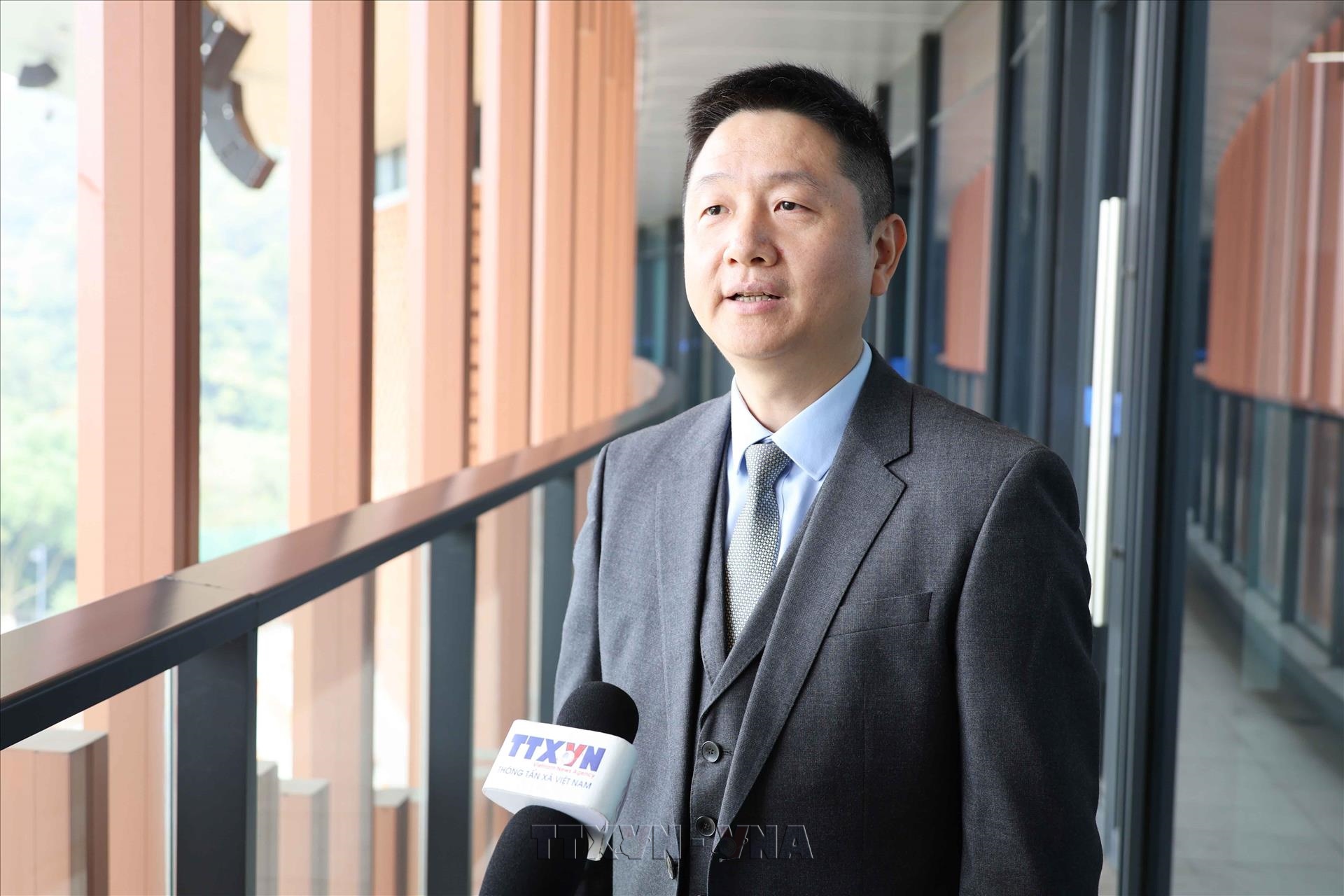
Vietnam is expected to leverage its role as host of the 34th Asia-Pacific Economic Cooperation (APEC) Economic Leaders’ Meeting 2027 (APEC 2027) to further open its economy, attract investment and develop emerging technology sectors, particularly artificial intelligence (AI), said Lang Yiding, a representative of Ningbo Fujia Co., Ltd. in China’s Zhejiang province, which currently operates an investment project in Vietnam employing more than 3,000 people.
According to him, the event will be significant for the country's economic prospects. Hosting a major international gathering such as APEC will help draw greater attention from the global business and investment community to Vietnam.
In an interview with Vietnam News Agency (VNA) correspondents in China, Lang described Vietnam as a safe country, a particularly important consideration for foreign investors.
Vietnam offers a safe investment environment and that its ongoing reforms are delivering tangible benefits to foreign businesses, he said, expressing his hope that the country will continue to expand investment openness while strengthening policies to support and encourage investment.
He noted that sweeping reforms implemented by the Vietnamese Government over the past one to two years had brought tangible improvements to manufacturing and business operations. Project approval procedures have also become significantly more streamlined compared with previous years.
As a result, his company has confidence in Vietnam's development prospects and wishes to expand its investment and strengthen cooperation. However, he said further improvements are needed in the speed and efficiency of customs clearance, reductions in the time required to approve certain applications and administrative procedures, and ensuring a stable energy supply as these factors directly affect business performance and companies' investment expansion plans.
On new areas of cooperation, Lang said major shareholders of his publicly listed company and its partners are keen to support Vietnam in developing infrastructure for AI, including AI computing centres. Regarding policies to attract foreign investment, he described Vietnam's introduction of a new law on foreign investment as a positive signal that would strengthen incentives and confidence among the business community.
He noted that the world is entering a period of rapid AI development, with the technology widely regarded as a driving force behind the Fourth Industrial Revolution. Against this backdrop, infrastructure plays a particularly important role in enabling countries to seize development opportunities.
He said he hopes that the Vietnamese Government will proactively position the country to capitalise on this trend by promoting the development of AI infrastructure and creating favourable conditions for private-sector participation. He also called on the Government to consider electricity pricing to facilitate business expansion in manufacturing, particularly investment in AI and data centres.
Lang also affirmed that his company is ready to contribute to the development of AI infrastructure in Vietnam, helping advance technology development and expand economic cooperation between the two countries./.