Ho Van Mung, Chairman of the An Giang provincial People’s Committee, has ordered local departments, law enforcement forces and authorities to tighten discipline, clearly assign responsibilities and strictly hold agency and local leaders accountable for results in combating IUU fishing.
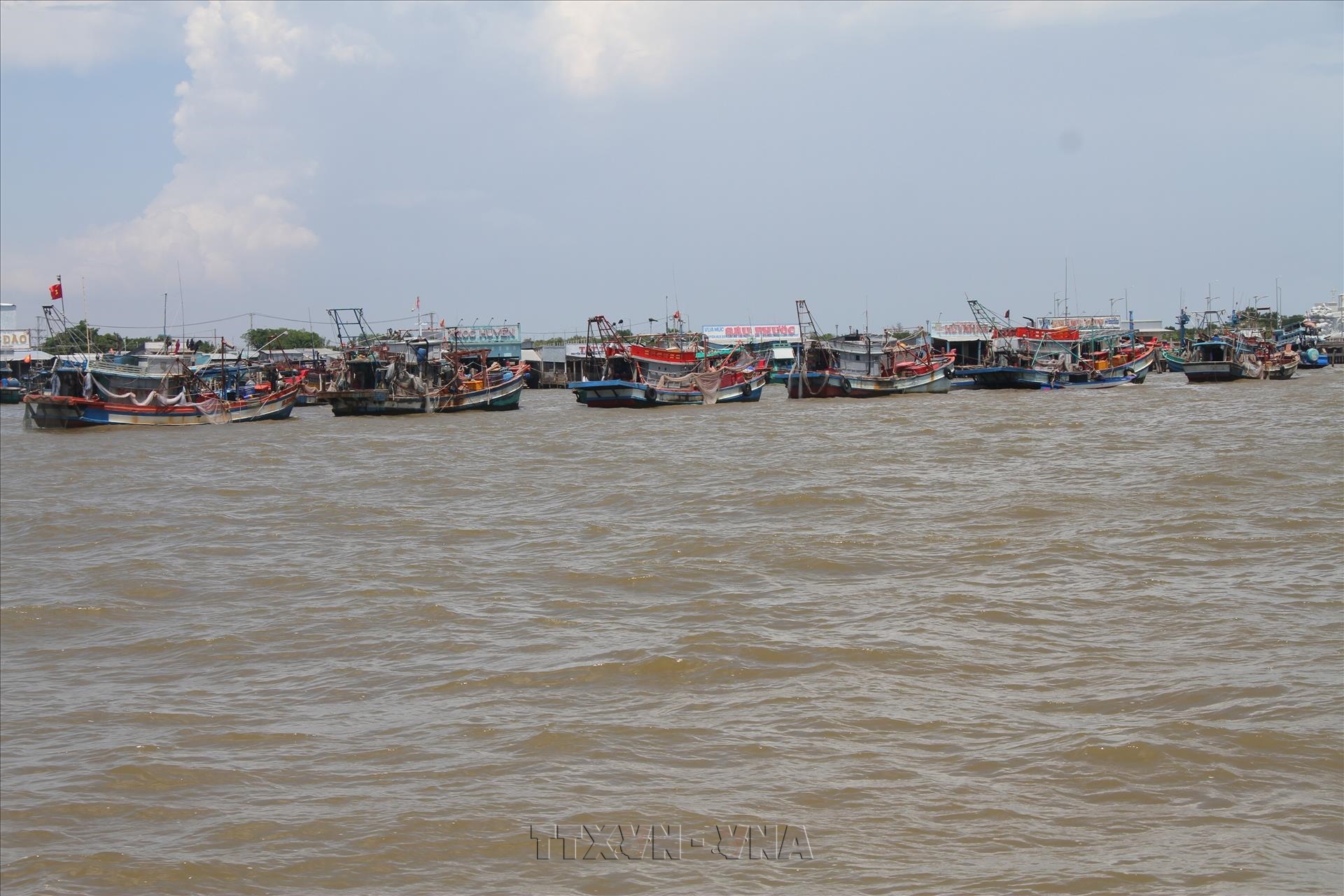
The provincial Department of Agriculture and Environment will lead efforts to identify fishing vessels that fail to meet operating requirements, with priority given to vessels measuring 15 metres or more in length, which pose the highest risk of illegally entering foreign waters. Lists of these vessels will be provided to competent forces, including coast guard, naval, border guard and fisheries surveillance forces and local authorities for close monitoring and enforcement.
The An Giang Border Guard has ordered all border guard checkpoints to strictly check vessel monitoring system (VMS) signals during departure and arrival clearance. VMS devices must be properly sealed, their serial numbers must match official records, and any signs of tampering must be addressed. Vessels that fail to meet operating requirements will be barred from going to sea.
Authorities of communes, wards and special zones are also required to document ineligible fishing vessels, photograph them and record their anchorage locations, while assigning local officials, Party members and civil servants to monitor their status and prevent unauthorised operations.
An Giang is also stepping up patrols in key maritime areas by fisheries surveillance and competent forces.
From the beginning of 2026 to mid-October, the provincial Border Guard and relevant agencies imposed administrative fines totalling more than 6 billion VND (232,000 USD) for violations detected during coastal and nearshore patrols. From January 1, 2024 to October 15, 2026, provincial police received 82 cases and reports concerning suspected IUU-related crimes and initiated criminal proceedings in 63 cases.
To tighten control over seafood landings, the province has standardised 26 coastal fish collection points alongside the two designated fishing ports of Tac Cau and An Thoi, bringing the total to 28 locations. The network will help authorities track vessel movements and strengthen oversight of fishing activities.
An Giang is taking a hard line against deliberate violations, particularly the removal of VMS devices, the use of fake vessel identification numbers and the organisation of illegal fishing trips into foreign waters. Such acts can constitute serious crimes that threaten national economic security and damage Vietnam’s international reputation.
Provincial police, working with the Border Guard, have been ordered to accelerate investigations and dismantle networks that organise and facilitate illegal fishing in foreign waters. Investigations will also target schemes that transport people by air or land to neighbouring countries to operate modified fishing vessels with erased identification numbers.
According to the provincial Steering Committee for IUU Prevention and Control, from the beginning of 2026 to mid-October, authorities issued 263 notices covering 836 violations involving 522 fishing vessels that had lost VMS connections or crossed permitted boundaries. They recorded 218 administrative violations and issued 109 penalty decisions, with total fines exceeding 6.6 billion VND.
Alongside tougher enforcement, the province is intensifying public awareness campaigns on legal requirements and penalties. It is also providing support for satellite VMS service fees, vocational transitions and the scrapping of vessels no longer eligible for fishing operations.
Chairman Mung has ordered authorities to review vessel registrations and revoke those of ineligible vessels, develop technical solutions to automatically alert vessel owners to violations, and clear outstanding VMS cases without delay. Support for VMS installation and occupational transitions must reach the right beneficiaries and deliver tangible results.
The campaign underscores An Giang’s determination to eliminate persistent IUU violations, strengthen accountability and tighten monitoring through information and operations centre (IOC) technology. The province aims to work with the rest of the country to secure the lifting of the EC’s “yellow card” warning and ensure the sustainable development of the fisheries sector./.