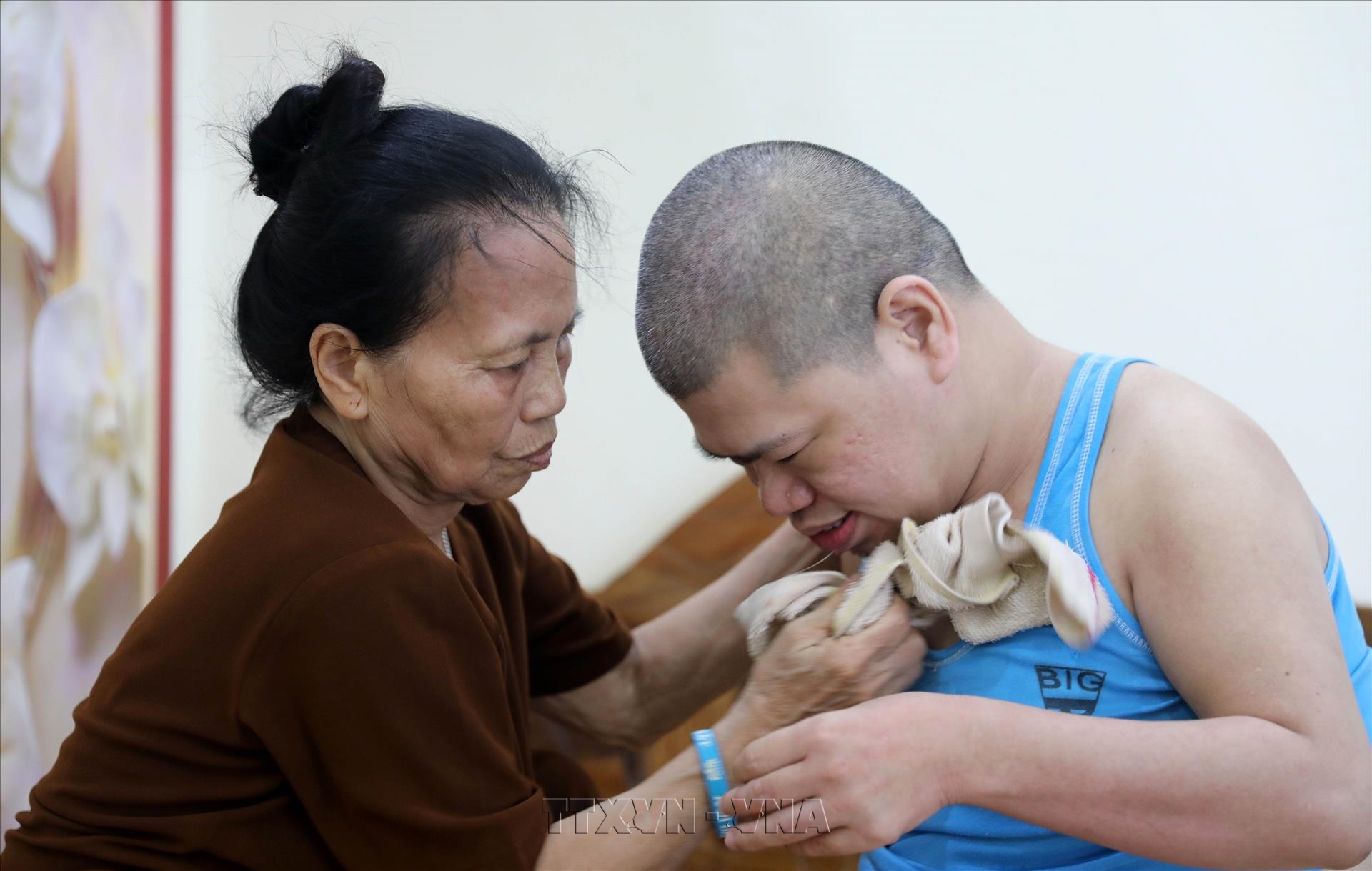
Despite her advanced age, Pham Thi Lan of Thuong Bai Village, Dien Ha Commune, Hung Yen Province, continues to care for her son, who has been bedridden for 41 years due to the effects of Agent Orange/dioxin. Photo: VNA
From immediate assistance to long-term cares
Over the years, Vietnam has developed policies covering allowances, healthcare, rehabilitation, vocational training, employment, and livelihood support for AO/dioxin victims and their families. In 2026, the support was expanded with a nationwide programme to eliminate temporary and dilapidated housing for biological children of people who participated in the resistance war and were exposed to toxic chemicals.
In March 2026, the Prime Minister issued an official dispatch, approving the use of remaining funds from the “For the Poor” Fund to support housing for this group. The Ministry of National Defence was assigned to coordinate implementation, while localities were asked to identify eligible households and mobilise additional resources.
The programme is the first housing support scheme exclusively designed for biological children of people exposed to toxic chemicals, reflecting an expansion of policies to subsequent generations still affected by the war.
In the Mekong Delta province of Vinh Long, 90 eligible households were identified, with 40 receiving support to build new homes and 50 to repair existing ones. In addition to 70 million VND (2,675 USD) in aid from the central budget for each newly built house and 35 million VND for each repaired house, the province has allocated an additional 10 million VND per house, mobilising further support from businesses, organisations and residents.
In the central province of Quang Tri, one of the localities hardest hit by toxic chemicals, 361 households were identified as eligible. The first phase saw construction begin on 143 houses in 74 communes and wards. The remaining households will continue to be covered on schedule, with the work scheduled for completion before June 30, 2027.
Nationwide, by the end of July 2026, construction had begun on 2,092 houses, nearly 900 had been completed, and more than 44,000 working days by military personnel had been mobilised for construction and repairs.
The housing programme is therefore part of a broader policy shift. Alongside allowances, healthcare, and livelihood assistance, improving living conditions is becoming a more long-term solution to help affected families stabilise their lives.
According to Lieutenant General Nguyen Huu Chinh, President of the Vietnam Association for Victims of Agent Orange (VAVA), the association mobilised more than 2.42 trillion VND during 2021-2025, including 2.31 trillion VND in direct support for victims and their families. The funds were used for healthcare, rehabilitation, housing, livelihoods, and other assistance.
Support from the international community
In addition to its own efforts, Vietnam has received growing support from the international community in this regard. From legislative measures and cooperation agreements to projects aiding people with disabilities and cleaning up dioxin contamination, numerous initiatives have been implemented to improve victims’ lives and steadily address the aftermath of war.
In October 2023, the Chamber of Representatives of Belgium unanimously adopted a resolution supporting Vietnamese AO victims, calling for stronger cooperation with Vietnam in assisting affected generations, scientific and medical research, and dioxin remediation. This is one of the few resolutions by a European legislative body to comprehensively address AO consequences in Vietnam, reflecting the international community’s concern over an issue that continues to affect generations of Vietnamese people.
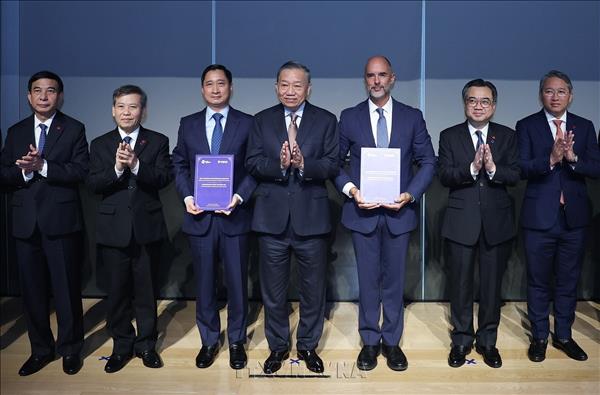
In April 2025, VAVA and the Brussels Capital Region of Belgium reached an agreement in principle to work together on addressing the consequences. The Aquitara Impact Fund 1 (AIF1) has rolled out livelihood programmes, including the “An Vui Mart” model in Dong Nai, which helps generate income. In 2026, the fund aims to expand the model to Hanoi and Hung Yen province, with plans for over 130 stores and about 25 billion VND in funding.
The US also remains an important partner in programmes to address war consequences in Vietnam. A disability support project jointly implemented by the Vietnamese Government and the US Agency for International Development (USAID) was initially carried out in Quang Tri, Hue, Da Nang, Dong Nai, and Tay Ninh, with a total committed funding of 65 million USD. The US later provided an additional 30 million USD to expand the project. To date, more than 32,000 people with disabilities and AO victims have gained access to healthcare, rehabilitation, livelihood support, and community inclusion services.
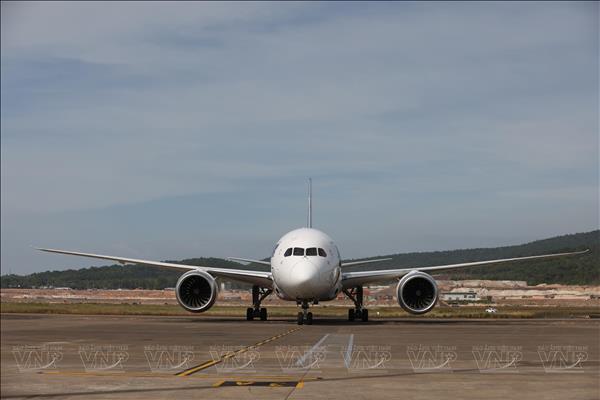
The partnership between Vietnam and the US has also extended to dioxin remediation. At Da Nang Airport in central Da Nang city, about 32.4 ha of contaminated land has been cleaned and handed over for defence, security, and socio-economic development. At Bien Hoa Airport in Dong Nai, the largest dioxin remediation project is being implemented, with excavation of contaminated soil having reached about 48% of the 62-hectare area.
Alongside cooperation programmes, the international community continues to pay attention to AO through advocacy to protect victims’ rights. The lawsuit filed by Tran To Nga against chemical companies that once manufactured and supplied the chemicals to the US military has drawn international attention for years, helping keep the consequences of chemical warfare and its lingering impacts on generations in the public spotlight.
Sixty-five years on, many families continue to live with the consequences of the war. Housing support, livelihoods, rehabilitation, dioxin remediation, and international cooperation are therefore part of a long-term effort to help AO victims and their families build more stable lives./.