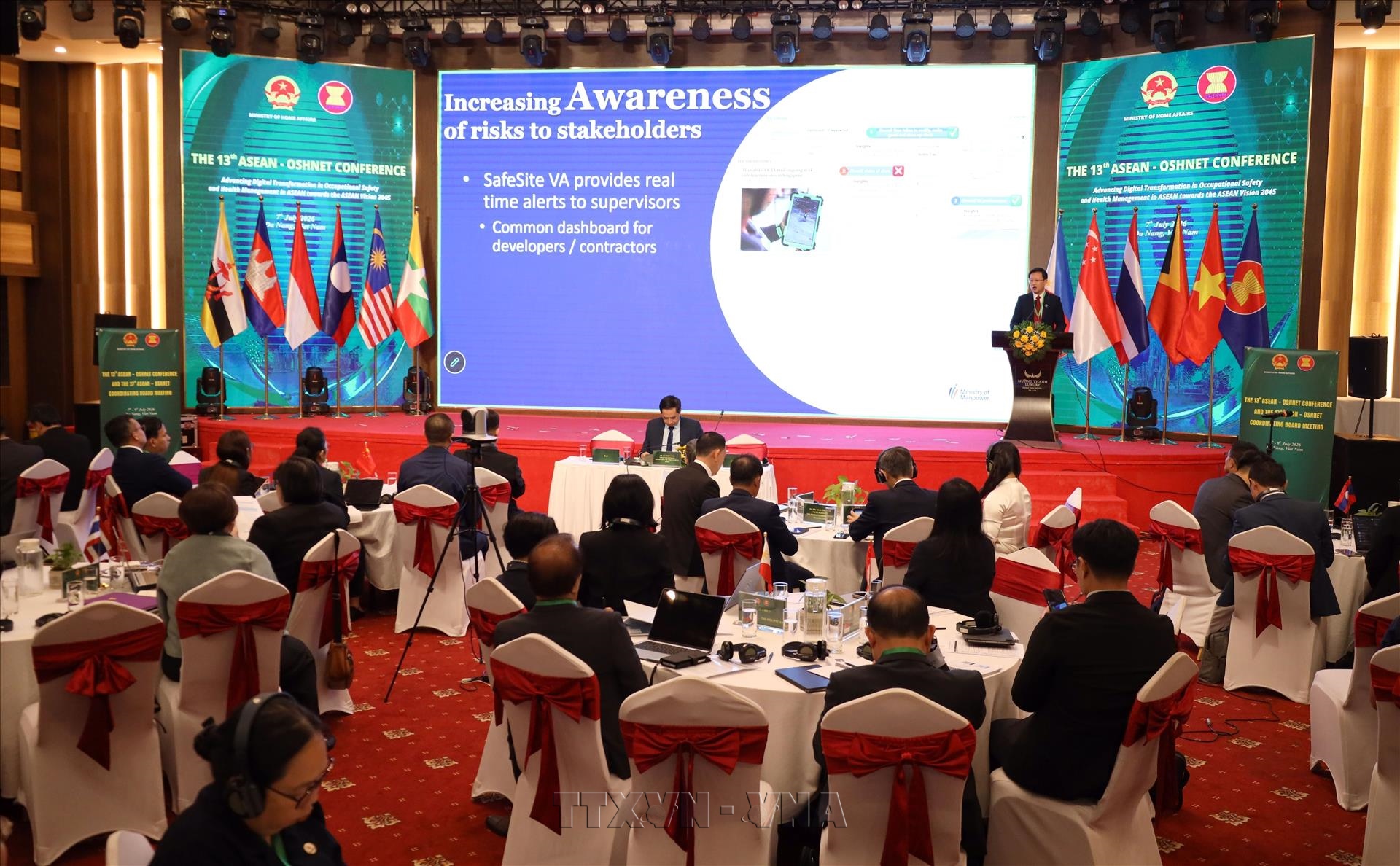
The gathering marked Vietnam’s assumption of the ASEAN-OSHNET chairmanship for the 2026–2027 term and kicked off a string of regional activities through July 9 hosted by the Ministry of Home Affairs.
It drew around 120 delegates from the 11 ASEAN member states, the ASEAN Secretariat, China, Japan, the International Labour Organisation, the International Association of Labour Inspection, and executives from major regional and Vietnamese companies.
In his opening remarks, Deputy Minister of Home Affairs Cao Huy said ASEAN, home to more than 350 million workers, has emerged as one of the world’s most dynamic hubs for manufacturing, services and innovation. Yet alongside rapid growth, the region still grapples with persistently high rates of workplace accidents and occupational diseases while insurance coverage for informal and platform-bassed workers remains thin.
Against the backdrop of accelerating global digital transformation, he said new challenges are piling up, such as the protection of personal data, ethical questions tied to artificial intelligence (AI), safeguarding the rights of platform workers, and narrowing the digital gap between nations and different segments of the workforce.
For Vietnam, digital transformation remains a top strategic priority. In the labour sector, the Government is fast-tracking a national database on occupational safety and health and an online workplace accident reporting portal. At the same time, it is studying amendments to the Law on Occupational Safety and Health and overhauling the occupational accident and disease insurance fund to broaden coverage and channel more spending into prevention.
Vice Chairman of the municipal People's Committee Tran Anh Tuan said Da Nang, the economic, tourism, and service hub of central Vietnam, is one of three Vietnamese cities, alongside Hanoi and Ho Chi Minh City, to have joined the ASEAN Smart Cities Network and also a magnet for large-scale foreign direct investment (FDI) projects.
Da Nang always considers occupational safety and health a cornerstone of sustainable development, he said, stressing that a smart city must, above all, be a safe city.
The AOC-13 focused on four key priorities, including crafting a common ASEAN policy framework for digital transformation in OSH up to international standards on AI ethics and data protection; promoting the sharing of best practices among member states, particularly in the use of big data, AI, and tripartite digital platforms for safety governance; ensuring an inclusive digital transition so that informal workers, platform workers, and small and medium-sized enterprises aren’t left behind; and drawing up concrete recommendations for submission to the ASEAN Labour Ministers’ Meeting to deliver on the ASEAN-OSHNET Action Plan for 2026–2030.
The agenda featured four main sessions covering regional policy and governance frameworks, national experiences in digital transformation across various sectors, a business dialogue on best practices, and the adoption of a joint set of recommendations.
This is the third time Vietnam has hosted an ASEAN-OSHNET conference, following the editions in 2006 and 2016. The 27th ASEAN-OSHNET Coordinating Board Meeting follows in Da Nang on July 8–9./.