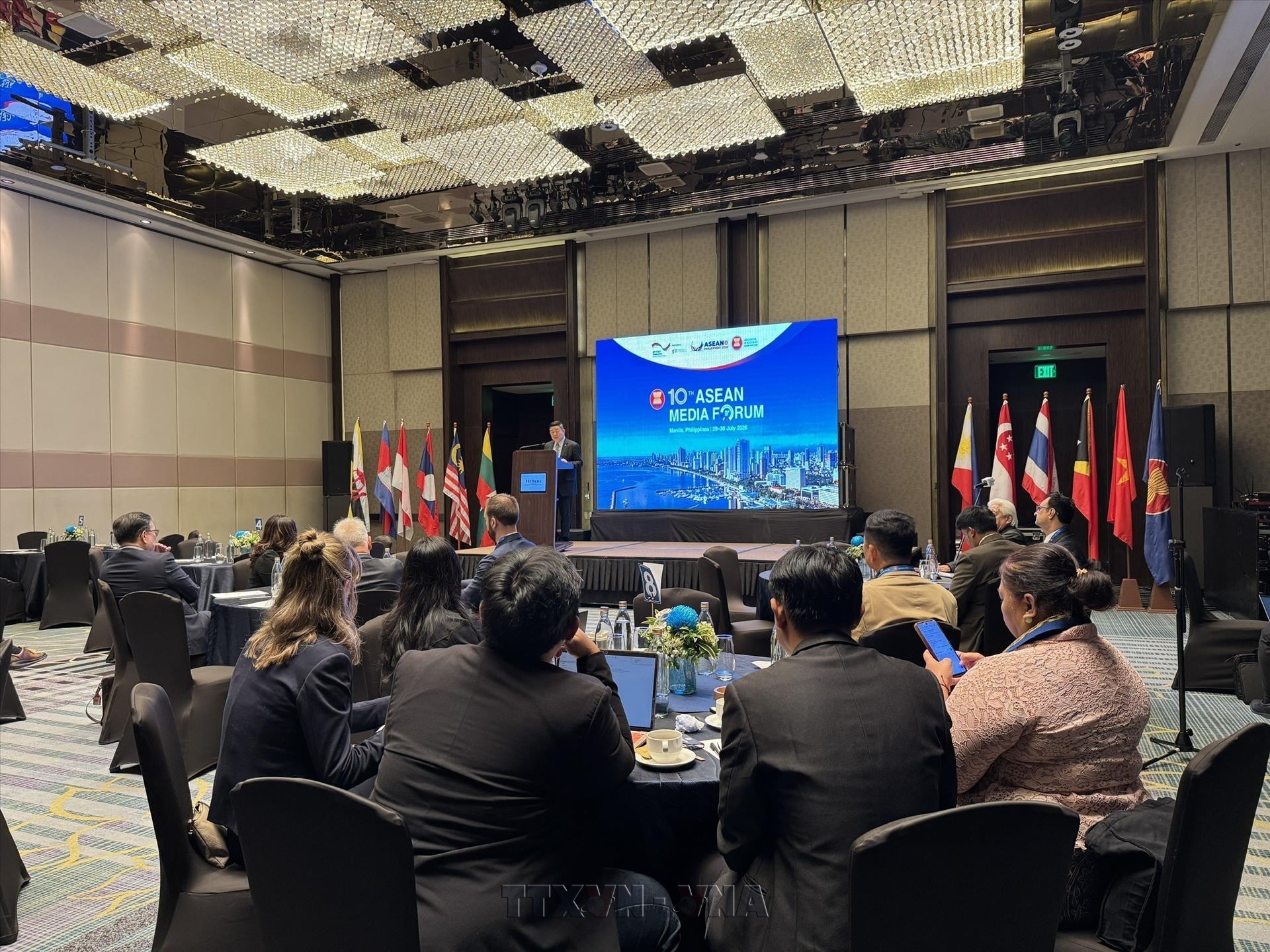
The 10th ASEAN Media Forum opened in Manila, the Philippines, on July 29, serving as an annual platform to convey key messages on ASEAN’s goals, achievements and challenges to top newsrooms across the region while offering journalists a space to discuss pressing international and regional issues.
The two-day forum drew delegates from leading ASEAN press outlets, senior officials from member states, experts, businesses and ASEAN development partners. It was co-hosted by the ASEAN Secretariat and the Capacity Building for the ASEAN Secretariat (CAPACITIES4ASEC) project, carried out by Germany’s GIZ with funding from the German Federal Foreign Office.
In his opening speech, ASEAN Secretary-General Kao Kim Hourn warned that the media is being hit by geopolitical tensions, economic uncertainty and technological disruption, which affect public opinion, spawn competing narratives, blur facts or widen divisions. Against such backdrop, professional journalism must move beyond conventional practices. In addition to chronicling events, the media has a role in helping the public better understand ASEAN policies, making it a vital partner in advancing regional integration.
German Ambassador to the Philippines Andreas Michael Pfaffernoschke and Philippine Undersecretary of Foreign Affairs for Policy Leo M. Herrera-Lim reaffirmed their countries’ readiness to keep backing and cooperating with ASEAN’s development goals in the new context.
A headline feature of this year’s gathering was a special session for direct dialogue with the ASEAN Secretary-General. Participants shared views, raised questions and dug into a wide range of issues, from emerging risks to the major trends confronting the bloc.
Speaking to Vietnam News Agency reporters, Kao stressed that artificial intelligence is a tool that opens abundant development opportunities while also posing serious risks around the spread of misinformation. ASEAN and international bodies, he said, are now working to craft guidelines, ethical standards and policies to mitigate AI’s negative fallout without putting a brake on innovation, which he called a key driver of economic growth.
Kao said fighting fake news is a shared responsibility of governments and media outlets. Governments need to put sound legal frameworks in place, while the media has a role to play in raising public awareness and pushing citizens to verify information sources.
According to him, the ASEAN Secretariat and member states are ramping up the dissemination of ASEAN’s achievements and challenges through websites, social media and other communication channels.
On the forum’s first day, participants also attended two thematic sessions taking stock of a decade of the ASEAN Media Forum, and another on ASEAN’s geopolitics and energy security amid global volatility./.