For many years, Ha Tay has been known as the land of “hundreds of crafts”, such as conical hat making, carpentry, statue making and paper fan making which has been closely attached to the lives of Chang Son villagers from generation to generation. The craft has been practiced for hundreds of years and any villager, from 5 year-old children to older people, is able to make paper fans. In recent years due to the change of tastes of customers, Chang Son villagers have shifted their production in a more effective way.
Visiting the village today, we were amazed at the thousands of paper fans of diverse sizes, designs and colours, drying along the main road and small lanes around the village. We arrived at the house of Khai who owns a large-scale fan making workshop. Talking with us, Nguyen Thi Huyen, Khai’s wife, said that her workshop both makes paper fans and collects most of products made by other families in the village to provide to the market. On average, her family sells tonnes of fans to agents nationwide every two days. To meet the demand of the market, her workshop now employs about one hundred of both direct and indirect employees.
In Chang Son, there are now five workshops as large as the family of Khai and each specialises in making only one type of fan. For instance, Khai’s workshop makes decorative fans with images of the country’s landscape and common paper fans with images of pagodas. These products are one of the favourites at tourist sites.
Paper fans made in Chang Son Village are now diverse in size, colour and style. Many households also make high-class cloth fans and dancing fans used in festivals and also serve as props for artists. To learn more about this type of product, we visited the workshop owned by Duong Thi Nhung who is famous for making high-class dancing fans and cloth fans according to the orders of customers. Nhung said that her fans were displayed on the occasion of the millennial anniversary of Thang Long –Hanoi and received praise from both domestic and foreign visitors. Each month, her workshop sells hundreds of thousands of fans of different cloths, colour and sizes to customers nationwide.
Despite the prevalence of electric appliances, such as electric fans, paper fans made in Chang Son Village are still popular and serve as evidence for the development of the traditional craft.
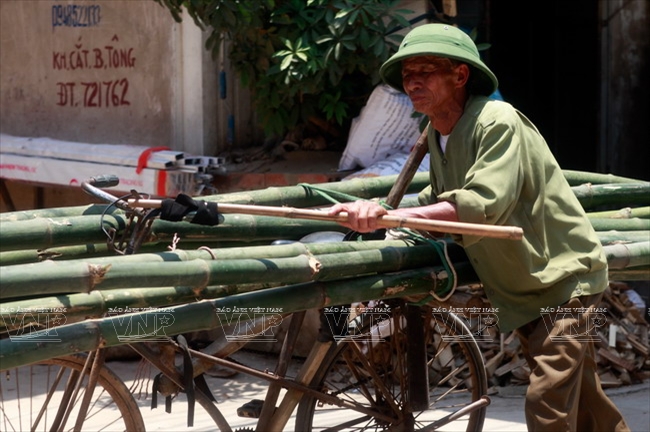 Fan makers carefully select bamboo for making bamboo strips. Photo: Viet Cuong/VNP 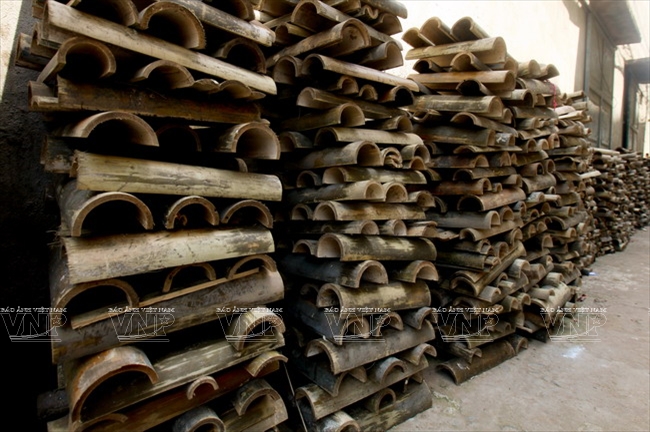 Bamboo strips for fan making are piled up along the lanes in Chang Son Village. Photo: Viet Cuong/VNP  Each family in Chang Son Village takes on one stage of making fans. Photo: Viet Cuong/VNP 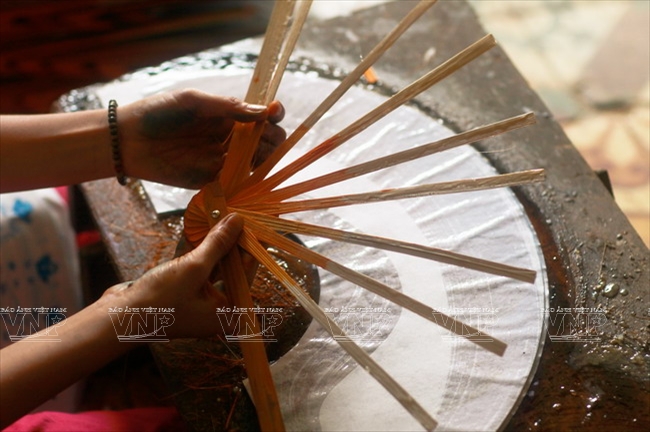 Before being stuck to paper, bamboo strips are equally stretched out to form a semi-circular shape. Photo: Viet Cuong/VNP 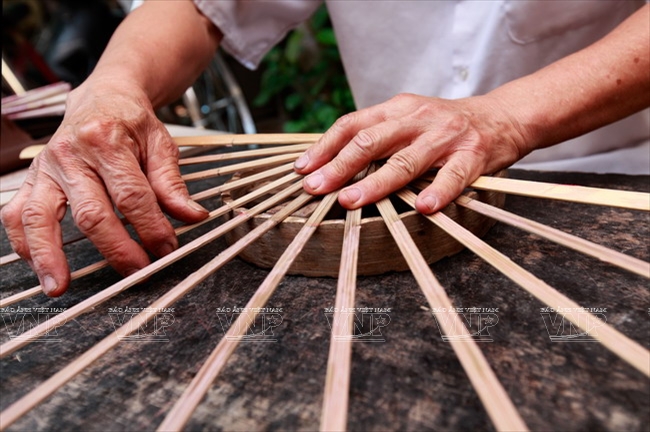 Carefully placing bamboo strips before sticking to paper. Photo: Viet Cuong/VNP 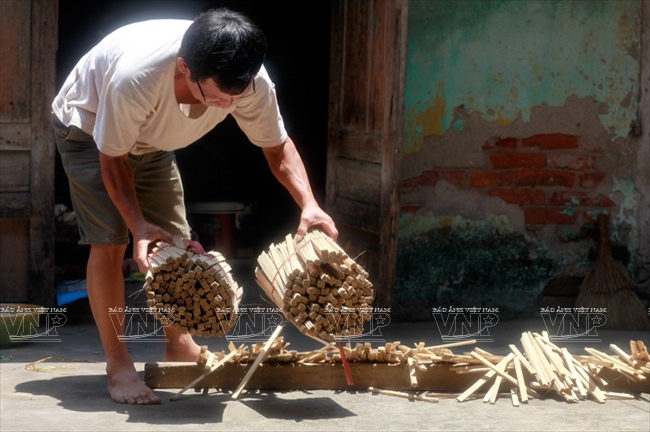 Bamboo strips are made from bamboo that was soaked in water for months. Photo: Viet Cuong/VNP |
Visiting the village today, we were amazed at the thousands of paper fans of diverse sizes, designs and colours, drying along the main road and small lanes around the village. We arrived at the house of Khai who owns a large-scale fan making workshop. Talking with us, Nguyen Thi Huyen, Khai’s wife, said that her workshop both makes paper fans and collects most of products made by other families in the village to provide to the market. On average, her family sells tonnes of fans to agents nationwide every two days. To meet the demand of the market, her workshop now employs about one hundred of both direct and indirect employees.
In Chang Son, there are now five workshops as large as the family of Khai and each specialises in making only one type of fan. For instance, Khai’s workshop makes decorative fans with images of the country’s landscape and common paper fans with images of pagodas. These products are one of the favourites at tourist sites.
Paper fans made in Chang Son Village are now diverse in size, colour and style. Many households also make high-class cloth fans and dancing fans used in festivals and also serve as props for artists. To learn more about this type of product, we visited the workshop owned by Duong Thi Nhung who is famous for making high-class dancing fans and cloth fans according to the orders of customers. Nhung said that her fans were displayed on the occasion of the millennial anniversary of Thang Long –Hanoi and received praise from both domestic and foreign visitors. Each month, her workshop sells hundreds of thousands of fans of different cloths, colour and sizes to customers nationwide.
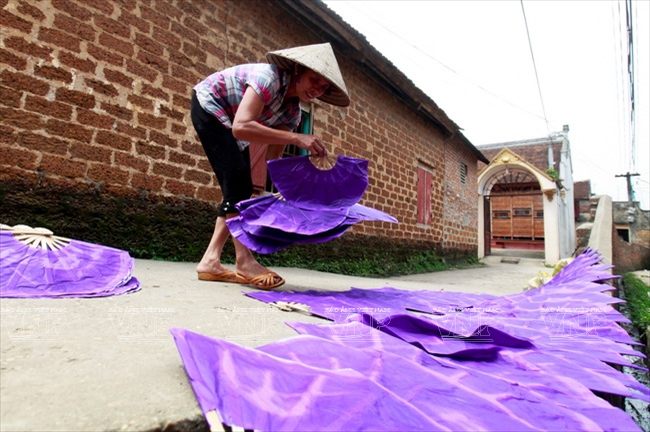 Every lane of Chang Son Commune is used for drying paper fans. Photo: Viet Cuong/VNP 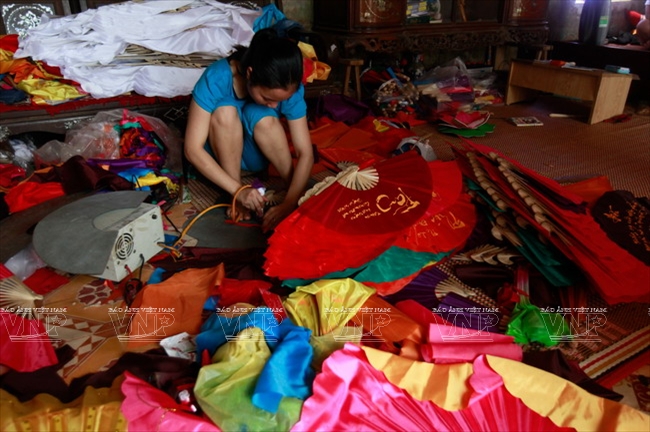 Part of the cloth fan making workshop of Duong Thi Nhung. Photo: Viet Cuong/VNP 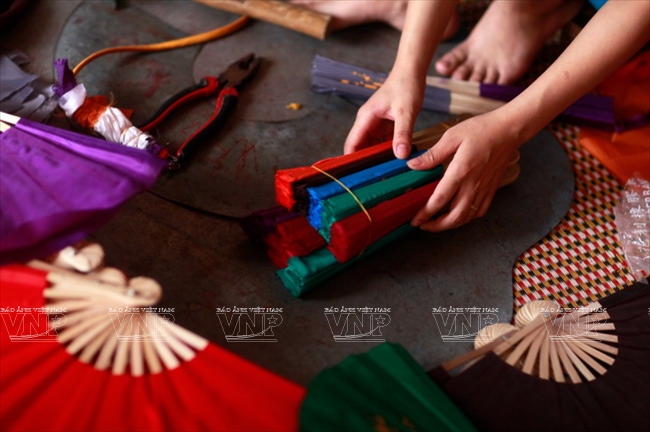 Each dozen of finished fans of numerous colours is packed together. Photo: Viet Cuong/VNP 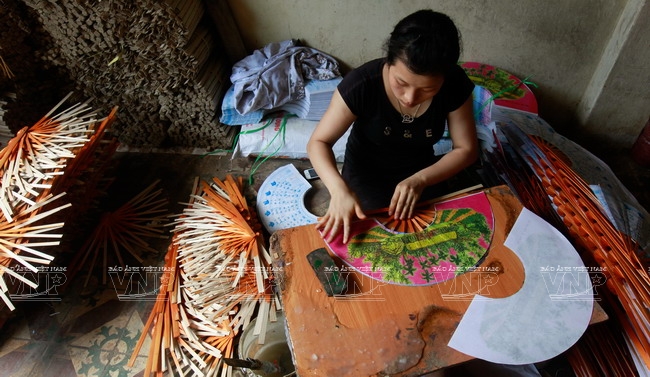 Senior fan makers can complete 1,200-1,300 fans/day. Photo: Viet Cuong/VNP 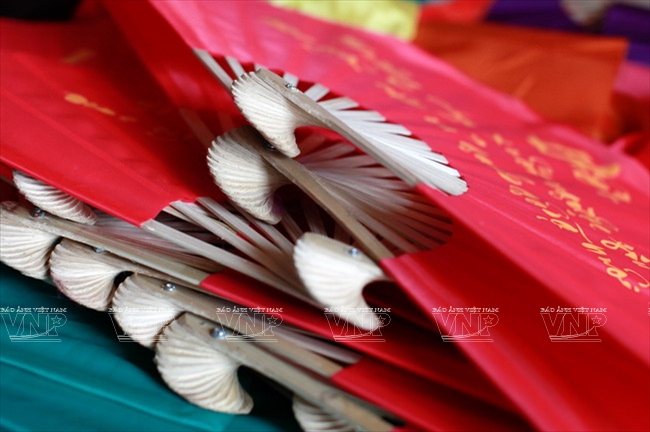 Cloth fans printed with different images and scripts are one of the favourites of customers. Photo: Viet Cuong/VNP 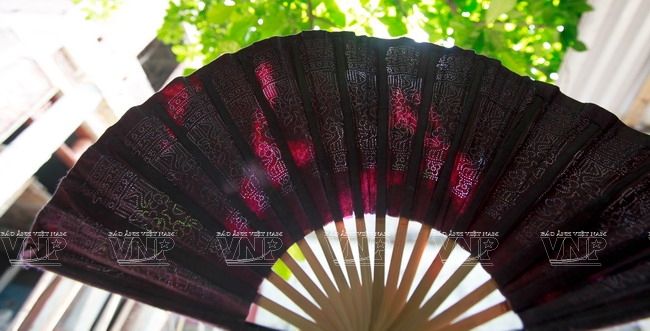 A fan with traditional patterms. Photo: Viet Cuong/VNP |
Despite the prevalence of electric appliances, such as electric fans, paper fans made in Chang Son Village are still popular and serve as evidence for the development of the traditional craft.
Story: Thao Vy - Photos: Viet Cuong