The province is transforming its natural and cultural assets into key drivers of economic growth, aiming to make tourism a major pillar of its economy in the coming years.
Covering more than 9,068 sq.km, Lai Chau boasts diverse ecosystems. It owns or shares seven of the country’s ten highest mountain peaks, including Pu Ta Leng (3,049 metres) and Bach Moc Luong Tu (3,046 metres). Other attractions such as O Quy Ho Pass, Tac Tinh Waterfall, Nam Luc Waterfall and vast hydropower reservoirs also provide ideal conditions for ecotourism, adventure tourism and high-end resort development.
Equally valuable is Lai Chau’s cultural diversity. Home to 20 ethnic groups, the province preserves a wealth of traditional customs, languages, folk knowledge, festivals, handicrafts, music and dance forms. These unique cultural resources have become a distinctive advantage that cannot be found anywhere else.
Permanent Vice Chairman of the provincial People’s Committee Tong Thanh Hai said Lai Chau identified tourism linked with cultural preservation as a strategic development priority at an early stage. The provincial Party Congress for the 2020–2025 term listed tourism development among key tasks while subsequent resolutions established policy frameworks to promote ethnic cultural values in tourism development.
As a result, the province welcomed more than 5 million visitors during the 2021–2025 period, with annual growth averaging over 33%. Tourism revenue was estimated at over 3.8 trillion VND (144 million USD), contributing significantly to the local economy. Lai Chau is currently home to two provincial-level tourism areas (Rong May Glass Bridge and Hoang Lien Pass), 20 officially recognised tourist destinations and three provincial festival-themed tourism products.
Community-based tourism has emerged as one of the province’s most successful models. Villages such as Sin Suoi Ho, Si Thau Chai and Lao Chai 1 have become well-known destinations where tourism development goes hand in hand with cultural preservation and promotion.
Notably, in 2023, Sin Suoi Ho village received the ASEAN Community-Based Tourism Award, affirming the quality and sustainability of Lai Chau’s tourism model.
Director of the provincial Department of Culture, Sports and Tourism Tran Manh Hung said every tourism product must be associated with authentic cultural values while engaging and generating direct benefits for local communities. Community-based tourism has not only improved livelihoods but also encouraged ethnic minority residents to preserve their languages, traditional costumes, customs and crafts.
Located at an altitude of about 1,400 metres and inhabited entirely by Mong people, Sin Suoi Ho has become a model of sustainable tourism. Residents operate homestays, sell handicrafts, provide tourism services and, at the same time, maintain traditional embroidery, folk songs and cultural festivals.
Looking ahead, Lai Chau has adopted a new resolution on tourism development. It aims to attract more than 2.4 million visitors and generate over 2.7 trillion VND in tourism revenue by 2030. More than 15 villages are expected to be recognised as community-based tourism destinations while Sin Suoi Ho is striving to earn recognition as the Best Tourism Village by the United Nations World Tourism Organisation.
The province also plans to attract strategic investors for large-scale ecotourism projects, diversify tourism products ranging from mountain trekking and wellness retreats to agricultural and cross-border tourism, and strengthen digital promotion efforts.
According to Hung, Lai Chau’s greatest challenge is not a lack of resources but the need to address bottlenecks in infrastructure, human resources and destination marketing while preserving cultural identity. With strong policy support, community engagement and improved transport connectivity, the province is positioning itself as an attractive destination under the brand “Lai Chau – Majestic and Authentic,” with sustainable tourism catalysing long-term development./.
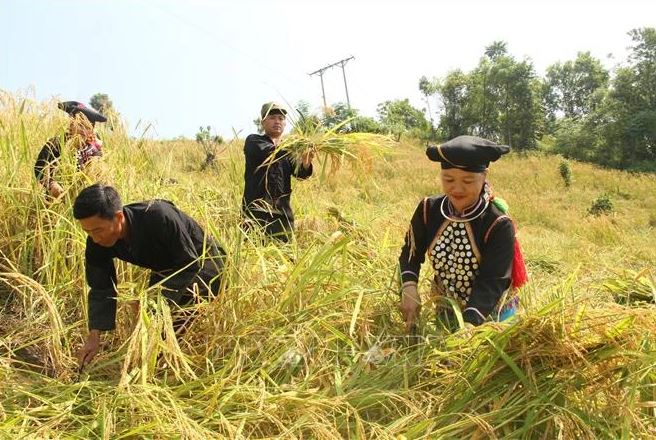
Si La people in Muong Te district, northern Lai Chau province harvest rice.
Photo: VNA