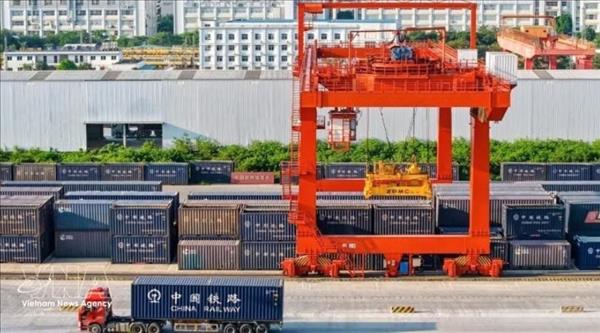
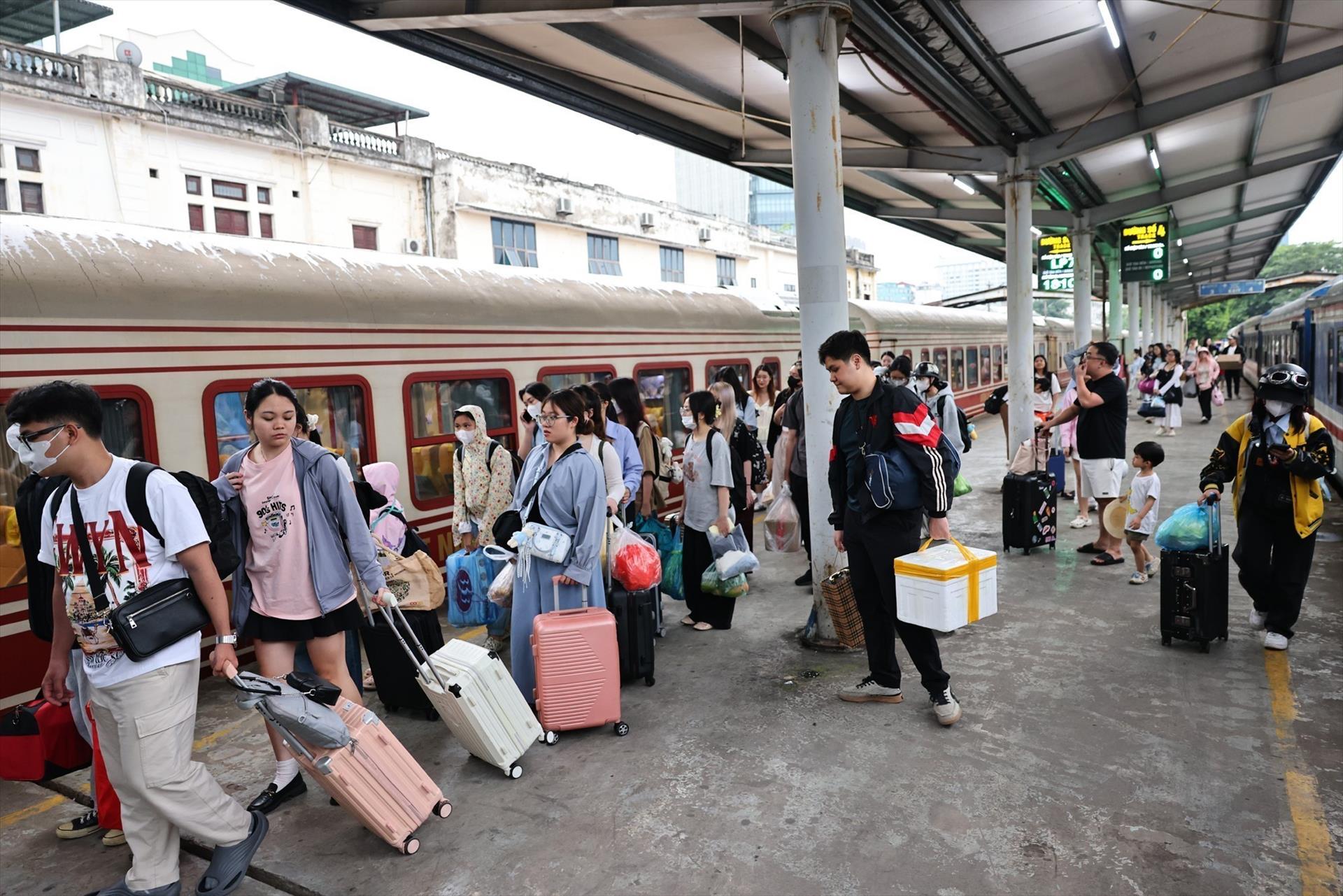
The industry currently operates 258 locomotives, 128 generators, about 4,000 carriages, and roughly 2,600 kilometres of track. Once a backbone of national transport, rail has lost market share to road, air, and waterway services in recent years.
After a downturn during the COVID-19 pandemic, the sector has rebounded, carrying around 40 million passengers and more than 5 million tonnes of cargo in 2025. While still accounting for a modest share of the market, the recovery reflects improvements in infrastructure and service quality, driven largely by digitalisation.
Nguyen Quoc Vuong, Deputy General Director of Vietnam Railways (VNR), said that the Politburo’s Resolution No. 57-NQ/TW on breakthroughs in science-technology development, innovation, and national digital transformation has opened up strategic opportunities for the sector to enhance its competitiveness.
Following this direction, VNR’s Party Committee has issued a series of resolutions and action plans focusing on six priority areas: improving institutions and digital governance; developing digital infrastructure and data; advancing railway technology and industry; promoting digital transformation in transport and services; building a digital workforce; and fostering innovation across the sector.
VNR has rolled out a range of digital tools, including e-office systems, digital signatures, e-ticketing, chatbot-based customer care, and the VNRA-MIS platform for infrastructure asset management. Technologies such as train monitoring systems, surveillance cameras, and Lidar-based warning devices have been introduced to enhance safety and operations.
An emergency response centre has also been established, enabling real-time connections to incident sites, particularly at level crossings and key traffic points.
This allows rapid assessment and response, helping minimise disruptions.
Since 2025, VNR has put in place a “digital railway” model, integrating artificial intelligence (AI), big data, and the Internet of Things (IoT) into management and operations. These applications have helped optimise performance, reduce costs, and improve service quality.
Challenges in green transition
Alongside digitalisation, the sector is pursuing greener operations. Rail transport is considered energy-efficient and low-emission, accounting for just 0.2% of the economy’s total greenhouse gas emissions and about 3% of emissions in the transport sector. Expanding rail’s market share could therefore help reduce overall transport emissions.
However, challenges remain as railways face limitations in speed, flexibility, connectivity, and transshipment capacity, as well as service quality constraints and limited investment resources.
VNR identifies five main emission sources: diesel-powered locomotives, energy use at stations and offices, maintenance activities, domestic waste, and logistics operations. Diesel consumption alone reaches about 46,000 tonnes annually, accounting for over 70% of total emissions.
To address these issues, VNR has set targets for 2030, focusing on full implementation of digital transformation and gradual modernisation of infrastructure, alongside the adoption of cleaner fuels that meet emission standards.
The corporation is pursuing four key solution groups: strengthening governance, improving management processes, developing infrastructure and technology, and enhancing human resources and innovation capacity.
By 2030, Vietnam’s railway sector aims to achieve sustainable growth on existing lines while playing a greater role in supporting a green and circular economy. It also focuses on improving efficiency, reducing environmental impact, and upgrading service quality.
With digital transformation and green transition identified as core pillars, the sector is working to remove bottlenecks in institutions, resources, and infrastructure to unlock its full potential and secure long-term development./.