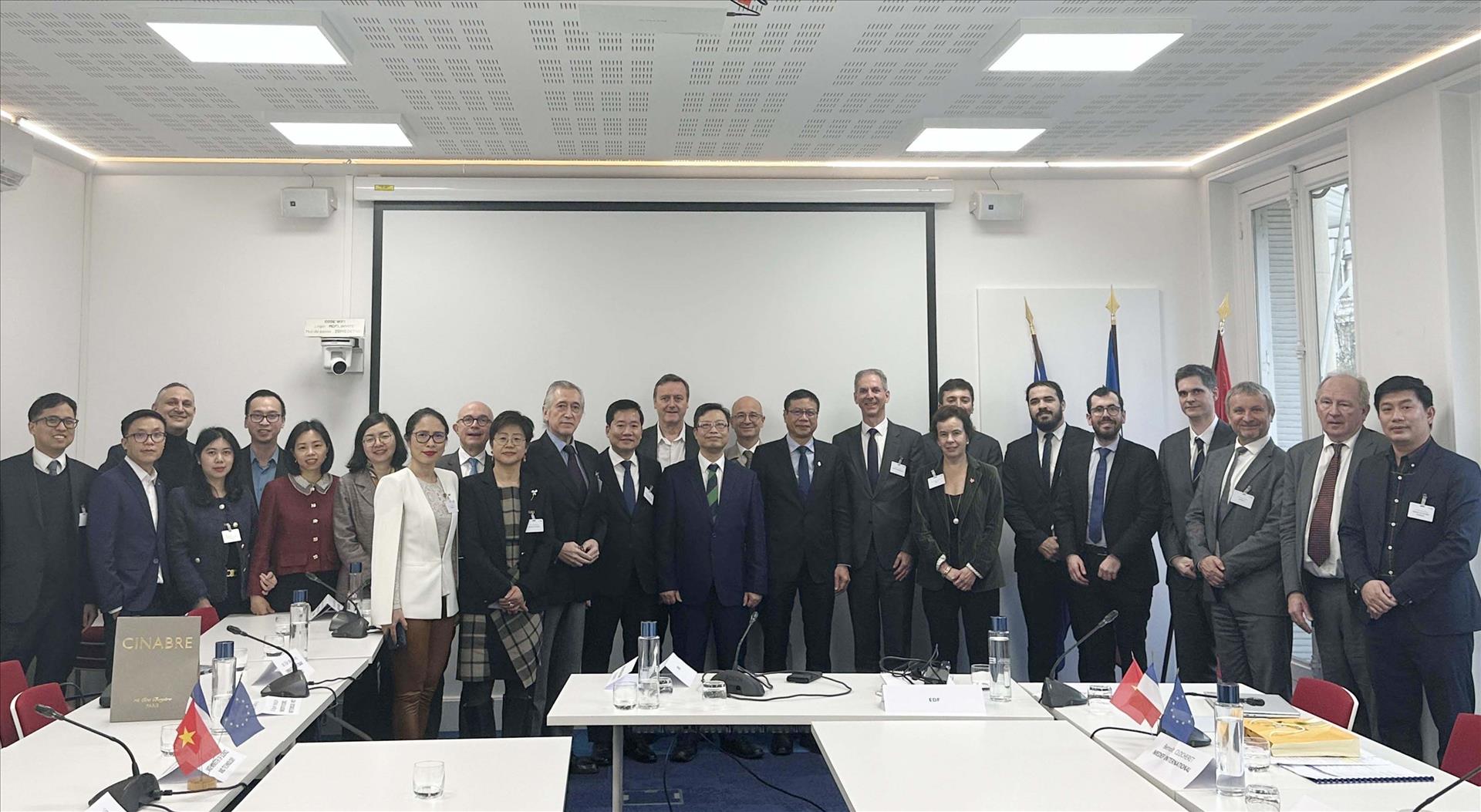
Vietnam hopes that French enterprises will step up partnerships with Vietnamese counterparts, enhance technology transfer, and regard Vietnam as a promising venue for piloting and implementing innovative technologies, Deputy Minister of Science and Technology Le Xuan Dinh has said.
Speaking at a working session with the Mouvement des Entreprises de France (MEDEF) (Movement of French Enterprises) – the organisation representing the French business community – in Paris on March 11, Dinh highlighted opportunities for Vietnam –France cooperation in science, technology, energy, infrastructure, and high-tech industries.
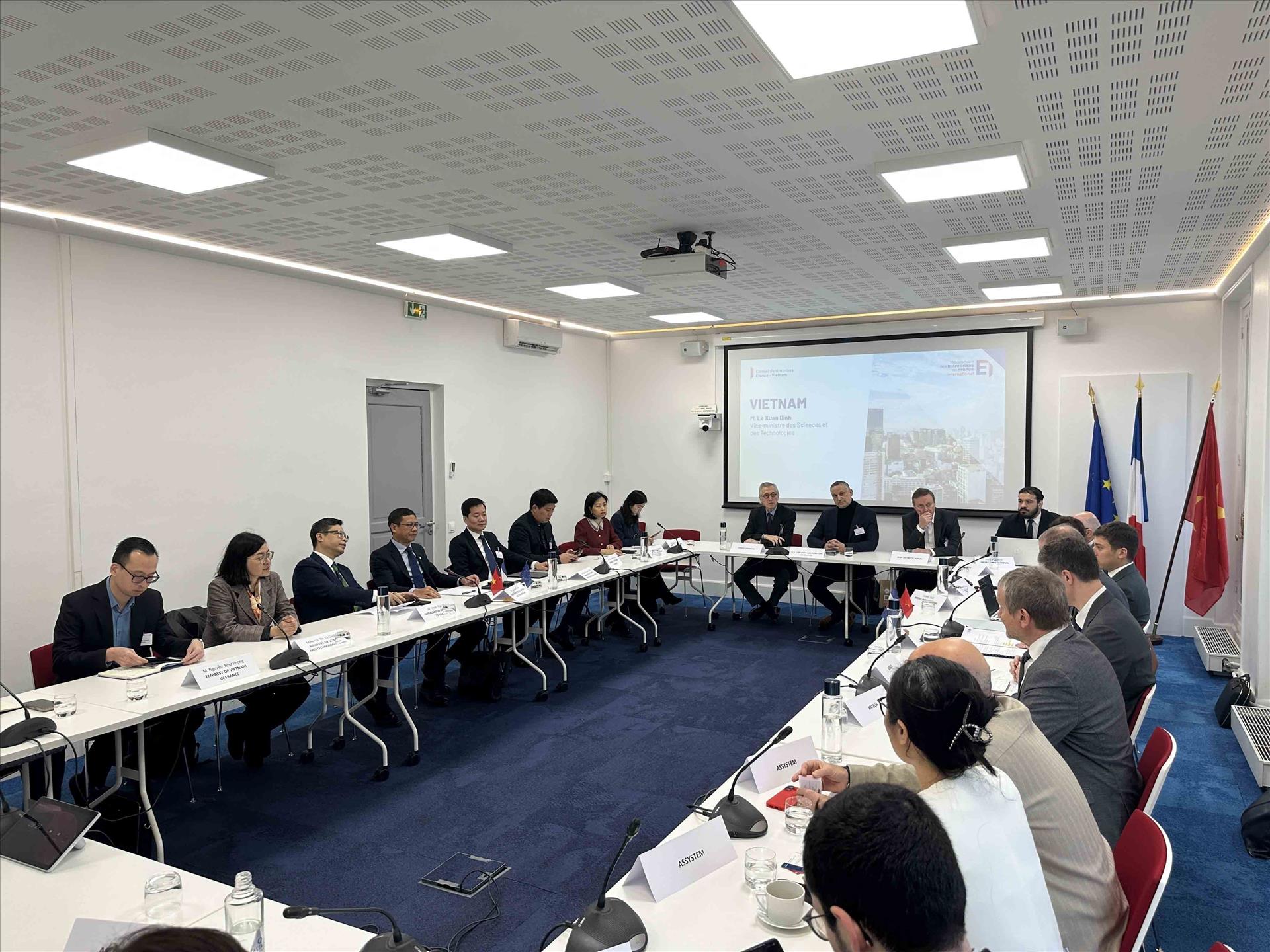
The meeting formed part of efforts to promote exchanges between the two sides’ business communities and explore potential collaboration in key sectors.
The deputy minister noted that Vietnam is entering a new stage of development, with growing demand for science and technology, energy, and infrastructure.
With a population of more than 100 million people, strong economic growth, and an increasingly favourable investment environment, Vietnam is regarded as one of the most dynamic markets in Asia, he stated.
For his part, Benoit Clocheret, Vice President of MEDEF International – the global outreach arm of MEDEF – who is also Chairman of the France–Vietnam Business Council and Executive Chairman of Artelia Group, affirmed that Vietnam remains one of the most dynamic and promising markets in Asia.
He said MEDEF wants to continue acting as a bridge between the business communities of the two countries and promote cooperative projects in infrastructure, energy, technology, and green transition.
Cooperation in nuclear energy was also a topic of discussion during the working session between the Vietnamese delegation and MEDEF.
Vietnamese Ambassador to France Trinh Duc Hai said that as the world faces major challenges related to energy security and climate change, many countries are reassessing the role of nuclear power as a stable and low-carbon energy source.
Vietnam is currently studying and refining policy orientations aimed at ensuring long-term energy security, diversifying energy supply, and achieving its net-zero emissions target by 2050, the ambassador said.
According to the diplomat, Vietnam is restarting plans to invest in the construction of Ninh Thuan 1 and Ninh Thuan 2 nuclear power plants. At the same time, the country is continuing to improve its legal framework, strengthen management capacity, and train human resources in the nuclear energy sector.
Vietnam is also committed to complying with the highest standards of nuclear safety and non-proliferation, while working closely with the International Atomic Energy Agency (IAEA) to ensure adherence to international norms, Hai stressed.
Apart from energy, many French companies expressed interest in expanding cooperation with Vietnam in high-tech sectors. A representative of Airbus said the group has been present in Vietnam for more than 40 years, with over 200 Airbus aircraft currently operated by Vietnamese airlines. Airbus is also working with Vietnamese partners in pilot training, the development of the aviation industry, and space projects, including the launch of the VNREDSat-1 Earth observation satellite.
Meanwhile, engineering companies such as Assystem, Egis, and Artelia voiced their interest in participating in Vietnam’s energy and nuclear infrastructure projects, particularly in technical consultancy, project management, human resources training, and the development of small modular reactor technologies.
At the end of the meeting, both sides agreed to continue stepping up dialogue and promoting concrete cooperation projects in the coming time.
Dinh took this occasion to invite French enterprises to visit Vietnam to explore investment opportunities and implement new technology cooperation projects, contributing to enhanced bilateral collaboration in science, technology, and innovation./.