The northern province of Quang Ninh is targeting more than 3 billion USD in foreign direct investment (FDI) this year, betting that a strategic shift in its investment attraction model from breadth to depth will accelerate its bid to become a centrally-run city ahead of schedule.
According to a local socio-economic report, Quang Ninh already pocketed 222.25 million USD in FDI during January-April. It granted investment registration certificates to 10 new projects valued at over 125.33 million USD, while eight existing project ventures added another 96.72 million USD.
Quang Ninh now boasts 237 valid FDI projects from 20 countries and territories, with a total registered capital approaching 16 billion USD. Even better, nearly 10 billion USD of that amount, equivalent to almost 63% of the total registered amount, has been invested.
The figures cement Quang Ninh’s position among Vietnam’s strongest FDI performers. Last year, it remained in the national top 10 with about 1 billion USD in inflows.
A defining feature of Quang Ninh’s FDI landscape in recent years has been the visible improvement in investment quality. The province has moved away from mass volume attraction toward selectively targeting high-tech, high-value-added and eco-friendly projects.
Statistics showed that the average investment density per hectares surged to 13.12 million USD during 2021-2025 from 1 million USD in 2016-2020. Over the same timeframe, the average land footprint per project shrank sharply from 41.32 ha to 4.41 ha, pointing to more efficient resource utilisation.
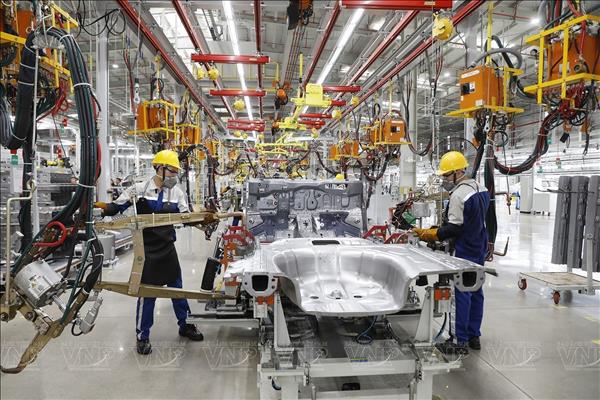
Processing and manufacturing still do the heavy lifting, with 152 projects worth 8.28 billion USD gobbling up nearly 52% of Quang Ninh’s total FDI haul. Giants like Jinko Solar, Foxconn and Lite-On have shaped modern production chains and laid a solid groundwork for local industrialisation.
Beyond expanding in project volume, the FDI sector has become a major pillar of the local economy. Between 2021 and 2025 alone, it contributed nearly 17 trillion VND, a 21.9% jump from the previous period.
Foreign firms also dominate trade, driving more than 80% of the province’s export-import turnover. By late 2025, FDI projects employed about 50,000 workers pulling in an average monthly paycheck of 9.4 million VND (244 USD).
Truong Manh Hung, Director of the Quang Ninh Economic Zone Authority, said attracting FDI now isn’t about just collecting capital, but about grabbing technology, management know-how, and real added value.
Through 2026 and beyond, Quang Ninh plans to keep tearing apart and rebuilding infrastructure like roads, power grids, and water lines for industrial parks and economic zones, to keep the cash streams open.
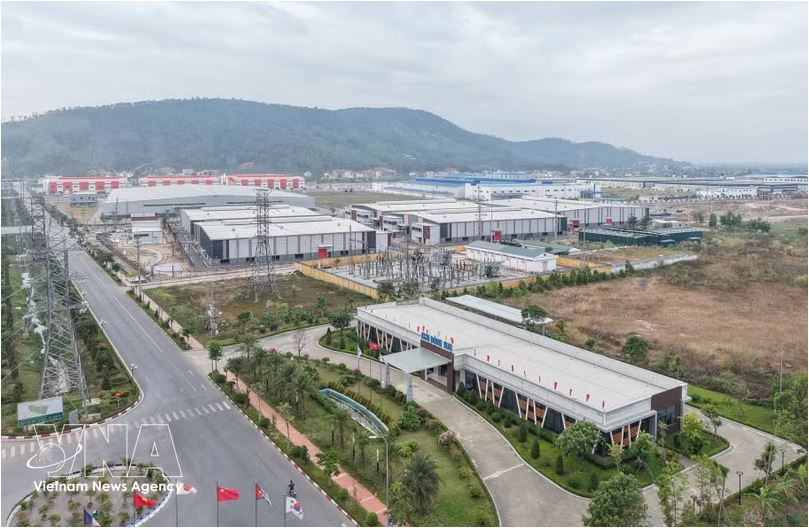
The province is investing in infrastructure for key industrial parks like Song Khoai, Bac Tien Phong, and Nam Tien Phong. It also plans face-to-face dialogues between local officials and foreign bosses to smash bottlenecks over labour, land, and red tape.
Chairman of the provincial People’s Committee Bui Van Khang stressed that government agencies and local authorities must nurture a contingent of leaders who “dare to think, dare to speak, dare to act, and dare to take responsibility” for the common good, to thoroughly clear hurdles faced by businesses and investors, including foreign ones.
According to him, the province is sprinting to finish integrated infrastructure inside economic zones Van Don and Quang Yen, creating ready-to-use “clean land” to hook "industrial eagles".
Quang Ninh is also courting multinationals and strategic investors to bring in next-gen tech and quality projects, while upgrading its skilled workforce through stronger links between vocational schools and foreign employers.
Rather than chasing widespread investment, Quang Ninh has adopted a selective strategy centred on efficiency and sustainability, prioritising high technology and green growth to raise localisation rates and technological content in products labelled “Made in Quang Ninh”.
At the same time, it is shifting from merely reeling in projects to stitching together integrated value chains and industrial ecosystems where foreign and local firms actually feed off each other.
Experts say strong FDI inflows are expected to help the province hit its 13% GRDP growth target in 2026 and strengthen its position as one of the few Vietnamese localities that can balance its own budget while still contributing to the central budget.
The local urbanisation rate has already surpassed 55%, well above the minimum required threshold of 45%.
Winning centrally-run city status as early as 2026–2027 would hand Quang Ninh special governance mechanisms, unlock more development resources, supercharge even bigger FDI inflows, and pave the way for one of Vietnam’s swankiest, most livable coastal hubs, they said./.