A total of eight new tourism offerings have been launched under the theme “Green Travel Journey,” focusing on nature conservation, cultural heritage preservation and community responsibility.
Among the highlights are two heritage routes: “South Thang Long – Hanoi Heritage Road: Journey to the Roots” and “South Thang Long – Hanoi Heritage Road: Essence of Vietnamese Craft Villages.”
The first route connects southern suburban areas of Hanoi with key cultural sites, including Dinh Noi Binh Da Communal House (Binh Minh commune), dedicated to Lac Long Quan, the legendary progenitor of the Vietnamese people. It also features the incense stick-making village of Quang Phu Cau incense village in Ung Thien commune and the traditional weaving village of Phung Xa weaving village in Hong Son commune.
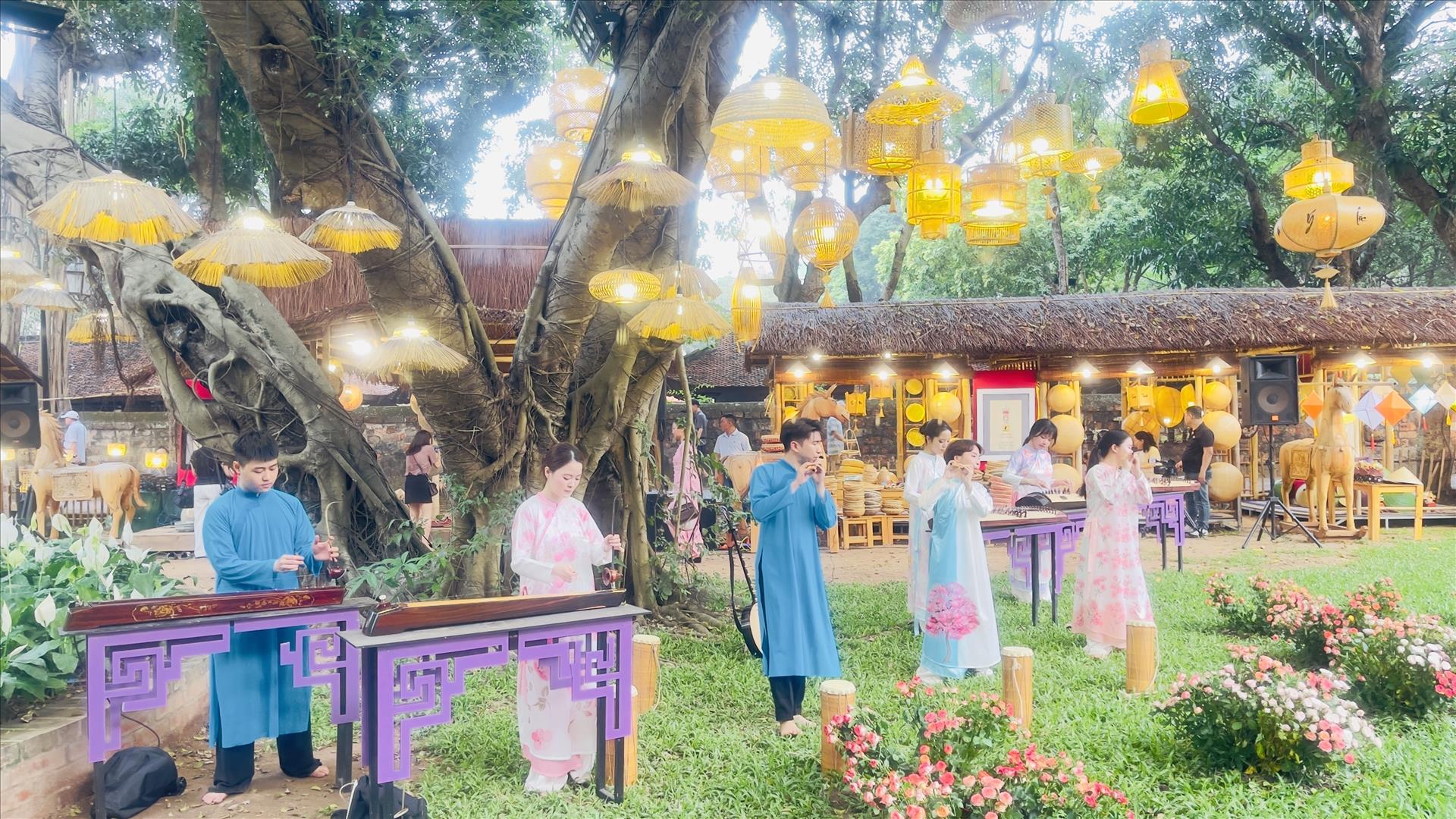
The second route offers visitors an immersive journey through renowned craft villages such as Ngau village (traditional rice wine making), Phuc Am village (votive paper craft), Ha Thai lacquer village and Cuu village, famous for bespoke tailoring.
In addition, several new tourism products have been introduced, including the “Path of Learning” experience at Ha Mo, which highlights educational and historical values; the rural tourism model “Tuong Phieu Flower Colours” in Phuc Tho; and a community-based tourism programme in Ba Vi commune, where visitors can explore Dao ethnic culture and traditional herbal wellness practices.
Three new destinations have also been recognised, including the Hanoi Botanical Garden in Tay Tuu ward, an urban ecological space; Thiet Ung fine woodcraft village in Thu Lam commune; and Thuy Lam tourism site, known for its rich cultural heritage, including Dao Thuc water puppetry. Meanwhile, the Hanoi Museum continues to stand out as a major cultural attraction, housing over 70,000 artefacts and numerous national treasures.
The city's Department of Tourism has urged travel associations and businesses to step up promotion of these new products on digital platforms and develop tour linkages to attract visitors in 2026 and beyond.
The move is expected to diversify tourism offerings, enhance the capital’s competitiveness, and support sustainable growth while drawing more domestic and international travellers./.