
Funding for national target programmes is gradually reaching communities, helping people, particularly in rural, mountainous and ethnic minority areas, expand production, improve incomes and strengthen market linkages. However, slow disbursement remains a key bottleneck requiring urgent action.
From livelihood support to sustainable poverty reduction
In recent years, effective livelihood models have taken shape across many localities, with programmes not only providing financial support but also transforming production practices and economic thinking. In Lao Cai, funding has supported the shift towards commercial livestock farming through breeding stock provision, technical training and capacity building. Many households have expanded production, improved incomes and formed cooperative groups for mutual support.
In central localities such as Hue, Da Nang and Ha Tinh, integrated programmes have fostered models like medicinal plant cultivation, free-range poultry and beekeeping. Several household models have grown into cooperatives, creating jobs, reducing migration and enabling participation in value chains.
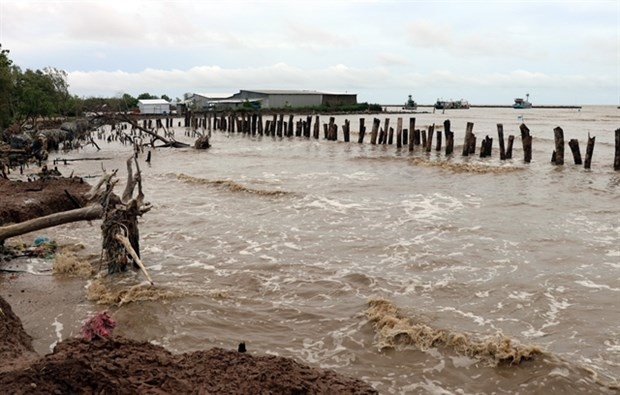
Meanwhile, in Ca Mau, climate-adaptive models such as shrimp–forest and crab–forest systems have helped boost incomes while protecting ecosystems, supporting sustainable livelihoods. These examples underscore that well-targeted funding can drive income growth while fostering sustainable rural economic models.
Despite clear benefits, disbursement progress in early 2026 has been slow. According to the Ministry of Finance (MoF), public investment disbursement under national target programmes reached just 382.03 billion VND (14.51 million USD) by the end of the first quarter, equivalent to 4.9% of the plan. Meanwhile, recurrent spending stood at 377.18 billion VND, or 4% of estimates.
These figures indicate that a significant volume of resources remains unused, yet to be translated into tangible benefits for production and livelihoods.
The main constraints lie not in funding shortages but in implementation. Many localities still face difficulties in completing investment procedures, approving projects and issuing support criteria. Some programme components lack detailed guidance, resulting in delays or limited implementation. At the grassroots level, especially in remote areas, limited capacity in project design and execution poses additional challenges. Given that these programmes involve numerous small-scale, dispersed projects directly linked to people’s livelihoods, flexible and effective implementation is essential.
Accelerating implementation for greater impact
As 2026 is a pivotal year for realising socio-economic development goals for the new period, national target programmes continue to play a vital role in ensuring social security and narrowing regional disparities. Beyond accelerating disbursement, ensuring that funds reach the right beneficiaries and deliver tangible results is critical.
The Government has repeatedly stressed that these programmes must promote inclusive development, social equity and the goal of leaving no one behind. This requires not only faster but also more effective and targeted implementation.
The MoF has called on ministries, sectors and localities to expedite capital allocation once conditions are met, simplify procedures, especially for small-scale projects, enhance digital application in management, and strengthen inspection and accountability, particularly of heads of agencies.
Experts underlined that timely disbursement is essential to maximising the effectiveness of these programmes. When resources are released promptly and directed appropriately, successful livelihood models can be replicated, generating broader socio-economic impacts.
Accelerating disbursement is therefore not merely a financial requirement, but a crucial step towards inclusive development, improved livelihoods and better living standards, ensuring that no one is left behind./.