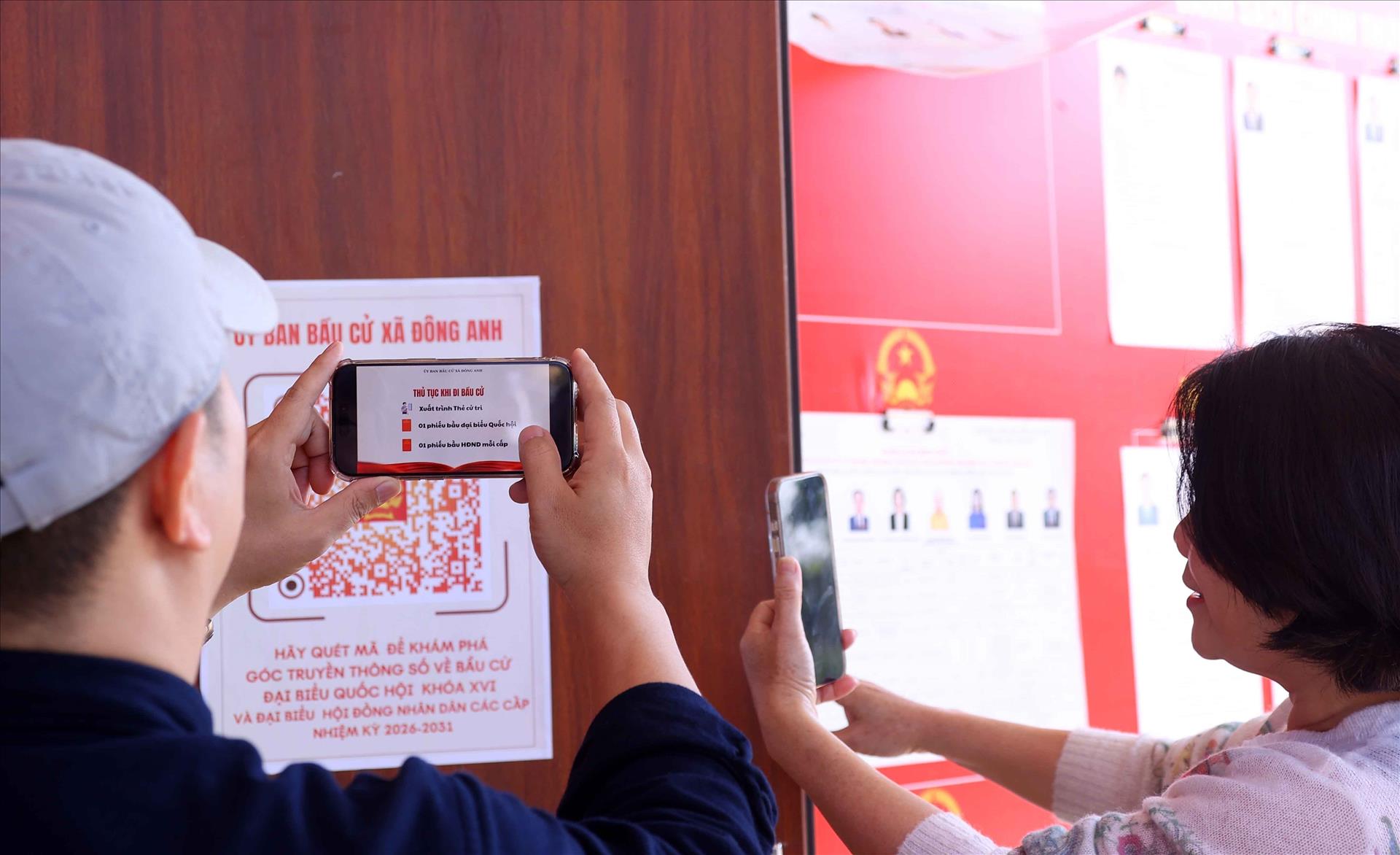
As the country’s largest economic hub and a centre of innovation, the southern metropolis has incorporated information technology into various stages of election preparation and organisation. From digitising voter data to diversifying communication methods on digital platforms and deploying real-time reporting systems, the city aims to ensure a democratic, transparent and efficient election in which citizens can fully exercise their voting rights.
Managing voter data has long been a challenge for Ho Chi Minh City due to its large population and frequent mobility, with millions of temporary residents, workers and students.
The implementation of the Government’s plan on developing applications of resident data, electronic identification and electronic authentication for national digital transformation in the 2022–2025 period, with a vision to 2030), together with the national resident database of Vietnam, has significantly improved the situation.
Instead of manually reviewing household registration and temporary residence documents as in previous elections, local election teams can now cross-check voter lists through synchronised digital platforms.
Specialised software tracking voter changes also allows local authorities to promptly update changes in residence, ensuring that citizens’ voting rights are not interrupted. The system helps minimise errors and duplication while shortening the time needed to compile voter lists.
In the city’s Tan Son Hoa ward, which is home to more than 79,000 voters and a large number of boarding houses and temporary residents, authorities have introduced QR codes for residents to verify their voter information and submit feedback.
For example, when discovering that his name was missing from the voter list posted in his neighbourhood, resident Nguyen Tri Nguyen quickly submitted a request to update his information through a QR code system.
Across the city, many localities have adopted similar digital platforms for voter registration to ensure that no eligible voter is overlooked.
Digital technology is also transforming election communications. Beyond traditional banners and loudspeaker announcements, Ho Chi Minh City has developed a multimedia communications ecosystem in cyberspace.
QR codes placed in residential areas and public spaces enable voters to instantly access candidate profiles, polling station layouts, and animated videos explaining voting procedures.
In Ben Thanh ward, local authorities have even applied artificial intelligence to produce short election-related videos and communications materials, thus increasing their appeal and reach.
Social media platforms such as Zalo and Facebook, along with local government applications, have become effective interactive communications channels. Chatbots answering questions about election regulations, online legal knowledge contests and digital maps guiding voters to polling stations have helped bring election information closer to residents, particularly young voters.
Technology also plays a key role in election management. The city’s election command centre is connected with those in wards and communes, enabling real-time updates on voter turnout among more than 10 million eligible voters.
Meanwhile, specialised software supports vote counting and result aggregation, reducing human error while accelerating reporting. However, city authorities emphasise that digital tools only serve as support while manual procedures remain strictly implemented in accordance with electoral regulations to ensure legal accuracy.
Cybersecurity has also been prioritised, with multiple layers of protection installed to prevent any external interference with the election serving system.
Vo Van Minh, Chairman of the Ho Chi Minh City People’s Council and head of the city’s election committee, said the application of digital technology to election organisation and communications is an inevitable trend.
Practical solutions such as digital maps, AI-based videos and interactive platforms have demonstrated positive results, helping improve governance efficiency while enabling citizens to exercise their civic rights more easily.
The use of technology in this election is not merely a short-term measure but reflects Ho Chi Minh City’s broader commitment to comprehensive digital transformation and smart urban governance, reinforcing public trust in the democratic process and administration./.